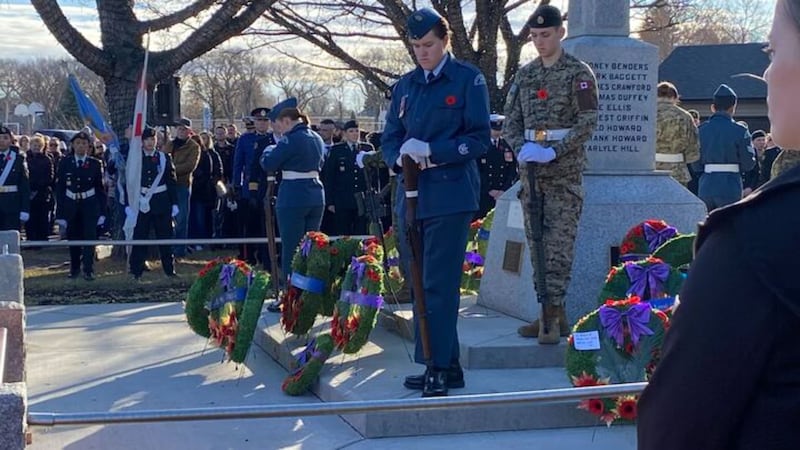
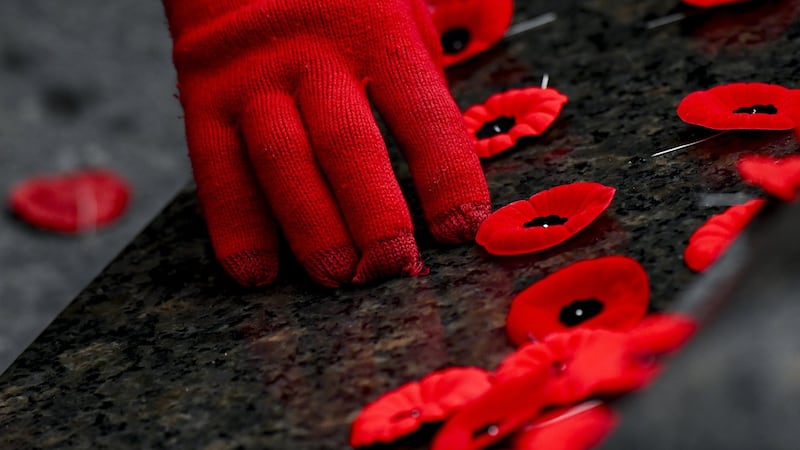
OTTAWA – The most recent data from the Department of National Defence show that 28 per cent of new recruits are visible minorities. Many of them joined the Canadian Armed Forces (CAF) because of a fierce sense of patriotism instilled in them by their immigrant parents. That’s the case for Palestinian Canadians Yousef Shaath, 66, and George Al-Koura, 39. The veterans are a generation apart but both found a shared purpose through military service. Ten years after immigrating to Canada, Shaath gave up his job as an accountant to enlist in the army. He was 45 years old, going through basic training with recruits who had just entered adulthood. Shaath said he was inspired by his cousin, Wafa Dabbagh, the first Muslim woman wearing a hijab in CAF. He was determined to “embed his footsteps” into Canada, energized by his fellow recruits who were more than half his age. “I enjoyed every minute of it … if there’s a hurdle, you persist,” Shaath said in an interview with CTV News. Over his 14-year career as a logistics officer, Shaath was deployed in Kuwait and Lebanon. He helped move weapons and equipment out of Afghanistan after Canada wound down its combat operation in Kandahar. Shaath said his last deployment was the most meaningful to him. In 2015, he was sent to Lebanon to help the federal government conduct security checks on Syrian refugees. Displaced by escalating violence in their homeland, Shaath’s parents fled from Palestine to Egypt in 1936. Shaath said his family history impressed upon him the importance of the work he was doing in helping Canada vet Syrian refugees for its sponsorship group. “It was most rewarding … being helpful, to put up a hand to help others – that made me more loyal, more loving to the Canadian Forces.” ‘I’m Canadian first’ That shared sense of being uprooted – then falling in love with a new country – is a feeling that is also ingrained in Al-Koura. In 2005, he joined the military just a few weeks before turning 18 years old. He sought adventure and to put into practice the lessons his parents taught him. His parents, also Palestinian refugees, instilled in him the importance of protecting the freedom they found in the “cultural mosaic” of Canada. “I’m proud to be ethnic Palestinian, but I’m Canadian first,” said Al-Koura, who was born in Montreal and raised Catholic. He followed in his sister’s footsteps and joined the CAF. “I remember the ice storm of ’97. We have inconveniences, but Canada allows us to be ourselves and gives us the freedom to live without essentially warfare in the background of our lives.” Al-Koura became a signals intelligence officer. He was also involved in Operation Impact, the U.S.-led mission against the Islamic State in Iraq and Syria. He used his fluency in Arabic to analyze the military manoeuvres of ISIS. He retired from the CAF last year and has transitioned into the private sector. In his 20-year career, he has lost colleagues in the line of duty. For Al-Koura, the most painful loss came during the War in Afghanistan. After Canada’s mission ended in 2014, a childhood friend took his own life. “He died when he got back (to Kingston.) His reintegration process wasn’t the easiest of things. The Afghan years were hard for lots of people. It was really hard for people to understand what they went through,” he said. “When (the soldiers) came back, we as a society didn’t really know how to help.” Like Al-Koura, Shaath also lost a close friend. His colleagues died during a NATO training mission. On Nov. 11, he will be thinking of that friend and others who have served and those still on the front lines. “On Remembrance Day, I think of everybody. Ever soldier that went there and came back. I think of the people who are away from their homes. It’s not easy.” With files from CTV News’ Kristen Yu