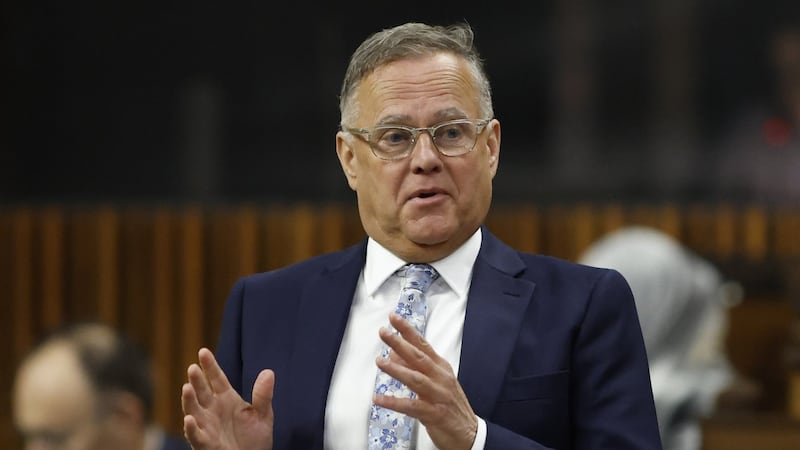
Ottawa Mayor Mark Sutcliffe says the launch of the O-Train Line 1 East Extension will happen when it is ready he is not concerned with the added delays the line has experienced. OC Transpo announced on Wednesday that it would begin running a full complement of 23 trains along the length of the line from Tunney’s Pasture to Trim Station for the first time starting on Nov. 22, though passengers would not be permitted to travel beyond Blair Station. The move, however, is not considered the pre-trial running phase that must precede the trial running phase that is required to finally open the extension to passengers. The timelines for trial running and related activities provided by OC Transpo suggest that the chances of the extension opening before the end of 2026 are quickly dwindling. Speaking on Newstalk 580 CFRA’s Ottawa Now with Kristy Cameron on Friday, Sutcliffe said he believes the city is making the right decision by not rushing the opening date. “We had a public inquiry four years ago. We know what happens when you rush things, when you are trying to meet an arbitrary timetable and you’re not putting your priorities in the right order, and you’re focused on a deadline rather than on completing a service and making sure it’s safe for the people of Ottawa. We know what happens. We’re not going to repeat those mistakes,” he said. The latest issue on the east extension involved a software problem that pushed the start of pre-trial running back by at least a month. Transit Services general manager Rick Leary told CTV News Ottawa that the glitch was stopping trains, prompting OC Transpo to take a cautious approach and update the software. The update is slated for Nov. 15. Sutcliffe said he knows there is a lot of anticipation for the extension to finally open, but he sided with the cautious approach. “I know everybody wants us to lay out a very clear timetable of saying this will take two weeks, and then that’ll take three weeks, and then that’ll take two weeks, so in exactly seven weeks we can open the service. But it doesn’t work that way,” he said. “You have to complete the first step and then start the second step, and only when you complete the first step do you know how long it takes. So, we’ll take it one step at a time and do it properly because that’s what the residents of Ottawa expect and deserve.” Sutcliffe said now is the time to work out the final bugs and ensure the line is running smoothly and there will be no issues when customers are aboard. “Right now, we’re having the people go in and look for every problem they can find on behalf of the people of Ottawa, identifying every little bug in the system, every little issue, because we want the contractors to deal with those issues now, not after we have opened the service,” he said. “This is the proper way to go about it to make sure that we’re holding their feet to the fire, we’re uncovering every single issue, getting it dealt with, and then when we take over the system and deliver the service to the people of Ottawa, it’s going to be working.” The east extension achieved substantial completion in March, but the next steps required to prepare the line for opening were put on hold because OC Transpo was dealing with a spalling issue on train cars at the time, reducing the available fleet to a fraction of the number of trains required to provide regular service, let alone begin testing the east extension. Since Stage 2’s approval in 2019, several suggested timelines for the opening of the east extension have come and gone. Staff had previously suggested the line could be ready by Jan. 1, 2025. That was later pushed back to the spring of 2025, then to the summer, and then into 2026. Sutcliffe would not say whether he believes the extension could still open before 2027 dawns. “We’re going to take it one step at a time. If everything goes really at the fast end of the of the spectrum, then then it could be open. I don’t know. I don’t know what the timeline would be,” he said. “If it takes longer, it takes longer. That’s what the public inquiry told us we had to do, and I think that’s the proper way to do it to protect the interests of not only our passengers but also the taxpayers who paid for the system.”