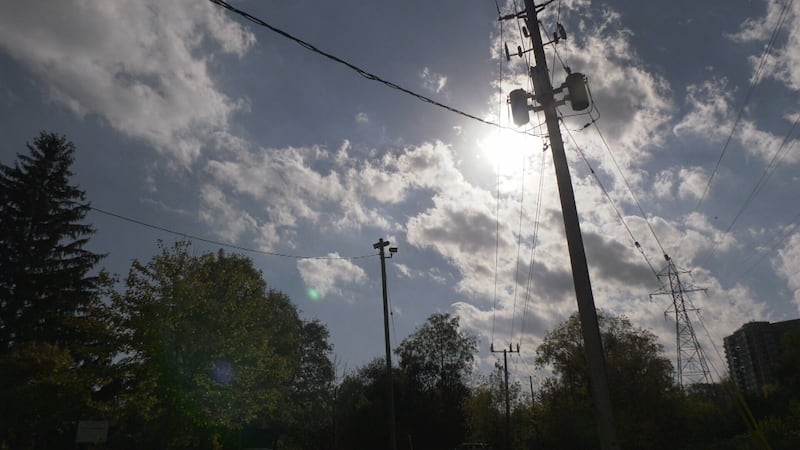
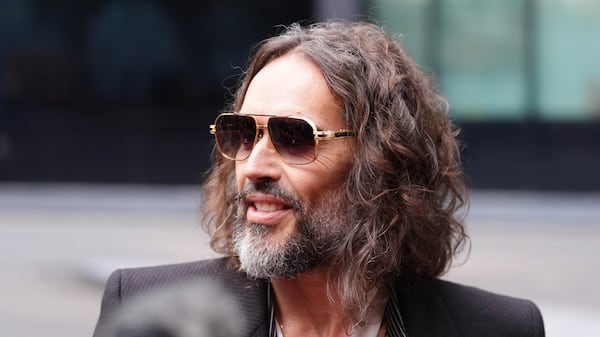
Mark Sutcliffe says, if re-elected mayor of Ottawa in October, he will prioritize climate resiliency in city infrastructure, pledging to prioritize $500 million of infrastructure investments over the next four years. The incumbent mayor released his 22-point environmental platform on Wednesday, saying he would “expand the application of a climate lens for infrastructure investments,” including upgraded storm sewers, ditch enhancements, energy infrastructure upgrades, and improved community cooling, with a particular emphasis on flood-prone neighbourhoods. “We know that with climate change, extreme weather events that used to happen once a century are now much more frequent,” said Sutcliffe in a news release. “We must be ready, and we must protect our neighbourhoods. My commitment is to invest whatever is necessary to protect our residents from flooding and other extreme weather.” The 2026 City of Ottawa budget included $239.6 million for integrated road, water and sewer projects, $24.5 million for water pipe rehabilitation, $36.5 million to replace and upgrade drainage culverts, $5 million for Climate Ready Ottawa projects, $4 million for priority mitigation projects—such as accelerating building retrofits, electric charging infrastructure for the City fleet, implementing renewable energy initiatives and developing a district energy strategy—$17.5 million for tree and forest maintenance and $2.3 million for tree planting programs. He said his platform includes a one-time $500,000 investment to install electric transfer switches in key community facilities across the city, so that every ward has at least one facility that can connect into a generator and act as a safe gathering point during or after an extreme weather event. He is also promising to “reform Better Homes Ottawa” to allow lower minimum loans and lower interest rates for energy efficiency retrofits and climate adaptation, expand loan and grant programs to benefit property owners who need to upgrade infrastructure such as sump pumps, wells, ditches, and septic systems, and create a new grant program for upgrades to climate resiliency. The plan also includes $400 million to modernize city facilities, working with Hydro Ottawa on a 10-year strategy to retrofit, upgrade and replace city facilities to improve efficiency. He also intends to accelerate the city’s Green Fleet Strategy to transition all municipal vehicles to zero-emission vehicles by 2035 instead of 2040. The 2026 budget included $38.1 million to replace vehicles, including the continuing transition of Ottawa’s fleet to electric, hybrid and low-emission vehicles. More trees, cooler sidewalks The proposed plan also includes changes to tree planting in the city, including a pilot program that offers a property tax rebate for residents who plant mature trees on their own property outside of established public programs, and using community groups, forestry staff and artificial intelligence to identify ideal places to plant more trees. Another proposed pilot project includes a “cool pavement pilot,” which Sutcliffe says would explore the impact of temperature reductions in high-heat, low-tree-cover areas. Sutcliffe also promised to direct staff to assess and seek opportunities to update wetland designations to preserve more wetlands in the city. He also promised to double overall investments into the acquisition, preservation, and enhancement of natural heritage lands and ecologically sensitive lands. The plan also addresses Ottawa’s aging landfill, with pledges to direct staff to enter into a purchase agreement for composters in order to offer them at heavily discounted prices to residents and business owners, in order to divert more food waste. “Every generation has a responsibility to leave Ottawa better than it found it,” Sutcliffe said. “There is more work to do, and this plan is about continuing to invest strategically and responsibly to protect our environment, strengthen our communities and prepare Ottawa for the future.” The infrastructure question Sutcliffe’s pledge comes on the heels of criticism from opponents over the state of infrastructure in the city. Three-term councillor Jeff Leiper, who is running for mayor this year, accused Sutcliffe and previous mayors of underfunding city infrastructure. “We all know that maintaining what we own is cheaper than replacing it later, and Sutcliffe and previous mayors have put us in the unfortunate position of having to play catch up now,” he said when announcing his infrastructure platform, which would include a proposed 1 per cent levy, if he is elected mayor. Sutcliffe, meanwhile, is pledging to cap property tax increases at no more than 2.5 per cent per year for the first two years of the next term, if re-elected. Stormwater infrastructure was brought into stark focus on Canada Day when up to 160 millimetres of rain fell on the city in a matter of hours, flooding streets and thousands of basements. On Wednesday, Sutcliffe said at city council that city staff were still tabulating the total costs and would be applying for provincial funding. Mayoral candidate Alex Lawson is promising to end the three-item curbside trash collection limit and is also promising to build a waste-to-energy plant if elected. He is also promising to improve rural ditch drainage in part by contracting rural landowners with heavy equipment to do some of the work. Candidate Neil Saravanamuttoo is pledging to work with cities across Canada to push senior levels of government to sign a new fiscal deal that gives municipalities a greater share of tax dollars to go toward maintaining critical infrastructure, if elected. Fourteen candidates are running for mayor of Ottawa: Queen Divine Priya Amber Bakshi, Zed Chebib, Bernard Couchman, Suraj Harish, Alex Lawson, Jeff Leiper, Geoff Nicholas, Josh Rachlis, Neil Saravanamuttoo, Ali Shayvard, Jacob Solomon, Mark Sutcliffe (incumbent), Amjad Ali Syed, and Peter Westaway. Election day is Oct. 26.