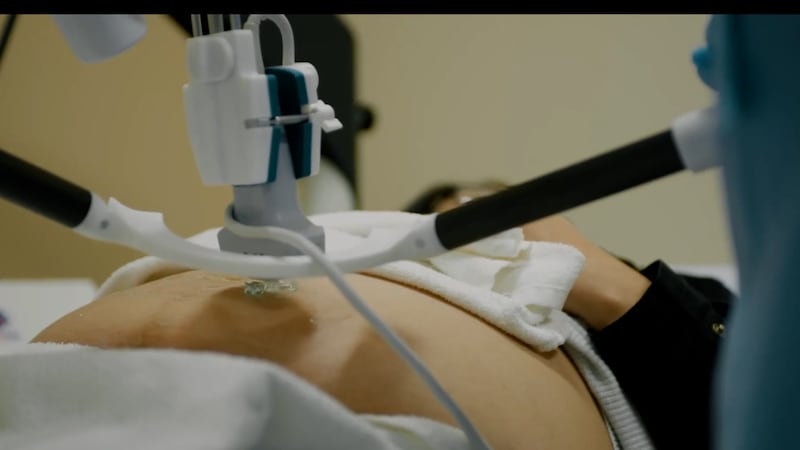
A new team of pediatric specialists assembled at Jim Pattison Children’s Hospital is expanding access to advanced epilepsy care in Saskatchewan, allowing more children to receive complex brain surgery closer to home. For 13-year-old Regina boy, Noah Dobson and his family, that care came at a critical time. After years of seizures and a previous brain surgery, Noah underwent Saskatchewan’s first pediatric epilepsy surgery guided by stereoelectroencephalography (SEEG), this summer. Noah’s life changed when he was 11 and began having seizures caused by a brain tumour. “He was put on three medications at the time. They seemed to be working. Unfortunately, the seizures ended up coming back and getting worse,” his mother, Charlene Dobson, told CTV News. Noah underwent surgery in 2024, but his seizures continued, eventually leading his medical team to consider another operation. In July, specialists at JPCH used SEEG to pinpoint where the seizures were starting in Noah’s brain. The procedure involves placing thin electrodes into specific areas of the brain to directly record electrical activity. Unlike a routine scalp EEG, SEEG can monitor deeper areas of the brain and help specialists identify where seizures begin and how they spread. “And actually, we found that it was not just the tumour, it was also part of the brain called the insula,” pediatric neurosurgeon, Dr. Amit Persad said. That information helped guide the next stage of Noah’s treatment. At the end of July, surgeons removed a section of brain tissue identified as being involved in his seizures. A major consideration was preserving areas responsible for important functions, including language and vision. “We want to try to avoid those areas, obviously to not cause any problems, but to still treat the epilepsy he was having. So that’s the procedure that Noah had at the end of July. And it went very well for him,” Dr. AnneMarie Denny, a pediatric epileptologist at JPCH, said. Noah has been seizure-free since the surgery less than two weeks ago and it’s an encouraging early result for his family. His case also marks an important milestone for pediatric neurological care in Saskatchewan. Before SEEG became available at JPCH, children requiring this level of specialized epilepsy investigation and surgery would have had to leave the province for treatment. “They don’t need to travel to other provinces or even other countries to have these done. We can be close to family,” Dr. J.P. Appendino, a pediatric neurologist at JPCH, said. Being able to do this in Saskatchewan puts the province among larger centres offering highly specialized epilepsy care. “Having this procedure available here puts Saskatchewan right up there with world-class hospitals, including Harvard in Boston and Los Angeles,” Appendino said. For families, being able to stay close to home can mean less travel, fewer disruptions to school and work, and continued support from family and their communities. For children with drug-resistant epilepsy, accurately identifying where seizures begin can help doctors determine whether surgery is an option and how it can be performed while protecting critical areas of the brain. When treatment is successful, seizure freedom or a significant reduction in seizures can improve a child’s safety, learning, sleep, independence and ability to participate in everyday activities. For Noah, the goal now is much simpler: getting back to being a kid. In just over a week, he expects to return to Grade 8 full time, which is something he hasn’t been able to do for some time because he has been in and out of treatment. “He is literally like a local celebrity at his school,” Charlene Dobson said. Noah said he is looking forward to seeing his friends and returning to school. After a summer very different from that of his classmates, he knows his return to school will come with plenty of questions. A donation by supporters from across the province raised $1.2 million to bring ROSA to RUH – that’s the robot used to assist in SEEG. It was made possible by a $700,000 lead gift from Merlis Belsher and his family. The robot is affectionately named Erin, in honour of Belsher’s granddaughter.