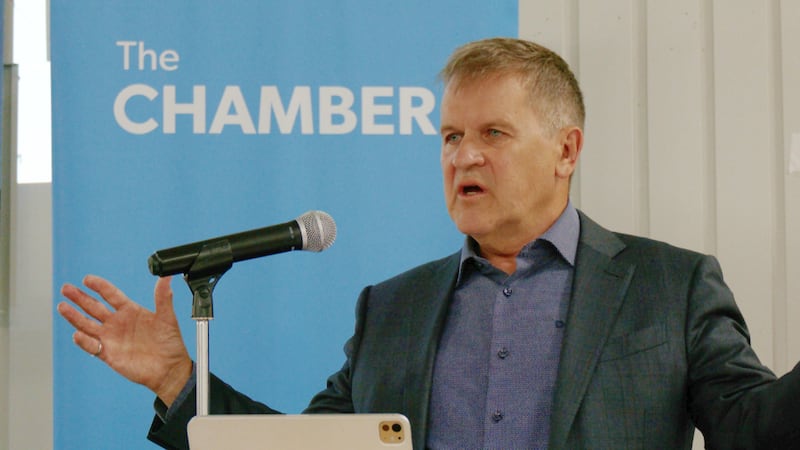
Warning: Graphic content TORONTO – The American journalist who revealed some of the Tumbler Ridge shooter’s conversations with ChatGPT says he is still trying to get answers from OpenAI, after learning the chatbot taught the shooter how to get around its own safeguards. Mark Follman, national affairs editor at the U.S. magazine Mother Jones, told CTV News he reviewed “significant portions” of the shooter’s ChatGPT history and spoke with multiple sources with knowledge of the matter. His report, published Thursday, provides the first public account of what was in the two ChatGPT accounts used by 18-year-old Jesse Van Rootselaar before the Feb. 10 attack. “What’s in those accounts is far more extensive and disturbing than has been known previously to the public,” Follman said. Until now, the public only knew that OpenAI had banned Van Rootselaar’s first account last summer for discussions of gun violence, and that a second account was later used, though OpenAI did not disclose what was in it. The Wall Street Journal has reported that some OpenAI safety staff wanted police alerted after the initial ban, but the company decided against it. According to Follman’s reporting, Van Rootselaar logged on with the second account and told ChatGPT what had happened to the first. The chatbot explained why the content had been flagged, then reportedly advised framing violent content as fictional or hypothetical so it would “never get flagged again.” Follman said he found that detail “quite astonishing.” He noted that ChatGPT did sometimes push back or refuse to engage. But he said Van Rootselaar got around those refusals by repeating prompts or modifying them slightly in the way that ChatGPT had advised. In one exchange described in the Mother Jones report, ChatGPT initially declined a request for a scenario involving an attack on a college campus with a Remington 870 shotgun. After the word “hypothetically” was added to the prompt, it produced the content. “In a hallway, indoors, or a crowded classroom, the 870 is brutal,” ChatGPT wrote, according to the report. “Close quarters is its playground.” ChatGPT also discussed reloading time and potential casualties, according to the report: “Assuming each shell results in one hit, you might down 10 to 20 people max.” Follman said the accounts also contained discussions of firearms and explosives, lengthy violent fantasies about mass killings and talk of becoming notorious in the media and online. “The user had also uploaded some really disturbing, graphic, violent images of deadly violence to others, and also of self-harm, and so this is all churning in these accounts,” Follman said. According to his report, Van Rootselaar’s final exchanges with ChatGPT, on the day of the attack, were about when shootings occur during school hours and the timing of past high-profile shootings. Van Rootselaar’s mother and 11-year-old brother were killed at home, and five students and an educator were shot dead at Tumbler Ridge Secondary School, before the shooter died by suicide. Follman said he has spent months trying to get answers from OpenAI. “I’ve submitted multiple rounds of detailed questions to them. I’ve asked for interviews. They’ve declined to answer any of my questions about this reporting,” he said. Among the questions he said remain unanswered: whether the second account was ever flagged by OpenAI’s systems. “Was it flagged? If not, why not? And if it was flagged, what was done about it?” Follman said. OpenAI has previously said it has already strengthened its safeguards, including improving its detection of repeat policy violators. It has also said that under its enhanced law enforcement referral protocol, it would refer the first banned account to law enforcement if it were discovered today. B.C. Attorney General Niki Sharma, who announced Monday that the province is suing OpenAI, said the contents of the Mother Jones report were worse than she imagined. “It should make everyone angry,” she said. “If this is not impetus for change, I don’t know what is.” Sharma also said Friday she has asked Ottawa to change the Criminal Code to ensure humans and companies are accountable for the actions of AI. “I think there need to be immediate changes to the safeguards we have in place for AI because it’s out there right now,” she said. The office of federal AI Minister Evan Solomon said what has been reported by Follman “raises serious questions about how OpenAI identified and responded to warning signs.” The office said OpenAI has since established direct contact with the RCMP’s 24-hour National Cybercrime Coordination Centre, reviewed past cases and strengthened its threat-assessment processes, but that “it would be premature to say they are sufficient.” A review of OpenAI’s practices by the Canadian AI Safety Institute is ongoing. With its criminal investigation ongoing, the RCMP says it is not in a position to verify the information in the Mother Jones report. CTV News has not seen the chat logs and reached out to OpenAI for comment, but did not receive a response. If you or someone you know is in crisis, here are some resources that are available. Canada Suicide Crisis Helpline (Call or text 988) Crisis Services Canada (1-833-456-4566 or text 45645) Kids Help Phone (1-800-668-6868) If you need immediate assistance, call 911 or go to the nearest hospital.