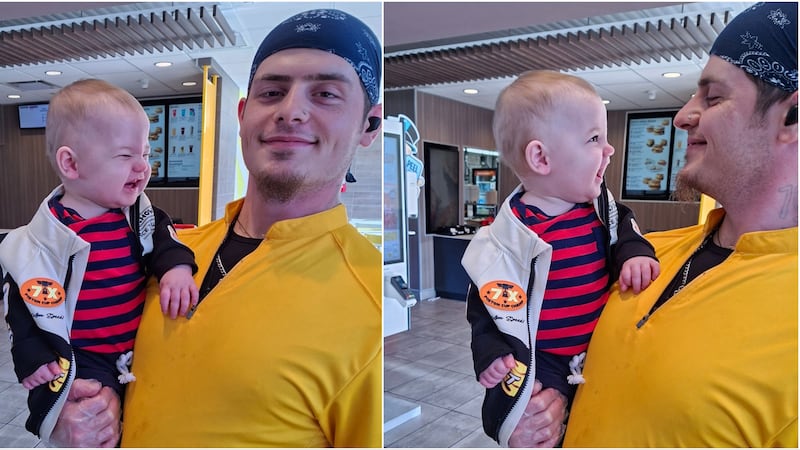
Warning: This story mentions suicide. A list of crisis resources is included at the end of this article. A Fraser Health psychiatric nurse testified she repeatedly tried to contact Chase De Balinhard’s mother as police responded to the 15-year-old, but was unable to reach her before he was fatally shot. Ashley Strasdin, a registered psychiatric nurse with Fraser Health, became emotional Thursday as she recounted Chase De Balinhard’s final moments during a coroner’s inquest into his death. “I was at Chase’s head and I closed his eyes, and I just told him he was free, and that, you know, he’s cared for and he’s loved,” Strasdin testified, her voice wavering. Chase was fatally shot by an RCMP officer on Feb. 9, 2025, after police responded to reports of a suicidal teenager carrying what appeared to be a firearm near Clayton Heights Secondary School. The weapon was later determined to be a pellet gun. Strasdin was working with Car 67, a partnership between Fraser Health and police that pairs a psychiatric nurse with an officer to respond to mental health emergencies. She testified that just one Car 67 unit was available to serve all of Surrey that day — a situation she said remains unchanged. When the emergency call came in, Strasdin and her policing partner, Const. Mark Peterse, headed toward the scene. As officers prepared their response, Strasdin searched Fraser Health records for information that could help them understand Chase’s behaviour. She located a January psychiatric assessment identifying autism, ADHD and obsessive-compulsive disorder, along with information about his medications. Strasdin said she shared those diagnoses with officers as they gathered near the scene. “We gotta take this into consideration,” she recalled telling them. However, she acknowledged she did not provide officers with specific communication strategies. “I don’t know how to communicate with him. I’ve never interacted with him before,” she testified, explaining that autistic people can have very different communication needs. Strasdin had previously spent approximately five years working as a behavioural interventionist with autistic children before becoming a psychiatric nurse. She told the jury autism is not a major focus of psychiatric nursing education, and she had not received specific Car 67 training on communicating with autistic people in crisis. Attempts to contact Chase’s mother Strasdin testified that she repeatedly tried to contact Chase’s mother, Crystal, using a phone number listed in his medical records. She hoped Crystal could identify familiar words, interests or other approaches that might help officers calm her son. “Parents, whoever’s taking care of the individual, knows them the best,” Strasdin explained. She said she could not remember whether the calls went to voicemail but was unable to reach Crystal. Crystal has previously testified that she received no call from police or emergency responders before her son was shot. The nurse also acknowledged she had not located a safety plan prepared for Chase in 2023. The document, discussed during questioning by the family’s lawyer, identified strategies Chase could use when distressed, including listening to music and looking at pictures of his cat, Ava. It also identified people who could help him during a crisis. Strasdin said she was searching through extensive clinical records while monitoring a rapidly evolving emergency. She agreed that making safety plans easier to locate could help first responders, but cautioned that those plans must be regularly updated as a young person’s needs and triggers can change over time. She also acknowledged that although the January psychiatric assessment did not identify an imminent or active suicide plan, she had not communicated that detail to responding officers. Counsel for the RCMP emphasized the limited time available to review medical records and the importance of keeping police radio communications clear during a firearms emergency. ‘Her scream is something I will never forget’ Strasdin remained inside the police vehicle as officers pursued Chase, explaining that the reported presence of a firearm made it unsafe for her to approach. When she heard that Chase had been shot and officers were requesting an automated external defibrillator, she drove toward the scene, grabbed emergency equipment and ran to help. Const. Peterse was performing CPR when she arrived. Strasdin took over first aid and continued assisting emergency responders until Chase was pronounced dead. She was also at the scene when Chase’s mother arrived. “Her scream is something that I will never forget,” Strasdin told the jury, visibly emotional. The nurse also addressed criticism of the police response that circulated publicly following the shooting. She said she went to work the following day because she wanted Chase’s mental health team to understand what had happened and how responders had tried to help him. Strasdin described seeing online comments suggesting Chase had been hunted by police and rejected that characterization. She said she wanted his care team to know that he had been treated with compassion. “He was cared for to the absolute last second,” she testified. Strasdin also recounted passing along thanks to officers from members of Chase’s mental health team, who she said believed responders had done everything they could. Calls for better information and more resources Strasdin’s testimony raised questions about the information available to mental health professionals during emergencies. She said Car 67 nurses can access Fraser Health records, but generally cannot see detailed clinical information held by other health authorities. When asked by the presiding coroner whether broader access to medical records across B.C. would help, Strasdin replied, “absolutely.” She also supported making current safety plans more accessible to first responders and providing general guidance on responding to autistic people in crisis. However, she cautioned against automatically contacting family members in every situation, saying doing so could sometimes put vulnerable people at greater risk. The inquest also heard that Car 67 has just one unit available at a time for all of Surrey, despite the city’s size and growing demand. Asked whether more psychiatric nurses were needed, Strasdin was unequivocal. “Absolutely. We could use one in every single district in Surrey.” The coroner’s jury is examining the circumstances surrounding Chase’s death and may make recommendations aimed at preventing similar tragedies. An earlier investigation by the Independent Investigations Office of B.C. concluded the officers’ use of force was legally justified. The inquest is not intended to determine criminal or civil liability, but to establish the facts surrounding the death and consider ways to improve public safety. This is a developing story. CTV News will continue to provide updates as the coroner’s inquest unfolds. For more background on Chase’s death, the circumstances surrounding the police response and questions about autism-specific training, read CTV News Vancouver’s award-winning investigative series, Lost in Translation, and our previous coverage of the inquest. If you or someone you know is struggling with mental health or thoughts of suicide, help is available. In Canada, call or text 988 for free, confidential suicide crisis support, 24 hours a day, seven days a week. In B.C., you can also call 310-6789 (no area code required) for mental health support. If someone is in immediate danger, call 911.