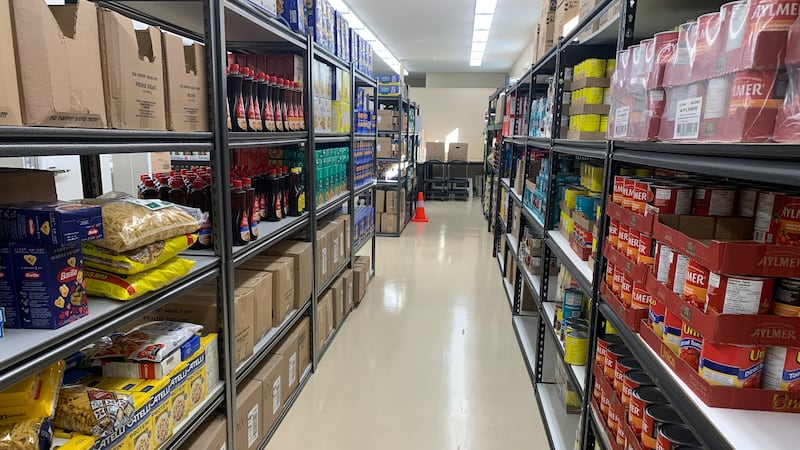
A new report indicates food insecurity in New Brunswick has increased significantly over the last few years. The report issued by Feed NB is based on the results of an environmental scan of 68 food banks, community kitchens, and shelters that began in March 2025. The scan was conducted by a consultant, Rick Hutchins, with 30 years of experience in the field. Food bank use has gone up by 60 per cent since 2022 and community kitchens are serving 24 per cent more meals, according to the report. Rising costs for housing, groceries, transportation and utilities have put increasing pressure on household budgets, driving more families to seek food assistance. The report finds demand is growing fastest among working households, students, and newcomers to Canada. Children and youth account for one-third of all individuals served by food banks and households whose primary income comes from employment saw usage rise by 159 per cent during the study period. “Food banks have been absorbing much of the pressure of affordability struggles and the growing inadequacy of household incomes across the province, serving increasing numbers of individuals who are struggling to afford life’s necessities,” reads the report. The organizations that serve those with food instability are also under significant strain. The report points to aging infrastructure, volunteer shortages, staff burnout, and insufficient funding to keep pace with rising costs and increasingly complex client needs. “The current state of food banks in our province is precarious. Food banks and community kitchens in New Brunswick have become essential services rather than temporary solutions to food insecurity,” reads the report. Stephanie Sirois, executive director of Feed NB, said many volunteers are essentially working fulltime shifts without pay due to the lack of other volunteers. “Food banks were never designed to service this level of demand,” Sirois said. “It’s been crazy for the last like three, four years especially. “We can’t keep going on like this. There needs to be a shift in more upstream work to reduce the demand on the front line.” Evelyn McNulty, executive director of Romero House Soup Kitchen, said they served roughly 82,000 meals annually before COVID-19, but that number has grown to 150,000. “I believe strongly that there will always be people in the community that we need to catch that can’t look out for themselves, but this is ridiculous the amount of people needing help,” McNulty said. “I think we’re all getting poorer every day because things are not changing, and I think instead of trying to make the people providing a service feel like they need to be better at it -- faster, quicker, better, do more, do more, do more -- we need to find out why people are falling in the river in the first place.” The report’s authors provided the following recommendations: With files from CTV News Atlantic’s Avery MacRae For more New Brunswick news, visit our dedicated provincial page.