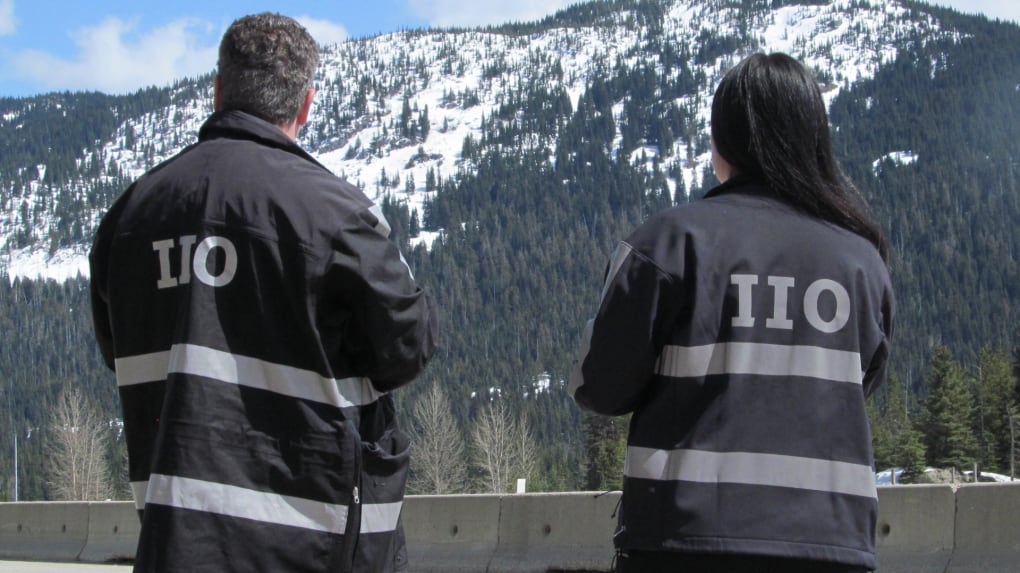
The head of the B.C. agency that investigates police-involved cases where people die or are seriously harmed is defending the decision to change the way it provides the public with information in cases where an officer may have committed an offence. The Independent Investigations Office of B.C. is the civilian-led oversight body that is called in to probe these incidents, whether or not there are allegations of wrongdoing. Created in 2012 after public inquiries into two high-profile fatal incidents, the IIO was established “in response to growing public concern regarding police accountability and calls for greater transparency in oversight” and to “enhance public confidence in police accountability across British Columbia,” according to its most recent annual report. According to experts and advocates, a policy change quietly made earlier this year about how information will be shared represents a fundamental betrayal of the agency’s raison d’etre and its core values. Once the IIO’s investigation of an incident that resulted in death or serious harm is complete, there are two possible outcomes. If the chief civilian director determines there are grounds to believe an officer may have committed an offence, a report is sent to the B.C. Prosecution Service for consideration of charges. If the investigation does not find reasonable grounds to believe an offence may have been committed, the file is closed—which is the outcome in the vast majority of cases. IIO director defends change In March of this year, the IIO quietly changed its policy on how it will communicate about cases where a file is forwarded to the BCPS. “In previous years, the IIO typically issued a media release when the (chief civilian director) made the decision to refer a file to the BCPS for consideration of charges. Upon review of this practice in early 2026, the decision was made to amend the IIO’s policy and, in most cases, the IIO will not issue a media release prior to the BCPS completing its charge assessment process,” the 2025/26 annual report said. “It is important to remember that as a civilian oversight agency, the number of files referred to the BCPS for consideration of charges and the number of cases in which charges are approved are not measures of the IIO’s success. Using these as measures of the IIO’s performance assumes that most officer or detention guard actions or inactions are unlawful, which is not the case,” the report continued, hinting at the reason for the change. CTV News interviewed IIO Chief Civilian Director Jessica Berglund on Monday. She explained the rationale behind the change. “Really, what we are preventing or trying to prevent happening at the IIO is that build up, a public expectation, that a referral from the IIO to Crown counsel means that there has been a finding of guilt about the officer that the charges are being recommended against,” she said. “It’s not a move away from notifying the public, it’s really just the timing.” Berglund said the affected person or their family will still be notified when a report is forwarded to the prosecution service, as will the officer who was the subject of the investigation. “I maintain that we are doing it to balance the important values of transparency and accountability with procedural fairness and the importance of not having someone’s guilt or innocence prejudged until Crown makes that charge approval,” she said. The IIO never identifies the officer or officers involved, and the prosecution service only releases a name if a charge is approved. The identity of the person who has died or suffered serious harm is also never provided by the IIO. However, in some cases—most often cases where a person has died—family members or advocates independently choose to identify the affected person. The IIO still has the discretion to issue a public statement when a file is sent to the prosecution service, Berglund said, adding that the most likely scenario in which that would occur is in a case of “extraordinary public interest.” Asked what prompted the review of the policy, Berglund did not point to a specific case or criticism. “Like any agency, we are constantly trying to improve and modernize our practices,” she said. Berglund said, in retrospect, the IIO could have announced this change to the media in addition to including it in its annual report. “That is something we could have done. So, we have learned, and in the future, if we make changes like that, we will endeavour to let the media know proactively.” A significant milestone Megan McDermott, policy director for the B.C. Civil Liberties Association, pointed out that investigations, particularly those in which the IIO does decide to forward a report to Crown, can take months or even years. She describes the IIO’s decision to forward a report to Crown as a significant milestone in a lengthy process for high-stakes and often high-profile cases. “From watching some of these files go through the system, and from knowing some of the affected people involved and some of the relatives left behind, it’s a really big milestone for them to even get to that point,” McDermott said. “It’s really, really big, not just for the affected people, but for the public, to know that this is where they’ve gotten to.” Last week, the B.C. Coroner’s Service announced an inquest into the death of Jared Lowndes, a 38-year-old Wet’suwet’en man who was killed by the RCMP on Vancouver Island. Indigenous people continue to be overrepresented as “affected persons” in IIO files, comprising 16 per cent of people who die or are seriously harmed while making up six per cent of B.C.’s population. The IIO was called in after Lowndes was gunned down in the parking lot of a Tim Horton’s on July 8, 2021. In December of 2022, then-director Ronald McDonald issued a public statement saying the IIO’s investigation had “determined that reasonable grounds exist to believe that three officers may have committed offences in relation to various uses of force” and that a report would be forwarded to Crown. Another announcement came in October of 2023, when McDonald said the report had been completed and forwarded. The decision not to approve charges was announced by the BCPS in April of 2024—two years and nine months after Lowndes was killed. If the current policy were applied to that case, the media and the public would not have known the file was forwarded to the Crown by the IIO for 33 months. A step backward? Erick Laming is a criminologist and author of the recently published book Policing the Police: International Perspectives on Police Oversight. He describes the IIO’s policy change as “backward” and an “abdication of responsibility.” Delaying or eliminating a “simple communication” in these cases is not, in Laming’s view, a move that demonstrates a commitment to transparency—and transparency is one of the cornerstones of effective oversight, particularly in policing and particularly for the IIO which was founded with the goal of improving the public’s trust. “An oversight body should be or should want to be more transparent with the public because that’s the body that the public is trusting. Getting trust is very difficult; losing trust is very easy to do,” he said. “We don’t get that much information from these bodies to begin with. So, the fact that that’s something that you’re taking away. It is problematic.” McDermott agrees. “The model that we have right now isn’t as transparent as we think it should be. So, to hear about less transparency is obviously a concern,” she said, adding that the BCCLA has advocated for changes including providing significantly more information about the officers who are under investigation “It seems like it’s reverting back (to) a culture of secrecy around investigations into police and whether or not police have possibly committed offenses, either on or off the job. Short of pointing to a practical example of how it’s harmful. It’s really hard to swallow that we’re now going to be getting less information than we had been.” ‘You should want to be independent’ Berglund also said the change was made to align the IIO with other agencies that recommend charges to Crown—including police departments. “You will not see most public agencies, including police, unless there’s a high-profile matter, issuing news releases advising that matters have been referred to Crown counsel,” she said. But Laming argued that civilian police oversight agencies like the IIO should be wary of adopting policies that too closely align with those of the police. “You should want to be kind of removing yourself from looking like law enforcement, even though you are. “In the public’s perspective, there’s a lot of distrust anyway with law enforcement. You should want to be independent; that’s the whole point.” McDermott also takes issue with the argument that the change reflects alignment with police practices. “We often see a lot more information coming out from policing bodies in B.C. when they’re investigating members of the public,” she said, noting that police routinely issue news releases about ongoing investigations, in some cases releasing descriptions, photos and videos. “Police in some cases do go out of their way and share a lot of what might be private information about an individual or about a specific criminal incident, and those are in cases where they don’t always end up referring charges over to the B.C. Prosecution Service.” The stakes are higher when an officer or officers are under investigation by the IIO, McDermott argued. “This is an official with a gun and a taser and a whole bunch of other weapons, and they’re able to really restrain us and potentially violate our fundamental freedoms and liberties, to the point of putting us into a cage or taking our life away,” she said. “We think that it’s of utmost importance that there should be a lot more disclosure and transparency.” Berglund maintained that the public will not receive less information than it has in the past. “It’s not a decrease in transparency, it’s just a decrease in the timing of when the public will learn of the decision,” she said. The B.C. Prosecution Service has confirmed to CTV News that it will continue to release public statements at the end of the charge approval process in almost every case where a file has been forwarded by the IIO. “The BCPS recognizes there is a very significant public interest in charge assessment decisions arising out of IIO investigations,” a spokesperson wrote in an emailed statement. “The change in the IIO’s policy to delay the announcement of file referrals until the charge assessment process has concluded has not resulted in a change to BCPS policy or practice.”