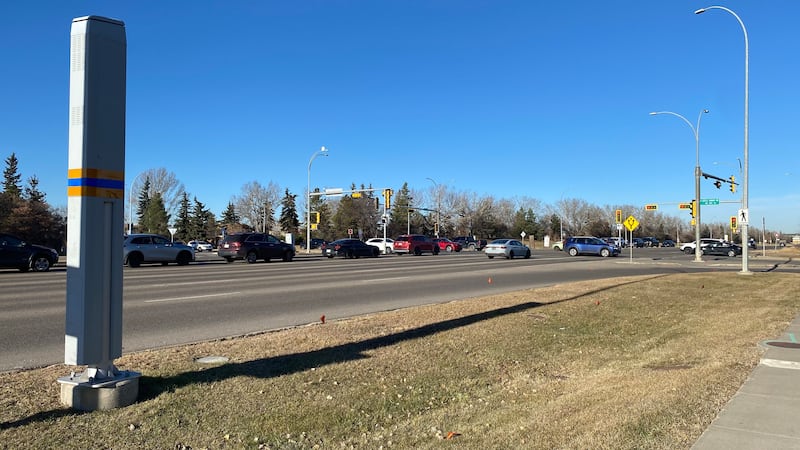
A city official says the Alberta government changed its criteria for allowing municipalities to use speed-on-green photo enforcement at intersections. In an email obtained by CTV News Edmonton, a deputy city manager says the province changed the rules before rejecting or ignoring seven City of Edmonton applications for the enforcement tool, writing, “These updated criteria had not been shared with municipalities.” The city says its cameras continue to collect data, showing the number of drivers travelling more than 30 kilometres per hour over the speed limit has more than doubled. “The business cases that we put together were to meet the criteria outlined in the 2025 guideline, under which we believe we met or exceeded criteria at all of those locations,” Jessica LaMarre, director of the City of Edmonton’s traffic safety department, told CTV News Edmonton on Tuesday. She says the 32 deaths on city streets last year were the highest since 2015. There have been 21 fatal crashes so far this year. “We know that this tool works,” LaMarre said. “It reduces speeds, it reduces crashes and it saves lives.” A memo from city administration sent to council two weeks ago said speeding has increased dramatically since the Alberta government banned speed-on-green photo radar and other enforcement tools in 2024. Staff told councillors the number of drivers caught travelling more than 30 kilometres per hour over the speed limit increased 128 per cent last year. The number caught driving 10 to 19 kilometres per hour over the limit rose 79 per cent. The province has approved the reinstatement of speed-on-green photo radar at one north Edmonton intersection. Transportation Minister Devin Dreeshen said at the time the other applications were not approved “because exemption-based criteria were simply not met.” A spokesperson for the Transportation Ministry said Edmonton must meet several conditions before speed-on-green photo radar can be reactivated. The intersection must have recorded at least 50 collisions, its crash rate must exceed that of similar intersections, and other traffic-calming measures must be deemed insufficient. To city councillor Michael Janz, the province’s decision to change the criteria without informing municipalities appears to be driven by ideology rather than data. The Ward papastew representative says his inbox is filled with complaints about road safety. “I don’t understand the political upside here to more death, higher insurance and more danger,” Janz told CTV News Edmonton. “Edmontonians want safe streets.” With files from CTV News Edmonton’s Jeremy Thompson