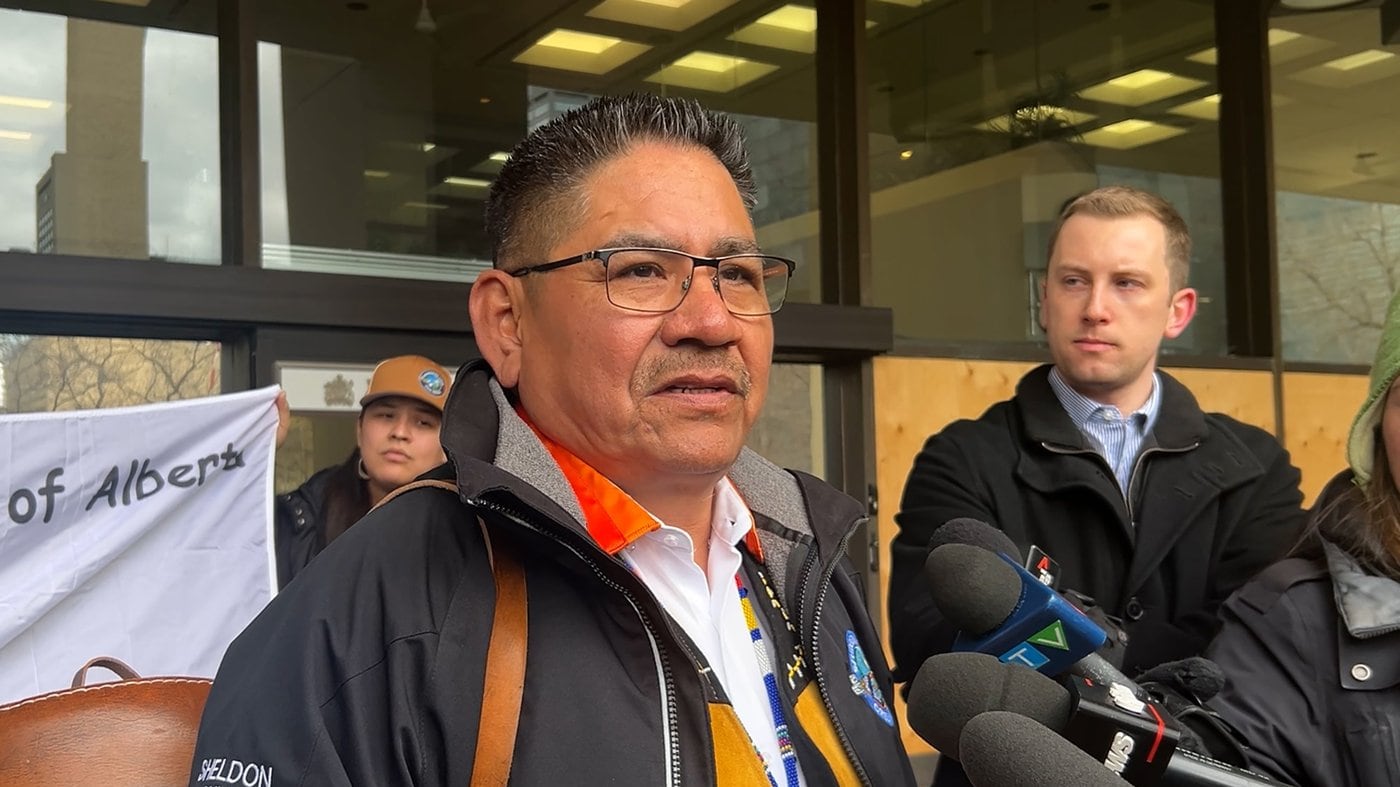
Legal experts say Alberta’s proposed data rules don’t go far enough as the province seeks to become a top destination for the energy-intensive industry. The critiques come as Ottawa is considering a request for a federal environmental impact assessment for O’Leary Digital’s Wonder Valley south of Grande Prairie. The supersized project would be one of the largest data centres in the world, costing $70 billion and building up to 7.5 gigawatts (GW) of capacity within a decade. At full power, the data centre would use 180 gigawatt-hours (GWh) of electricity a day, or 65.7 terawatt-hours (TWh) per year. The entire province of Alberta consumed 90.3 TWh in 2025, according to the Alberta Energy System Operator. The project has received significant pushback from the nearby Sturgeon Lake Cree Nation (SLCN) over a lack of consultation, and environmental concerns over the centre’s huge land footprint and plans to divert water from the Smoky River. SLCN has filed three judicial reviews relating to the project and asked Ottawa to step in and mandate an environmental assessment after the provincial regulator decided it didn’t need one. “We’re talking about something that is so gargantuan in scale,” said Francco De Luca, a lawyer representing the First Nation. “SLCN members exercise their treaty rights literally within the boundaries of this proposed project extensively,” he added. “They’re going to be directly impacted by this … the heat and the electricity, and the noise and the water consumption.” O’Leary Digital chief operating officer Zach Parston told CTV News Edmonton on Thursday that the company was aware of the First Nation’s request and that it would cooperate with the Impact Assessment Agency of Canada. “Wonder Valley is going through Alberta’s regulatory process, which includes robust environmental assessment and mitigation requirements,” Parston said in an email. “We will meet every requirement that applies to the project, whether provincial or federal, and we will participate fully in any process regulators decide is needed.” ‘A balance’: technology minister The Alberta government’s website explains that not all projects require an environmental impact assessment and that centres are assessed under the same environmental laws as other industries. The province recently announced new policies it says will further address Albertans’ environmental concerns over data projects. They include moving regulation of centres 10 megawatts (MW) and larger to the AUC, which would hold them to the same standards as power plants, including limits on noise and light; the province says it is also planning new water use limitations and ways to reclaim waste heat. “We wanted to make sure that we had a balance that could ensure that responsible projects could proceed [and that] irresponsible projects would never proceed,” Technology minister Nate Glubish said on Wednesday. “We support responsible data centre development. When done right, all Albertans will see a benefit from the economic growth and diversification that they will unlock,” he added. Projects that have already been approved and given permits will not be required to abide by the new policies, including the 1-GW Meta facility in Sturgeon County. Mayor Alanna Hnatiw told CTV News Edmonton she would have liked to have seen more from the province as construction goes ahead on Alberta’s first hyperscale centre. “We would like to see some further language around public reporting of both emissions and water use, and certainly further steps in airshed protection where power generation is a part of data centres,” Hnatiw said. Hnatiwk confirmed key approvals have been granted for another megasized data centre in Sturgeon County, the 800-MW Beacon Heartland Data Centre hub that is expected to come online late next year. ‘Not far enough’: legal experts Data centres connecting to the Alberta grid, like Meta’s, must bring along a gas-powered energy source; while the centres themselves may not contribute to air pollution, natural gas does. Recent research from the Harvard School of Health found that residents living near one gas-powered data centre in the U.S. were exposed to high levels of fine particulate pollution, which can travel long distances and deep into the lungs. The United States Environmental Protection Agency reports this pollution contributes to acidification of natural water ways, depletes nutrients in soils, damages forests and crops, and harms human lung and heart health. “Fine particulate matter is estimated to drive nearly 90 per cent of the health impacts from air pollution and is often not captured in traditional energy or climate assessments,” said the study’s co-author Michael Cork. Environmental lawyer David Wright said some of the province’s new policies are good but that setting minimal requirements won’t be enough to address the “magnitude” of the larger centres. “[It’s] a step in the right direction, but probably not far enough or comprehensive enough from the perspective of many potentially affected communities,” Wright said. He believes there are strong grounds for a federal environmental impact assessment of Wonder Valley due to the “massive” scale of it. “You’ve got fish and fish habitat species at risk, and then potential impacts to the welfare of Indigenous peoples, and the rights and interests of Indigenous peoples,” he said. “There is ample federal jurisdiction at issue to justify the federal government doing an assessment,” he added. The Impact Assessment Agency of Canada has acknowledged SLCN’s request and is considering designating the project as requiring a federal impact assessment. “It’s in no way a guarantee that they’re actually going to,” De Luca said. “I don’t have a crystal ball, obviously, but if you think about what this project is and how big it is, if the feds don’t designate this project, what project would they ever designate?” The federal agency has a 90-day legislated time limit to respond to requests for designation. With files from CTV News Edmonton’s Nicole Weisberg