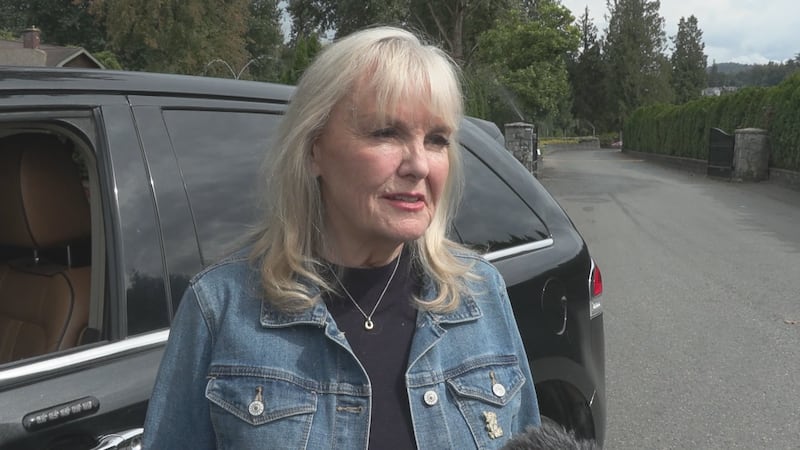
With Edmonton in Year 2 of a revamped zoning bylaw that allows blanket infill development across the city, some residents in mature neighbourhoods say they’ll be using the current discussion about how to tweak it as they consider who to vote for in this fall’s municipal election. That’s because they have expressed several concerns over the size, quality, location and parking considerations that have sprung up since developers started building under the new rules at the start of 2024. Crestwood resident Kelly Petryk says infill will be the deciding factor when she casts her votes. “Who’s going to advocate for thoughtful, responsible growth in this city? What is their plan? How are they going to handle that?” Petryk told media on Wednesday, posing rhetorical questions to candidates hoping to be elected to city hall in October. City council passed a revamped zoning bylaw two years ago after a five-year process to overhaul it, updating rules that hadn’t been broadly reviewed since 1961. The bylaw came into effect on Jan. 1, 2024. The changes allow developers to build larger and multi-unit buildings on most lots across the city. This year, after a four-day public hearing in early July, city council passed several changes to the infill bylaw, including a reduction of side entrances and length limitations for mid-block infill developments. Infills must also be further from the property line, add space between buildings, and require the street-facing facade to look more like a house with more windows and covered doorways. Three candidates to be Edmonton’s next mayor laid out their plans this week to address infill concerns. Tim Cartmell, Rahim Jaffer and Andrew Knack all believe the city’s infill policy will play a major role in the Oct. 20 vote. Cartmell is calling for reduced units and mandatory parking stalls. He believes mistakes have been made by the current council. “Frankly, I think that there was more of a focus on policy than there was on people,” Cartmell, who currently represents the southwestern Ward pihêsiwin and who was first elected to city council in 2017, told media on Wednesday. “A lot of this work was crafted during (the COVID-19 pandemic), when there was not a lot of opportunity for face-to-face engagement, and I think we left people behind.” Jaffer says he would repeal the blanket zoning bylaws that allow for this type of development in mature neighbourhoods. The former southside federal member of parliament told media on Wednesday he would like to see “something that assigns one parking stall per dwelling, the ability for neighbours to have input in the way that they’d like to see their neighbourhood develop, and to ensure that there’s accountability.” Knack, the city councillor for the west-end Ward Nakota Isga who was first elected in 2013, says the need for housing is high and that infill is the answer while preserving community character. “As mayor, I will bring forward a bylaw to protect mature trees on infill sites, and I will also work with property owners and the city to protect our heritage neighbourhoods by implementing and strengthening the heritage places strategy,” he told media on Tuesday. All three agree, though, that Edmonton needs to get creative to keep building more housing to meet demand as the city continues to grow. Richard Fott, a project manager for infill developer Eight Block, echoes past discussions around development in mature neighbourhoods in saying as the city grows, so too does demand to live in areas that have access to amenities such as those found in central neighbourhoods. “I think there are two-point-something people per lot in this community; there’s not a ton of rentals. It’s below 15 per cent rentals,” said Fott, who’s overseeing a project in Crestwood. “This neighbourhood has access to the river valley, access to LRT in the future, access to specialty schools, and so we’re providing an option for people to access all those things without having to pay over a million dollars for a lot, let alone a good house … “Edmonton is moving from a mid-sized city to a large city, and these are the problems that large cities face. You go to Vancouver, you go to Calgary, you go to Toronto, you don’t park in front of your house, and that’s just what happens when you turn into a large city.” Mayoral candidate Michael Walters released his plan for housing on Aug. 27. In regards to infill, he wants to reduce density from eight to four units mid-block, but six units would be allowed on corners. Walters would also require design standards to “ensure buildings look like homes, not warehouses.” He would not permit multiplexes on subdivided lots. With files from CTV News Edmonton’s Diego Romero