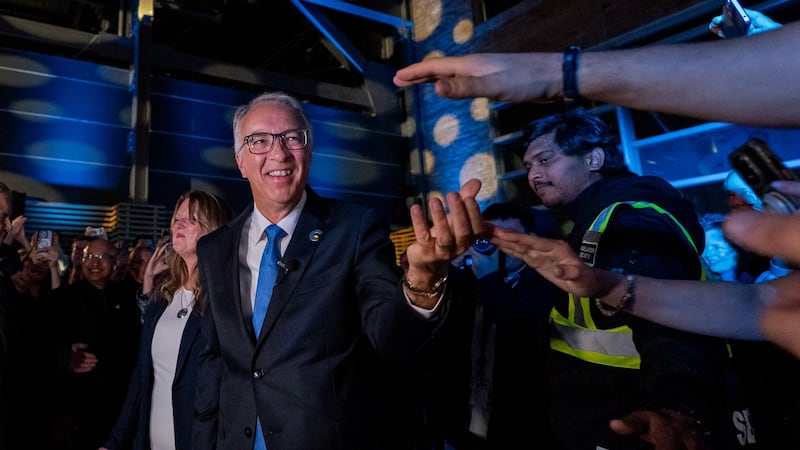
With just over a month to go until Edmonton’s municipal election, residents can expect to see more signs, door knocking, robocalls and texts. The campaign manager for mayoral candidate Tim Cartmell and the Better Edmonton political association said while they have been campaigning since the start of the year, things will ramp up in the coming weeks. “You’ll start to see a lot more of the digital ad buys starting to roll out,” Alex Hryciw told CTV News Edmonton. “We’ll also be employing a media buy as well so that’ll look like advertisements in the Edmonton Journal, advertisements on billboards as well. Advertisements on the sides of buses.” She said the campaign team has experimented with mass texting and has seen a positive response overall. “When we deploy an opportunity to kind of live text back and forth with Tim, we see a really good return on investment in that,” Hryciw said. “That’s easier for somebody because it’s in the moment, they have their phone in their hand and they’re ready to ask a question.” She said Cartmell and the other Better Edmonton candidates are also door knocking almost every night. “You kind of have to try and push all the buttons, and then you’re covering all of your bases and getting a very good kind of voter interaction.” What works and what doesn’t One political analyst CTV News Edmonton spoke with said in this digital age, he’s found campaigns tend to rely too heavily on social media. “I’ve been working on this and looking for the tipping point in terms of social media becoming a determinant of election results,” said Najib Jutt. “So far, if anything, it’s going the other way, where one-on-one interactions and in-real-life interactions are more meaningful than ever.” This year also marks a change in the structure of municipal campaigning, with a few party slates in the running for Edmonton council seats. Jutt argued the benefit of having a party slate is to help candidates with funding and officialize sign lists. He said even having a mayoral candidate on a slate hasn’t resulted in “a standout campaign from the other candidates who are mostly independents.” “I don’t see anyone who’s really put their finger on the pulse of what is really driving people in this municipal election,” he said. “In the municipal elections, turnouts are so low. It’s even more important that you identify early on what is going to get people to vote for you.” So while candidates are aligning themselves with a party message, he said, having like-minded individuals doesn’t absolve the need for specific messaging. Responses to campaigns Specific or not, candidates are door knocking, texting, calling and lining the roads with campaign signs, something not everybody takes kindly to. In a statement to CTV News Edmonton, the city said peace officers have received 60 complaints since June about campaign signs. “I don’t remember the names on them,” one student, Kaeli Nguyen, told CTV News Edmonton. Others said tactics like lawn signs don’t mean much to them. “I’ll still research the candidates to figure out who’s running and what they stand for,” one woman said. Still, Jutt said someone putting a candidate’s sign on their own lawn is an overall good indicator of the chance they’ll vote for you. It’s the public signs, he said, that can become an issue. “I’ve used them many times and you always get the same kind of backlash. It depends on how good your list [of potential voters] is that you’re using,” he added. “If anything, people might just associate you with the clutter, especially if you’re doing it for vanity, not visibility.” He said the effectiveness of campaign tactics often comes down to the discipline of the team behind it. Election day in Edmonton is Oct. 20. Five front-running mayoral candidates were set to debate on Friday night. All candidates, Hryciw said, are going to be using the feedback they’ve gotten on their campaign strategies and amping up what works. “I think any campaign has to weigh that for themselves,” she said. With files from CTV News Edmonton’s Connor Hogg