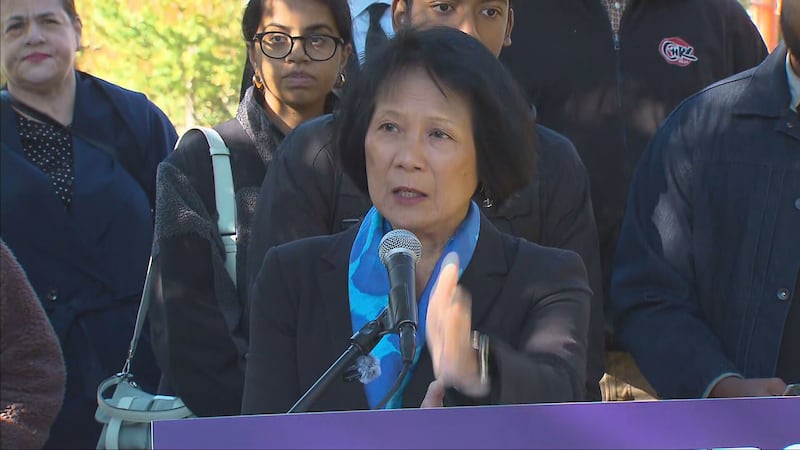
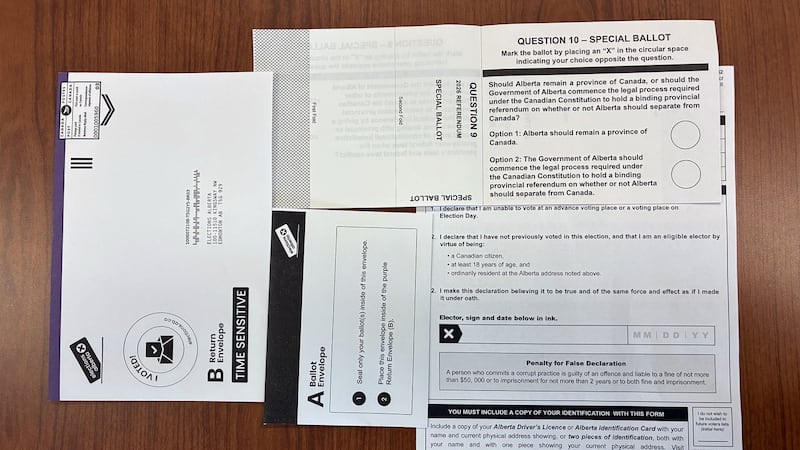
Matthew Wildcat, director of Indigenous governance and partnership at the University of Alberta and a member of the Ermineskin Cree Nation, joins Alberta Primetime’s Michael Higgins to discuss the frustration First Nations chiefs are feeling with the UCP government after a press conference earlier this week. This interview has been edited for length and clarity. Michael Higgins: What does their reaction speak to where this whole separation issue is concerned? Matthew Wildcat: It speaks to, certainly, trust being at very low levels, and that was also spoken to in the press conference as well. The Grand Chief, earlier in the press conference, said the premier is acting unlawfully, and she’s acting unlawfully because she refuses to engage and respect treaty rights in any sort of minimum way. If the premier is acting unlawfully, what that means then for Treaty 8 First Nations, they have to explore all the avenues available to them. One of the other things he said is if a referendum goes forward they’ll be encouraging their members to vote. When he talks about all avenues, it could be encouraging members to vote or the potential for blockades. MH: Manitoba Premier Wab Kinew, his criticism of Daniel Smith at the recent Western Premier’s Conference in Kananaskis, how much of a turning point is that in this whole conversation around this issue of duty to consult? MW: It is a real kind of bellwether moment, it’s something we can always reference back to with these competing interpretations of treaties. Section 35 of the constitution is quite short, actually, it just says that Canada recognizes existing Aboriginal and treaty rights of First Nation, Métis, and Inuit people. So it requires interpretation, it requires ongoing negotiation, dialogue back and forth to figure out what all of that means. One of the really big things that I want to point out with the duty to consult is that it only arises in cases where there is the potential or real infringement upon Aboriginal or treaty rights, upon Section 35 rights. If there is a full respect for treaty rights, the duty to consult does not apply because treaty rights are being respected, there’s no need to have a dialogue to trigger these consultations and to go and seek First Nation consent. It exists because treaty rights are going to be infringed upon or abrogated in some sort of way, and it requires a discussion around how that can be mitigated or needs to be avoided, but at the end of the day, the government still reserves to itself the right to infringe upon Aboriginal rights in the basis of the national interest. MH: I want to speak to your column in the Globe and Mail. You wrote that now is the time for First Nations to build a political strategy. By that, do you mean take a more active role in the provincial government dynamic? MW: Right now, what First Nations have been very effective at pursuing is press releases. We’ve had, by my count, at least 35 press releases over the last year. So, 47 of 48 chiefs and councils in the province have spoken out against Alberta separation in a public way. There’s also been a number of lawsuits. By politics, I mean the question of political power and negotiation and dialogue. When I talk about First Nations pursuing a political strategy, it is entering into those realms of dialogue and talk. It is just as important to have an inter-Indigenous politics where we pursue multilateral communication to advance goals as much as it is speaking with the provincial government. MH: How do you formalize that? What shape does that take? MW: It could take a bunch of different shapes. The chiefs have passed motions in the past, but I think something which would be a bit more weighty and substantive would be the possibility of having a treaty commission. In Saskatchewan, right next door, they have a permanent Office of the Treaty Commissioner and it’s been something which is seen in that province’s permanent curriculum around treaties in the education system. I’m not envisioning, necessarily, a permanent treaty office, but I think just a one-time treaty commission to explore the situation that we’re confronted with, and Indigenous people’s understandings of treaty give a form of reasoning which teaches how to live together in this current moment of where we’re trying to figure out some difficult issues. MH: Would someone need to step forward and take the lead on that? MW: I’m drafting right now, thinking about how it might take place. There’s the Assembly of Treaty Chiefs, which could organize it, there’s also the Assembly of First Nations. The treaty offices themselves could come together and organize it. But I think the first point would be that you have to get a committee together to explore what would be the terms of the commission? What would be its mandate? What is the question that’s going to explore? And any sub-questions like, should there be a permanent treaty office? Once you have a framework in place, then you can bring it back to the chiefs, they can discuss, amend it as they see fit, and they could strike if they wanted to, through ratifying in a vote, a treaty commission to go explore on their behalf. MH: Cindy Woodhouse Nepinak, national chief for the Assembly First Nations, led a delegation to Buckingham Palace earlier this week to speak to the king about separatism. How much of a role does that relationship play moving forward? MW: The treaties are sacred documents, they were signed to allow people to share the land together. And Indigenous people’s understanding of that is that it’s meant to ensure mutual flourishing for both parties. The original signatory of those treaties is the British Crown. First Nation people from treaty areas hold the Crown with very high regard, because that is who the partnership is with. Canada now exercises many of those rights and that relationship that was made with the Crown, but the foundation of that being with the British Crown is still fundamental in people’s understanding of treaties. MH: All of this is based around Albertans deciding, at some point, whether or not the province should leave Canada, but how much of this conversation is about Indigenous sovereignty? MW: The First Nations of Treaty 8 were really good in their opening line. Treaty 8 was signed in 1899, it predates the creation of the province of Alberta by seven years. They said simply, Alberta is subject to treaties not above them. Ultimately, there can be no talk of secession without focusing on Indigenous people’s sovereignty, and without focusing on treaty agreements.