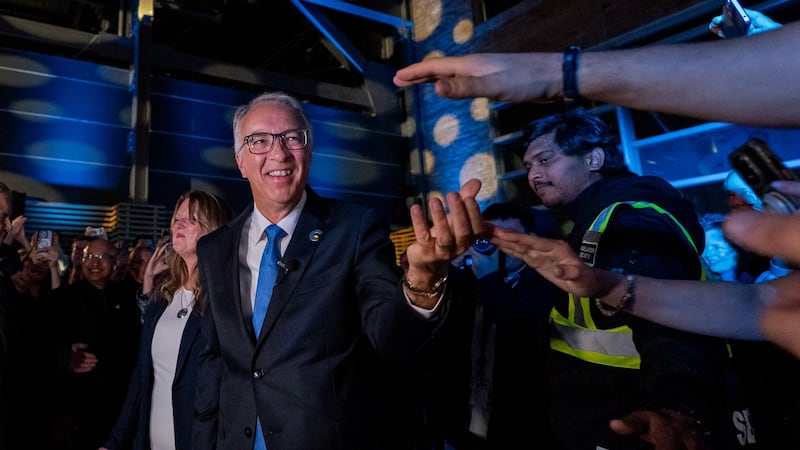
The Alberta government submitted a pipeline plan that would see a million barrels of oil being shipped daily from northeast of Edmonton to the southern B.C. coast, mirroring the same route as the Trans Mountain pipeline. Edson Mayor Kevin Zahara joined Alberta Primetime’s Michael Higgins to discuss the proposal. This interview has been edited for clarity and length. Michael Higgins: How would you rate your level of optimism around this pipeline proposal? Kevin Zahara: If I were to rate it on a scale of one to 10, I think it’s probably 9.5. I have very high confidence that this project is going to move forward based on the situation we are today with the Americans, with our own country, with the leadership that we have under Prime Minister Carney and Premier Danielle Smith, who both seem to be working very hard to repair a decade worth of difficulties between our province and the federal government. I think there is a willingness there and we see a willingness from British Columbia as well with this pipeline route to support it based on it being along the Trans Mountain route, which makes a lot of sense. MH: As you reflect back on the Trans Mountain expansion, how much of an impact would you say that it brought to your economy in the Edson region? KZ: We are the main hub for most of these types of projects. We do have some pipeline yards ready and available in our community and surrounding our community in Yellow County. We are a pipeline community so when TMX came through, it was a major boost to our economy. At the same time, we had the Cascade Power Plant being built so it did create a lot of pressure at the time, but that pressure was welcome for our business community, for industry, it was a very busy place. You go to Tim Hortons in the morning and you’d be waiting in line for 15 minutes every time. I think it’s really important, not just for Edson and Yellow County in the region, but for the entire country. We need to get our resources to Tidewater. We need to be an economic powerhouse. We’ve seen the recent announcement with Doug Ford as well, looking at the pipeline to the east. These are the nation-building projects that the Prime Minister is talking about and are critically important for our natural resources sector. Whether you’re talking oil and gas or projects that might be related to coal or forestry, all are really important. There’s sectors like agriculture and cars and mining, all those things are really important for the provinces. MH: That impact that came with TMX, was that strictly short term? How much of a sustained benefit did it bring to your area? Do you still feel it now? KZ: No, we still don’t feel it today, in terms of the construction of the project. But we are a natural resources producer here in our region, primarily natural gas, so we have right now some natural gas pipeline projects that help feed our local economy longer-term, because we do have natural gas wells in our area. For TMX, it’s more about the construction jobs and the planning that goes into that. When TMX was here, the workers were helping fundraise, helping out the food bank. The golf course was super busy as well because they all got memberships since they were here for a long time because it’s a big project. When this project comes through, it’ll be the same thing I’d imagine and that’s going to be the same for all communities along the pipeline route. MH: If there is a shorter time frame to the start of construction, how much of a runway does that give communities like yours to be ready to absorb the impact? KZ: I don’t think we need a ton of runway. When TMX was originally coming through, there was some pre-planning in terms of traffic impact, working with the local RCMP, seeing an influx of workers, influx of vehicles, which means influx of criminal activity, so you have to be prepared for that. But those conversations happen beforehand and the municipalities are involved in those discussions, as well as other agencies so we’re prepared for that. Right now in our region we’re going through a little bit of a slump with what’s going on with the tariffs, so this is certainly welcome news to our business community. MH: Are there any other projects under development that could compound the impact that would come with a new pipeline, whenever that may be? KZ: We have TC Energy that is going to be gearing up for a project here later this year that should be wrapped up pretty close to when this project is expected to start, if we do follow the timelines that are projected. I do think they are a little bit generous, but hopefully they do come to fruition. ATCO has their pipeline heading east into the Heartland which is going to be built east of Edson, however workers are going to be housed in the Edson area, so there could be some potential overlap there. But we experienced that with the Cascade project as well. We were able to manage. We do have about 1,200 hotel rooms, we have a lot of rental properties usually available, so there are certainly opportunities there as well. MH: What about the expectations of the provincial and federal governments in pushing this forward? They would be, it appears, the primary proponents of backstopping such a project. KZ: Absolutely, and you know what? Obviously we always want to see private sector involvement and we see that with Pembina coming on board with this project, which is certainly a good news story. But I’m really heartened to see the cooperation between the federal and the provincial governments. It’s showing that federalism can work when you have the right people at the table. Under the last federal government, there were certain individuals - I won’t mention any names - that quite frankly didn’t care about the impacts they were having on everyday Albertans when they were making policy decisions and they were treating Alberta much differently than they were treating other areas of the country. I think that is where people are upset and have been upset for quite some time. To see things sort of swing back the other way, I think is welcome news. We always want things done in an environmentally responsible way and you’d be hard pressed to find another country that does things as environmentally responsibly as Canada and Alberta. We need to continue down that path. Indigenous consultation is really important and having Indigenous buy-in, but we see that in projects in our region than where we do have Indigenous communities involved in benefiting from these massive projects. MH: As a municipal leader, how do you weigh the political dynamics surrounding this pipeline project? KZ: It’s hard to really judge that. I think that there’s some people that are really upset with what has occurred over the last decade. I don’t think anything that happens is going to change their mind. I do think there are probably some people that are a little bit more optimistic now that may have been leaning towards separation. Really at the end of the day, it comes down to actually getting it done. It’s up to the prime minister, it’s up to the premier, it’s up to those involved in this project to make it happen. To show that we’re still a country that can build projects that are driving economic activity and not just putting lip service to these sorts of things that need to happen and I think it will under the current leadership.