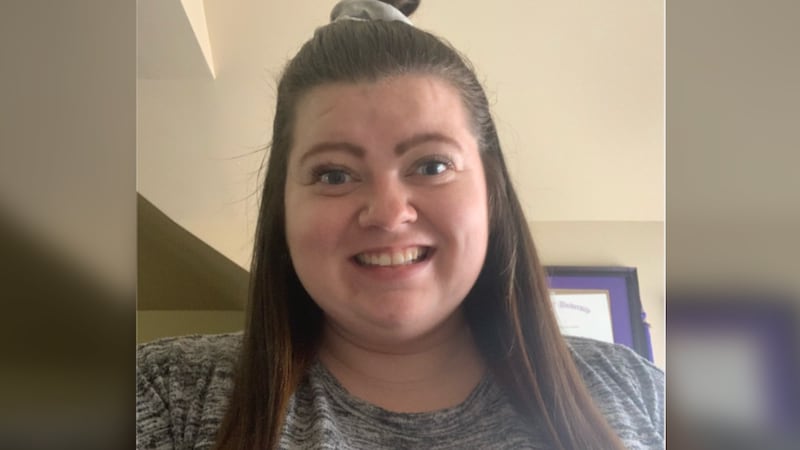
OTTAWA – Years after the COVID-19 pandemic, a small number of Canadians who rolled up their sleeves to get vaccinated are still suffering from adverse effects. And now, one Conservative MP is striking an informal inquiry to hear their stories. Concerns are arising that this forum won’t be able to provide the kind of accountability some are hoping for. Ontario MP Dean Allison has plans to chair four days of sworn testimony between Sept. 8 and 11 on Parliament Hill, focused on COVID-19 vaccine injuries. “The purpose of the Allison Inquiry is to provide a neutral forum for Canadians to share their personal experiences of injuries to themselves, or to others, from the Covid-19 vaccine(s),” reads the inquiry’s website. This initiative is not sanctioned by the federal government, nor does it have the resources or ability to compel witnesses the way an official probe would. The most Allison is offering is, at the conclusion, members of the inquiry “may, but are not required to, refer questions to Parliament.” CTV News asked Allison at his press conference on Parliament Hill Thursday about the inquiry, including whether he was concerned about asking these individuals to open up again without being able to ensure any accountability follows. “I think one of the biggest challenges right now is that people have not felt they have permission to actually talk about this,” he said. “So, we’ve realized by raising awareness, we’re hoping to put pressure on the government … We hope they’ll listen to what the stories and the frustrations and concerns are.” Allison, who describes himself as pro-vaccine choice, said he feels it is his job as an MP to listen to Canadians, help them access supports and to raise awareness about gaps in systems. He dismissed a suggestion that a process that only platforms one perspective on vaccines could delegitimize it and result in less widespread consideration of what comes out of it. “We’re going to talk to individuals, and those individuals are going to share their stories,” he said. “The government admits themselves that people have been vaccine injured.” More than 80 per cent of Canadians received at least one dose of an authorized COVID-19 vaccine. As of January 2024, of the more than 58,000 adverse events were reported following these vaccinations, fewer than 12,000 of the reports were considered serious, representing 0.011 per cent of the millions of doses administered. “These systems of active and passive surveillance are set up such that you would detect a needle in a haystack,” said infectious disease specialist Dr. Isaac Bogoch. He said knowing what medical professionals do now, both about the severity of the virus currently circulating and the nuance around risks for different demographics, “when you look at the vaccination currently, based on the best data we have, the vaccination still does a reasonable job in reducing the risk of hospitalization and death.” ‘We need immediate accountability’: vaccine-injured Canadian One of the 50 vaccine-injured Canadians Allison’s inquiry is slated to hear from is Carrie Sakamoto. Like millions of Canadians, she got vaccinated for COVID-19. Her first dose was AstraZeneca, but come time for her second shot, it wasn’t available. The advice she received was that mixing different types of vaccines was safe, so she proceeded with her second dose – the Pfizer vaccine – in June 2021. That night, she began to get sick. As the week progressed, she said, so did her symptoms. “I thought I was having a stroke, but I wasn’t,” she told CTV News. After already going to the hospital after initially feeling unwell, she said, went back to the emergency room. “They assessed me, and they said that it was Bell’s palsy.” Sakamoto then spent 17 days in hospital. “That’s when my specialists that were taking care of me … came to me and told me that this was a Pfizer vaccine injury, and that they were reporting it to Ottawa, and that there was a vaccine program in place that I could apply for.” During the pandemic, the Trudeau government set up a Vaccine Injury Support Program which, as of 2025, had approved 252 claims and paid out more than $21 million in compensation. It was through this third-party administered process that Sakamoto received $62,000, but she and other claimants have said the process was mismanaged and mired in red tape. After an extensive Global News investigation and a federal audit, the Public Health Agency of Canada overhauled the program – rebranding it as the Vaccine Impact Assistance Program – and, as the agency now in charge of it, is still sorting through a backlog of claims. “I’m still in appeals,” Sakamoto said. “They want more documents, but it’s stuff they already have.” One doctor, who long pushed for Canada to join other G7 countries in enacting a vaccine injury compensation process, said a system Canadians can have confidence in is key. “I would call it part of our social contract,” said Bruyère Health Research Institute Chief Scientific Officer Dr. Kumanan Wilson. “We’re expecting people to participate in a public good, and our part of the bargain is if something were to happen to them, even potentially happen to them due to the vaccine, we need to provide support for them.” Chief science advisor supports ‘evidence-based’ reflection Canada hasn’t conducted any formal review of how COVID-19 was handled nationally. This country’s chief science advisor is among many who think there’s merit in the federal government reflecting on its pandemic response, in an evidence-informed way, to reassure Canadians and improve future public health responses. “Overall, Canada’s response compared favourably with that of several peer countries, particularly given the complexity and length of the pandemic, and the fact that responsibility for the health response spans multiple levels of government,” said Dr. Mona Nemer in a statement to CTV News. “At the same time, no response to a crisis of this magnitude is perfect, and there is value in examining what worked and where we could have done better.” Nemer added that there’s also learning that can done by considering the lived experience of Canadians. “A constructive, evidence-informed reflection could help strengthen our preparedness, not only for future pandemics and health emergencies, but also for the more frequent viral outbreaks we are likely to face in the foreseeable future,” she said. ‘If you’re going to do an inquiry, you have to do it fairly’ Allison – who on Thursday was joined on stage by a physician that advocated for patients during the pandemic to take the human and animal drug Ivermectin – isn’t planning to include testimony from doctors or experts who believe in the safety of COVID-19 vaccines. “No, we basically want to hear from constituents across the country,” he said. This, and the fact Allison, as an actively elected politician is intending to act as the chairperson, has prompted critics to question the intent. “Anybody who believes they’ve been affected by taking a vaccine deserves to be heard and deserves compassion and support,” said Liberal MP and chief government whip Mark Gerretsen. “The problems with what Mr. Allison is putting forward is that it’s based on the premise of an official inquiry, but it’s not.” “There’s no independent commissioner gathering evidence, and … it’s really billed as being nonpartisan, but all of his preamble to setting the stage for this is very partisan, where he talks about the (Freedom) Convoy and he talks about vaccine mandates, and Canadians being silenced,” he continued. “I think that he’s setting the stage, through his own words, to set this up to be a political argument, instead of an argument that could genuinely have meaningful impact on people’s lives.” Sakamoto said she isn’t anti-vaccine, having received many prior to the pandemic, but after speaking out about her personal experience with the COVID-19 vaccination process, she felt targeted. “I was left caught in the middle, dismissed by authorities who asked me to take the shot, and then ridiculed by the people who used my physical suffering as a political weapon,” she said. Asked if she’s concerned this inquiry could lead to further politicization, and not result in the “accountability and reform” she’s calling for, Sakamoto said no. “I think that anywhere that gives us a space to speak and to come together and support each other and have it put on record, I think, is important.” Though, as Bogoch noted, to have a fair inquiry where the results can be meaningfully considered requires a range of perspectives. “Is the goal to look at what are the benefits and risks of COVID-19 vaccines? And if so, you probably want to hear from people who have experienced some of the benefits, hear from people who have experienced some of the harms, hear from people who are vaccine experts,” he said. “Like anything else, if the results are written before the study’s even done, you have to ask yourself what good is the study in the first place?” He added, “If you’re going to do an inquiry, you have to do it fairly.” MPs from all political parties have been invited to sit in, but so far, the inquiry only has the support of Conservatives. Allison said that includes Conservative Leader Pierre Poilievre, whose office didn’t return a request for comment on whether Poilievre intends to attend any of the hearings. Gerretsen said that from his perspective, Liberal MPs are encouraged to meet with constituents. “I certainly would not have an issue with that,” he said, noting that as whip, he doesn’t involve himself in telling his colleagues who to, and not to, meet with on Parliament Hill. With files from CTV National News producer Rachel Hanes