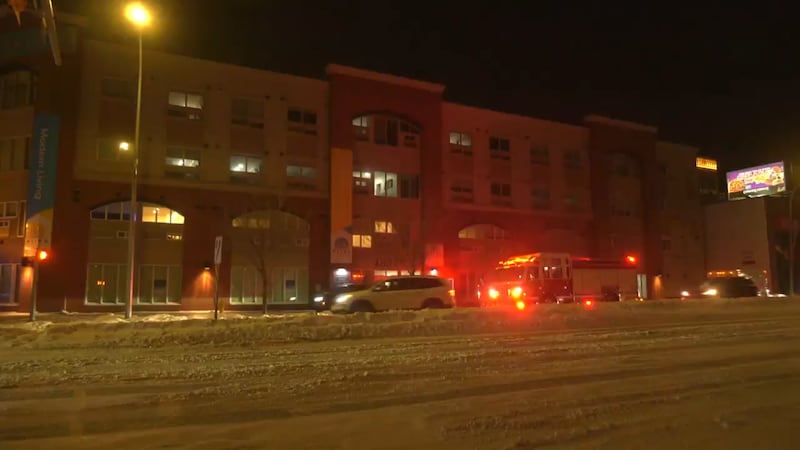
London’s revamped Winter Response to Homelessness is preparing to open more overnight spaces, but amid a growing crisis there’s uncertainty about whether everyone who needs a warm space will get one. “I am very pleased that the city announced it early, and (shelters) plan to be fully open across the city Dec. 1, and there is a coordinated approach with service providers so that it is an every night approach, largely,” explained Sarah Campbell, executive director of Ark Aid Street Mission. When city council approved the winter response in the summer, the scale of London’s homelessness crisis had been relatively stable, but the previous two months saw numbers hit highs never before experienced in London. According to the city’s online dashboard, roughly 2,200 to 2,300 unique individuals interacted with frontline services each month from January to August. That number climbed to 2,388 in September and 2,534 in October—a net increase of 146 people in a single month. A question from CTV News asking city hall to explain what might be causing the record-setting surge was not specifically answered in an emailed response Friday afternoon. Campbell acknowledges it could put additional pressure on shelters, “We could be looking at more people coming to us (this winter), and we may find ourselves tight on space.” Unlike last winter, the Boyle Community Centre will not be utilized as a cold weather emergency shelter. Instead, council allocated $5.8 million for existing shelters to provide an additional 238 spaces every night between Dec. 1 and March 31, plus another 29 spaces will open when temperatures fall below -15 C or the wind chill drops below -20 C. Ark Aid plans to use its two existing locations and is now unlikely to temporarily rent a third. The 20 to 40 beds initially envisioned for that third shelter will instead be divided between The Ark and Cronyn-Warner House, as well as other frontline shelters. “The truth is we had a hard time securing a third location this year,” admitted Campbell. ”That’s the first time in six-years, but it’s happened. We were being specific to an area of the city, and we’re continuing to be in talks with some churches just in case we need some of that expansion space.” Peak demand experienced last winter was 240 individuals at the Winter Response to Homelessness emergency shelters. This year shelters will create a total of 267 additional overnight spaces, 27 more than last winter’s peak demand, but London’s Unique Client Count has risen by more than 300 people since last winter. “I think when we see these new numbers about homelessness, this is an important number to track, because when people are new to homelessness they have some resources initially, maybe they can stay with a friend for a little while, maybe they can manage in various ways, but over time this is when the crisis becomes really intense for people,” Campbell said. City staff commit to track the situation as the winter progresses. “The City will monitor demand and availability with local providers throughout the winter. If demand exceeds available spaces, we’ll work with providers to assess options and keep City Council informed,” wrote Jonathan John, the City of London’s director of Housing Stability Services. Campbell says the municipal funding will only provide nighttime spaces this winter, participating shelters and frontline agencies will still depend on the generosity of Londoners for everything else. “One thing is, if you’ve cleaned out your closet and you have any winter gear at all, please donate to the organization of your choice. At Ark Aid if we have more, (then) we share with others. But the truth is, we always run out,” she said. “The second thing is come and volunteer with us. You know, get your hands involved. We need people on the ground,” Campbell added. “The third thing would be make a donation to one of these organizations. There’s always gaps to be filled.” The City of London’s full statement: “Last winter, many warming spaces opened only during extreme cold conditions. On the busiest night, 240 people used those spaces, exceeding planned capacity. This year, 238 Winter Response spaces will be available every night from December 1 to March 31, with 29 more opening during extreme cold conditions. That gives people more reliable options for coming indoors throughout the entire duration of the winter season. In addition, 419 year-round emergency shelter beds, respite beds and transitional housing spaces will continue to operate throughout the winter months. Together, year-round shelters, respite programs, transitional housing and seasonal services will provide 657 spaces this winter and 686 during extreme cold conditions. The City and its partners will continue helping people move from shelters into housing this winter, which can free up shelter spaces for others who need them. In addition, the Canada-Ontario Housing Benefit and other rent supplements will help people find or keep housing. Federal reimbursement through the Unsheltered Homelessness and Encampments Initiative also allowed Council to reinvest $350,000 in outreach, daytime drop-ins and access to showers and other basic needs. We are grateful to the local agencies and frontline teams who will be there night after night to help people come indoors and access the support they need. The City will monitor demand and availability with local providers throughout the winter. If demand exceeds available spaces, we’ll work with providers to assess options and keep City Council informed. This year’s Winter Response represents an investment of $5,784,775, including $3,632,500 in municipal funding and $2,152,275 in federal funding. Like other major cities across Canada, London continues to face a shortage of deeply affordable and attainable housing. The City is working closely with federal and provincial partners on long-term solutions to expand access to housing.”