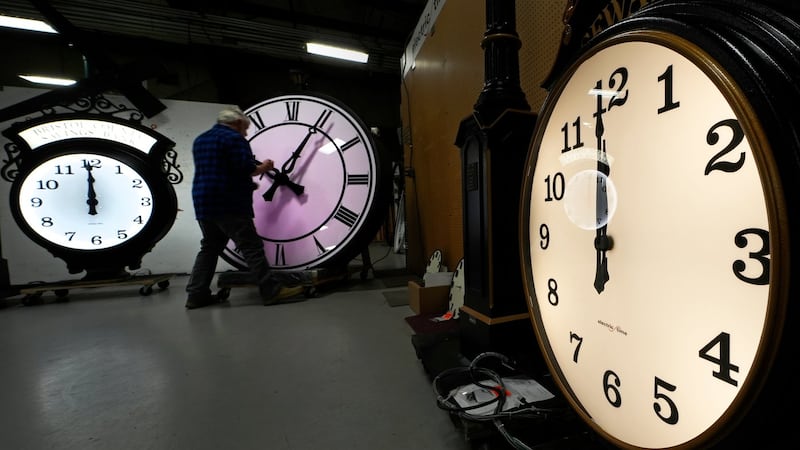
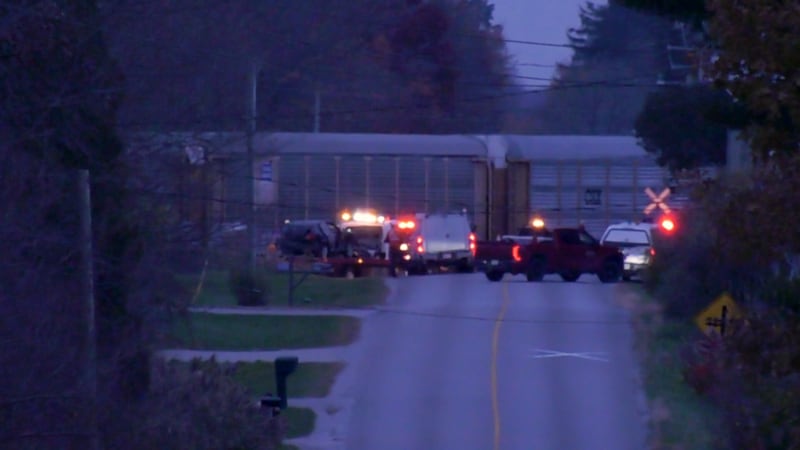
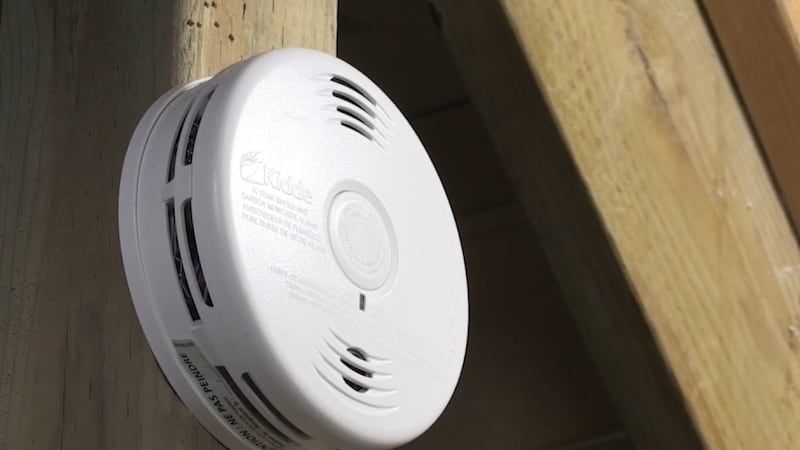
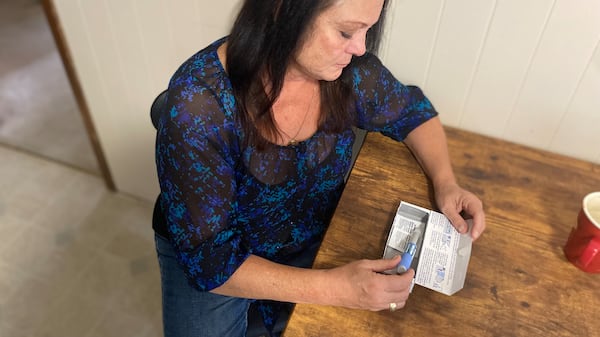
Next week is Carbon Monoxide Awareness Week, a time that has special meaning for Jessie Embrack and her family of North Bay, Ont. Six and a half years ago, a working carbon monoxide detector saved them from the silent killer. It was around 2 in the morning on March 1, 2020, when a beeping sound woke Embrack up from a deep sleep. Thinking one of her two children left a video game system on, she got out of bed and followed the noise. Still drowsy, as she got closer, the sound was accompanied by a faint voice. “Carbon monoxide/monoxyde de carbone,” the alarm in the basement rang out. That’s when her self-described “mom mode” impulse kicked in. “It was just like, OK, we got to get out of the house,” she said. “That was my first instinct.” She woke her children and her husband, Jamal, and the family and their dog escaped the home safe and sound before calling 911. The family later learned that their furnace had a crack in it and the levels of CO in the home were dangerously high. Fire crews used detectors and found that carbon monoxide levels were higher than 170 parts per million and climbing. “My grandparents had a scare a couple of years prior to that and I just know that they had gone to the hospital,” she said. “It was a scary moment for them.” Carbon monoxide is a colourless, tasteless and odourless gas. Exposure to CO can lead to serious health risks -- including death. It’s produced when fuels such as propane, gasoline, natural gas, heating oil or wood do not burn completely in fuel-burning appliances. CO poisoning may appear as flu-like symptoms and can cause headaches, dizziness, nausea and breathlessness, which can escalate to unconsciousness or death if left unchecked. “If there’s any reading above zero on your digital display, evacuate your home with your pets,” said Bonfield fire chief Shaun McGee. As part of Carbon Monoxide Awareness Week, fire services are urging people to CO-proof their homes. Ontario fire departments responded to an annual average of 4,000 calls where CO was present between 2020 and 2024. New fire code laws went into effect Jan. 1, requiring homeowners to have a working carbon monoxide alarm on each level if your home has a fuel-burning appliance, a fireplace, an attached garage or direct heat by forced-air from a fuel-burning appliance located outside the home. Time change, change your battery “They also need to be outside every sleeping area. So now is the perfect time to check your carbon monoxide alarms,” McGee said. “Make sure you have the right number, right amount and their proper location.” Fire crews are also reminding people that as the clocks change this weekend, it’s the perfect time to check and change the batteries in all smoke and carbon monoxide alarms. It’s also important to ensure fuel-burning appliances, chimneys and vents are cleaned and inspected annually and check that all outside appliance vents are not blocked. “Make sure you get the propane tanks checked. Make sure you get the valves checked (regularly), everything that has to do with the heating appliance,” McGee said. “Make sure you get it inspected by a qualified service technician.” The Embracks have a simple message for other families. “Go get the alarms because it saved us,” Jessie said. “Hopefully it’ll save others.”