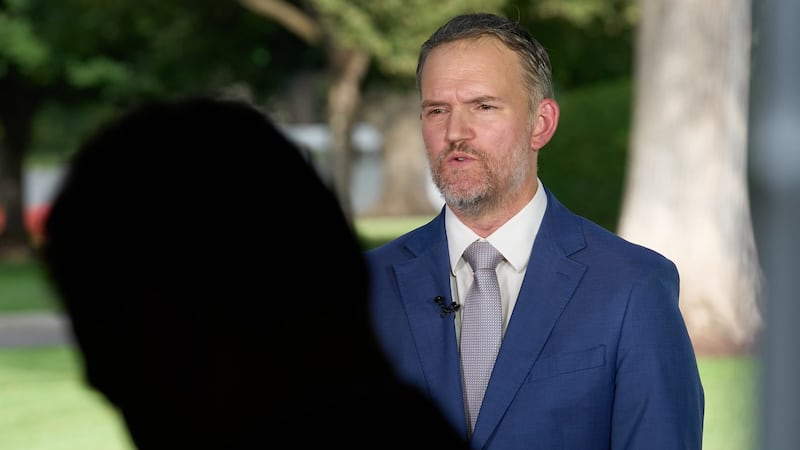
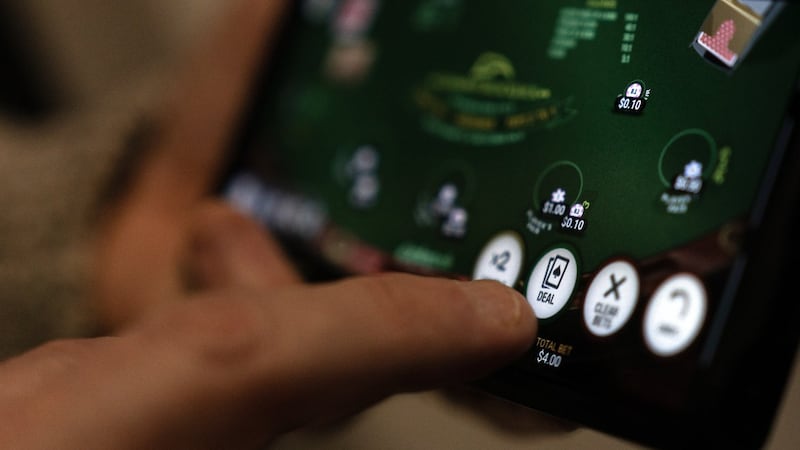
With the advent of highly accessible online gambling, medical experts in Ottawa are warning that gambling addictions are becoming increasingly common. This week, as part of its “Beyond the Bets” series, CTV Your Morning Ottawa spoke with experts to discuss the rise of gambling addictions and its effects. ‘It’s too easy’ In 2021, the federal government passed legislation allowing single-event sports betting, and in 2022, Ontario allowed private operators to offer legal online casino games and sports betting. Two medical experts at the Royal Ottawa Mental Health Centre say that one of the main challenges in dealing with gambling addictions is online betting has become so commonplace. According to them, online gambling has made it easier than ever to put money on the line at any given time. “It’s a huge problem where we have a casino that’s connected to your phone, which is connected to your bank,” Dr. Tim Lau, a psychiatrist and intermediate director of informatics and digital transformation at The Royal, said. “It’s too easy. The ability to throw your life away becomes so much easier, and it’s much harder to stop.” Dr. Rayyan Zuberi, a medical resident at The Royal, echoed Zuberi’s sentiments. “The biggest problem is ubiquity. Before people would have to go to the casino, before people would have to actually physically go somewhere else in order to access gambling. Now, people can just do it from the comfort of their home,” Dr. Rayyan Zuberi, a medical resident at The Royal, said. Christina Cook, the host of the Broke Girl Society podcast, which is focused on gambling addiction recovery for women, says she had her own experience struggling with gambling addiction. At 28, Cook began gambling. She says it only took a few years to realize her habit was causing harm, but throughout the 15 years she continued gambling, she never associated it with an addiction. “I never even understood that you could experience an addiction or harm with gambling, and I certainly didn’t see women talking about this,” she said. “So, it took me a really long time to understand that what I was going through was gambling addiction disorder.” While Cook’s experience with gambling was always “in person,” she says she’s heard from “thousands’ of people in her community or through her podcast who have been impacted by online gambling. “I hear women saying, ‘You know, I’m gambling while I’m doing laundry. I’m gambling in the living room while I’m surrounded by my family,’ and it’s devastating,” Cook said. “So, yeah, the ease of online gambling is going to be extremely impactful.” Lau says he’s seen an increase in gambling-related disorders at The Royal, but he knows the problem goes beyond what he sees in person. “In some ways, it’s like the tip of the iceberg because it’s really the most severe people that end up hospitalized or seeing psychiatrists,” Lau said. “But it is a very common problem.” A study published in September from the Institute of Clinical Evaluative Sciences found that emergency department visits for gambling disorders had nearly doubled since Ontario expanded the availability of online gambling in 2022. ‘The cost isn’t just money’ According to Lau, gambling addiction is similar to other addictions in that the brain’s reward system gets “hijacked” and people lose their ability to control themselves. Where gambling addiction differ from others, is in the thrill of the unknown. As he puts it, “anticipation is a powerful drug.” “No one knows when you place a bet what the outcome is going to be,” Lau said. “The other thing is the near misses; when people bet on something and they almost win. It’s almost as powerful a driver as winning.” Lau says gambling addiction can carry more than just financial repercussions. “The cost isn’t just money,” Lau said. “The cost is your relationships. The deceit, the lies, the hiding, it fractures relationships.” Gambling is associated with several adverse health effects, including anxiety and depression, Lau says. Lau says studies have also shown a link between gambling addiction and an increase in likelihood of suicidal thoughts and suicide attempts. Gambling addiction is also associated with other addictions, which Lau says can be particularly damaging for young people. “The reward pathway gets hijacked, and the ability to control yourself gets much worse,” Lau said. “That’s why it’s worse for younger kids because their frontal cortexes are not developed so their ability to control themselves and inhibit their impulses are severely impaired.” Gambling and youth In March, a study published in the Canadian Medical Association Journal found that the mean monthly rate of gambling related calls for men between the age of 15 and 24 to ConnexOntario, the province’s mental health and addictions hotline, had risen by 317 per cent since before the private gambling was allowed in Ontario. The Centre for Addiction and Mental Health’s (CAMH) 2025 Student Drug Use and Health Survey, whose findings were published this summer, found that 12 per cent of Ontario students between grades 7 and 12 had reported gambling within the last year. The CAMH’s study found that approximately 10 per cent of students had participated in online sports betting — a tenfold increase from 2019, when only one per cent reported being involved in sports betting. Tanya Halsall, a research scientist at The Royal, says young people make for particularly easy targets. As Halsall explains, young people’s brains are still developing, and they have a more difficult time thinking of the consequences of gambling. Additionally, Halsall says young people are wired to take more risks to explore their environment, test their skills and learn. While Halsall says these traits are “developmentally normal,” they can be exploited. “It’s harder for them to think critically about these spaces and any harms that might exist in them. They have a hard time predicting consequences,” Halsall said. “Younger people wouldn’t understand the house always wins in the end.” While gambling platforms are easily accessible on smart phones, Halsall says gambling-like features are also becoming more prevalent across culture. Whether its through blind-box-style toys, collectables or video game rewards, Halsall says people are confronted with the same sense of anticipation and excitement of winning as with gambling. Medical resident Zuberi also notes that gambling advertisements, often featuring celebrities, digital content creators or sports stars, are ever-present. “People who are really struggling with gambling are getting triggered over and over and over again with these with these various reminders of gambling, and that really causes people to relapse and continue to struggle with gambling,” Zuberi said. What can you do? If you are a person struggling with a gambling addiction, Zuberi suggests speaking with someone you can trust. “The first step is to have someone in your corner. Really find somebody you can talk to, somebody that cares about you that that you can hopefully unload some of these issues with,” Zuberi said. From there, the medical resident also suggests speaking with your family doctor, who will be able to connect you with other resources. Cook, of the Broke Girl Society podcast, operates a gambling recovery support group on Facebook, and recommends people connect if they are struggling with a gambling addiction. When it comes to advice for parents, Halsall suggests setting healthy screen-time limits and considering if your child may be at a greater risk for gambling. “This is more common in males. Certainly, if they’re vulnerable, if there’s a mental health issue like anxiety or depression, if they’re maybe more of a risk taker, they like sports or they’re the kind of kid who loves watching their team win and they get excited, or even like competitive games — these are the kids who are more likely to be at risk,” Halsall said. Signs of gambling addiction in children might include a pre-occupation with screens, stress, lack of sleep, borrowing money or changing behaviour, Halsall says. If you suspect your child is at immediate risk, Halsall says you should bring them to an emergency department, either at CHEO or the Royal. If you suspect is a loved one is struggling with gambling addiction, Lau says the best things you can do is equip yourself with knowledge and prepare yourself to be a steady presence for the person struggling. “There’s a saying, ‘it’s hard to pour from an empty cup, and it’s hard to give someone strength when you don’t have it,’” he said. “So, you need to take care of your own mental health.” Lau recommends looking up information on addictions to better understand what your loved one is experiencing. He also suggests researching resources which can be accessed by those struggling with a gambling addiction or those close to them, including ConnexOntario, AccessMHA and Gamblers Anonymous. “Motivating someone externally and telling them they have to do something doesn’t work. It has to come from within. So how do you do that, and how do you help someone find that there’s something missing for them, or they’re not where they want to be? That’s the big challenge,” Lau says. “You do it with empathy and realize that relapse is common. So, recognizing it as a journey, they’re going to fall down, and you’re going to have to be there to keep helping them get up.”