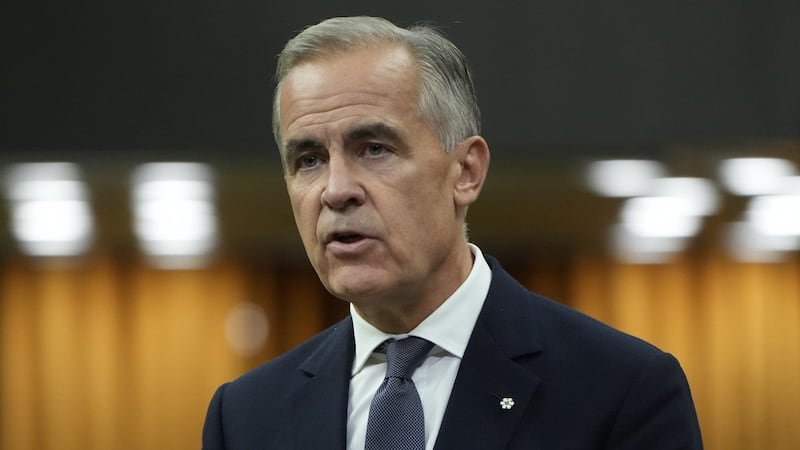
TORONTO -- Canadian universities are working to send a message that they still want international students, after the government’s reduction of student study permits curbed international applicants and took a financial toll on colleges. Less revenue from international students has resulted in staff and program cuts at polytechnic and public colleges and may undermine Prime Minister Mark Carney’s $1.7 billion (US$1.19 billion) effort to attract top research talent to Canadian universities. Canada’s latest immigration plan targets 150,000 new international student arrivals each year for the next three years, down sharply from 292,830 new arrivals in 2024. The government says the reductions are intended to ease pressure on housing and public services. “These study permit caps really tarnished Canada’s brand,” said Joseph Wong, vice-president international at the University of Toronto, who has travelled to India three times in the last two years on recruiting trips. “It gave the impression that Canada was closing its doors to international students.” Carney’s government hopes to attract international researchers who have for decades favoured U.S. universities with larger research budgets. Since U.S. President Donald Trump returned to office last year, his administration has cut or threatened to cut funding from some universities. Competition with other countries Robert Asselin, chief executive of the U15 Group that represents Canadian research universities, said Ottawa had exempted graduate students from some restrictions on foreign students starting this year, but warned the changing rules might broadly deter talent. “What is really important is that we recognize this is something we’re in competition with other countries, and that if we don’t attract these high-quality students, they will go elsewhere, and we will lose talent,” Asselin said. Canada has committed more than $625 million to attract researchers through newly created research funding programs, with more recipients expected to be announced in early 2027, according to the Natural Sciences and Engineering Research Council of Canada. The research council referred a request for comment to Canada’s industry ministry. The ministry, which oversees the research council, did not respond to a request for comment. Open to talent Canada, beginning under former Prime Minister Justin Trudeau, reduced the number of international study permits partly in response to fraud the government discovered in student visa permit applications. Reuters reported last year that Canada rejected most Indian study permit applications in August 2025. India has been Canada’s top source of international students over the past decade. “The challenge is actually conveying to prospective Indian students that our door is open,” Wong said of his latest India recruiting trip. The University of British Columbia warned that frequent policy changes have created uncertainty for students considering Canada. “Federal policy changes since 2023, alongside global economic challenges, rising geopolitical tensions and heightened competition, have affected international student enrollment across Canada,” UBC spokesperson Thandi Fletcher said. At Humber Polytechnic, one of Canada’s largest publicly funded colleges, international enrollment for the 2025-26 academic year has fallen to about one-third of 2023-24 levels following federal immigration reforms, according to spokesperson Andrew Leopold. The college faces a $40-million revenue shortfall, resulting in canceled programs and voluntary staff exit packages. Canada’s immigration ministry said new international student arrivals between January and July 2026 were down 80% compared with the same period in 2024. “With fewer opportunities available, we’re being more selective,” IRCC said in a statement. (Reporting by Wa Lone; Editing by Caroline Stauffer and Rod Nickel)