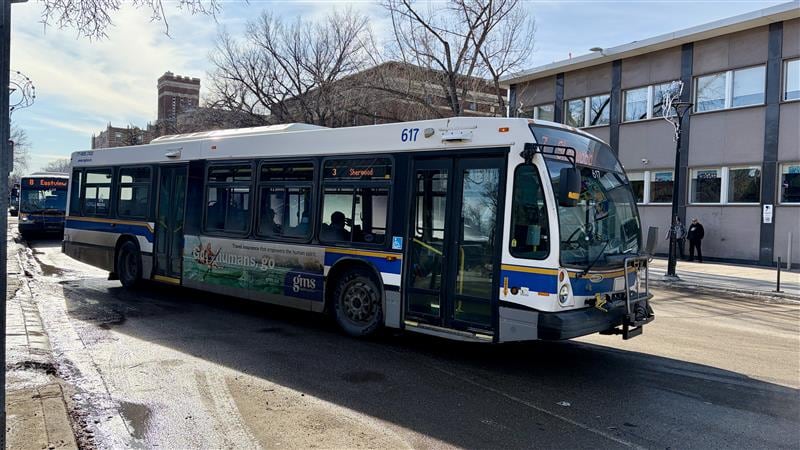
Regina Transit is back in service the day after a city lockout of union workers forced the shutdown of standard routes Monday. Still, dozens of Regina residents showed up to the bus stop Monday morning, unaware of the fact their ride was never coming. “Transit operators were out in their own vehicles (Monday) morning, picking up passengers waiting at bus stops with their own vehicles to try to continue the valuable service that these citizens deserve,” national president John Di Nino said during a rally Monday. Due to the service shutdown, some high school and university students could not attend classes while many elderly residents were unable to be go out for errands. “Buses are such a crucial and critical system for our students to get to campus,” University of Regina Students’ Association president Ethan Wiechert told CTV News Monday. “Thousands of students rely on transit to get to school.” Many others had their plans stifled by the disruption. “I want to go to the Southland [Mall] and I cannot, because there is no bus,” said Patricia Prefontaine, a regular bus rider. “So I’m stuck downtown.” On Tuesday, as transit service resumed, the city addressed the disruption. When asked about how the city communicated the disruption to riders, director of transit Nathan Luhning described it as “very good communication.” “We reached out to customers where they were,” he described. “So through the apps we have; for customers who use TransitLive, using the mobile app, through social media channels and putting up posters at bus stops saying, ‘Service is not in effect.” Communications timeline Late Friday night, after negotiations between the Amalgamated Transit Union (ATU) Local 588 and the city had reached an impasse, the union issued notice to the city of an overtime ban job action effective Sunday evening. The city retaliated by issuing a lockout notice effective 11 a.m. Monday, forcing the shutdown of standard transit routes. CTV News first learned of the looming lockout on Saturday after being sent an internal memo sent from the director of transit which indicated Monday’s pending job action. Shortly after 2 p.m. Nov. 21, CTV News reached out to City of Regina media relations requesting confirmation of the letter. At 2:20 p.m., city officials confirmed the validity of the letter and issued their first statement to media. The city first notified users of the disruption at 3:09 p.m. with posts to its official Facebook page and to the @YQRTransit ‘X’ page. “All standard Transit routes are out of service as of Monday, November 23, 2026, due to an operational safety directive. Paratransit service will continue. More information on Paratransit is available at https://Regina.ca/Paratransit. We apologize for any inconvenience,” the posts read. However, the service announcement was not posted to the official @CityofRegina ‘X’ account. The city’s official X account has over 60,000 followers, its transit page has only 2,189. A notice was also posted to the City of Regina’s official Instagram page via stories — which are only online for 24 hours at a time. It appears no posts were made on their official Threads, TikTok or Bluesky pages. Luhning says the city prioritized social media and the transit app, instead of notifying media through an advisory. “The focus, because it was a quick turnaround, was to get information out to customers as quick as possible,” he said. “So going through our apps and social media channels to get that information out was the priority.” The director was then asked if he felt the media was one of the quickest ways to get information out. “With the information that was shared with a simple statement like that, the media did pick it up and shared it on news outlets as well,” Luhning said. “Through the channels we use, that is the best way to communicate to customers.” Left in the dark Avid transit user, labour relations expert and former Regina city councillor Andrew Stevens said he was tipped off about the service disruption by a friend. “In a text [they] said, ‘Have you heard about this?’ And then I learned from my 15-year-old how the city confirmed it because he was looking at TransitLive, getting ready to plan his day on Monday,” Stevens described. Stevens understands quite well the past of labour negotiations between the city and ATU from his time as Ward 3 Coun., which ended in 2024. While he says he wasn’t shocked about the job action itself, he feels the rollout of the information left him confused. “I thought it was kind of unusual,” Stevens told CTV News Tuesday. “The city has all sorts of communication channels they can use; they have a communications team. I found it a little suspicious how they framed it. They said it was a safety and technical operational question. It’s a lockout: just say what it is.” Stevens went on to say there was a lag between when he first learned of the looming shutdown to when he saw official communications from city channels. “Don’t be shy about it, this is a part of labour relations,” he noted. “But don’t keep people in the dark; because if all of a sudden you get a notice there’s a safety issue. I think far more grave concerns came to mind as a transit user and as a parent.” Council’s role Some current city councillors say they were just as in the dark as the rest of the city, including Ward 5 Coun. Sarah Turnbull. “Council is not involved in labour negotiations at all. In fact, I found out about the lockout at the same time as the public,” she said in a post to social media Monday evening. Mayor Chad Bachynski spoke to reporters Tuesday morning following a regularly scheduled Board of Police Commissioners meeting. “Very happy an agreement was reached,” he said. “Especially getting it ... with day of no service, it was great to get to a tentative agreement last night. It’s super impactful for people who rely on [transit] for school and work every day.” Bachynski admitted formulating a cohesive communications plan was difficult. “It’s tricky to pull everyone together,” he said. “It was just about trying to get the most pertinent information to the public as quickly as possible when decisions were being made about how transit was going to be impacted. The strategy was trying to do the absolute best in a very tight time frame over a weekend.” The mayor and many other councillors issued mirroring statements which said, “city council does not negotiate collective agreements or take part in bargaining talks. Those negotiations are carried out by city administration, through the established collective bargaining process.” Stevens did not buy it. “If I was an elected official, I would be kind of outraged,” he said. “If you’re going to disrupt a valuable public service a lot of people depend on, including myself, can you at least give me a notice of what’s happening and how does this fit into the strategy? Are you banking on a long term lockout? Is there a communication strategy that we should be thinking about or talking about going forward? What’s the actual point of the impasse?” Stevens added if he was at the table, he would be a bit concerned. Bachynski agreed communication with the public must be better if a similar situation ever reared its head like this again. “As council, we’ve talked quite a bit already in the last number of hours and days and we’ll look to see how it all kind of transpired,” he said. “And to see what we can learn and what we could do better if something else that’s urgent (happens) — and we need to communicate quickly. It’s always about having a plan in place.”