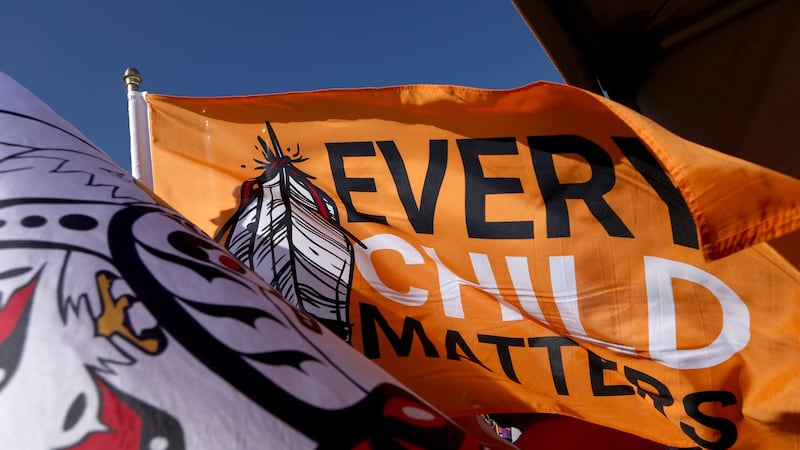
SaskTel Centre was filled with the sound of drumming and music, as people danced at the ‘Every Child Matters Powwow,’ hosted by the Saskatoon Tribal Council. “We look at it as an opportunity to have this as a healing ceremony. For our people to be part of it and celebrate their language, culture, identity that was basically taken away from them in [residential] schools,” Chief Mark Arcand of the Saskatoon Tribal Council said. The audience was made up of students from various Saskatoon schools who had an opportunity to experience Indigenous culture ahead of the National Day for Truth and Reconciliation. “They can take this back to their schools and actually start doing projects, opportunities within class with their teachers. So, I look at it as a teaching moment for all the kids that are coming today,” Arcand said. For many years, Indigenous children were taken from their families and forced by the Canadian government into an education system called residential schools. The intention of the schools was to separate Indigenous children from their culture and language. Many children suffered abuse within these schools and came home with trauma that has been passed down through generations, while some children never came home at all. This history was not acknowledged by the Canadian government or taught in schools until former Prime Minister Steven Harper offered a formal apology to residential school survivors in 2008. “It was like a dark kept secret from students. But I think now it’s starting to improve in the curriculum of schools. And I think it has to be front and centre about education for young people to know that the First Nations people that live on these lands, what they had to endure,” Arcand said. As the National Day For Truth and Reconciliation draws near, Arcand shared that it’s an important time to reflect on the circumstances that allowed for residential schools to happen and strengthen education around the topic. “When we look at residential schools, we look at how we can improve from the situations that our people endured, and making sure that moving forward, that this never happens to another child again,” he said. For those dancing in the powwow, it was an opportunity to celebrate culture in a way that earlier generations were not able to. “I came to dance for my relatives and for my ancestors. Because the power is about truth and reconciliation. And most of my ancestors were residential school survivors. So, I came to honour their history,” Alexandra Cameron, a 14-year-old dancer said. Cameron added that it’s very important for both Indigenous and non-Indigenous people to understand the meaning behind Orange Shirt Day. “Orange Shirt Day has been a big, big inspiration in my life. I have so many orange dresses to honour my ancestors and to honour all those that went to residential school,” Cameron said. The powwow was one of two scheduled to mark the National Day for Truth and Reconciliation and the day leading up to it. Tuesday’s event had a focus on missing and murdered Indigenous women and girls, while a second powwow scheduled for Wednesday is intended to highlight the purpose of Orange Shirt Day. “What I’m most looking forward to is our elderly people being with their young children and watching our young people carry on the traditions that have been taught from our elderly people in a safe place, to be proud of your identity, to be proud of who you are,” Arcand said. Cameron explained that powwows are intended to be a place of healing for both dancers and spectators. “I hope they take away the prayers, the thoughts, and also the emotions because they’re very powerful and especially, watching us dance. Because we dance, we dance for healing, and we dance for them because some of us are not educated. So, we want to make sure that everyone’s educated about our history,” Cameron said.