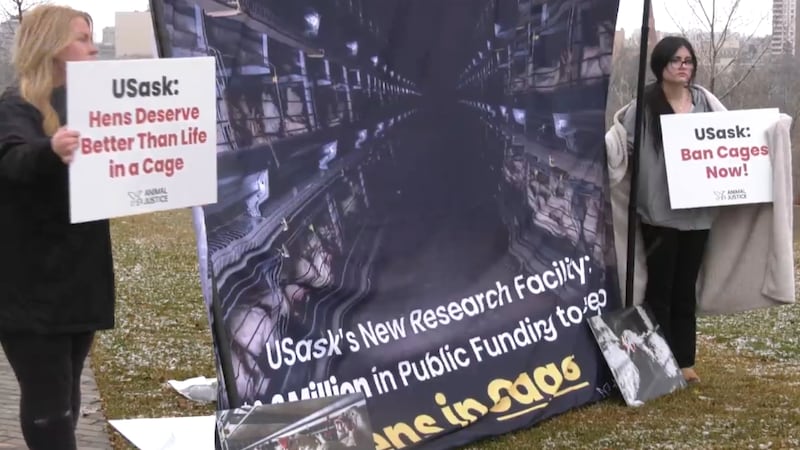
A group of animal activist is calling on the University of Saskatchewan (U of S) to abandon plans to include restrictive cage systems in its new poultry research facility. With countries around the globe moving to outlaw conventional cages to house chickens, they say the so-called “enriched cages” included in plans for the new facility still restrict the movement and welfare of laying hens. Protestors with Animal Justice gathered in Saskatoon on Thursday, holding signs opposing the project. “Basically, a two-by-two-foot cage where multiple hens are stored and kept,” one protester said. “They are living in there, undergoing the testing and they have no room to move.” This comes months after the university announced plans for a nearly $16 million poultry research facility. It’s designed to study laying hens as Canada’s egg industry transitions away from conventional cages. The facility is expected to include 10 research rooms where scientists can test lighting, feed and other conditions affecting egg production and animal welfare. The U of S has said conventional cages for laying hens will be phased out across Canada by 2036, and that additional research is needed as producers move to enriched cages, free-run and free-range housing systems. Animal Justice however, says the enriched cages still confine the birds to a small area, severely restrict their movement, and cause the animals unnecessary distress. “No room to turn around, no proper care and they are literally dying while this happens. And we need that to stop,” the protestor said. The organization behind the protest has also cautioned that using enriched cages threatens the educational value of the facility, by locking it into a system that is already outmoded globally. “In reality, USask would be investing in outdated technology that is already illegal in Canada’s peer countries. The UK, US, and the EU have outlawed or are phasing out these very systems. The university would be ignoring the clear direction of the global market and doing a disservice to its students,” PJ Nyman, corporate engagement manager at Animal Justice told CTV News earlier this year. When unveiling the project earlier this year, poultry science professor Karen Schwean-Lardner said the facility would allow researchers from across North America to collaborate on studies examining the impact of things such as lighting and different feeds on laying hens. The university said the facility will also include a glass viewing room where groups such as schoolchildren can observe the birds without risking biosecurity. The facility is expected to open within two to three years.