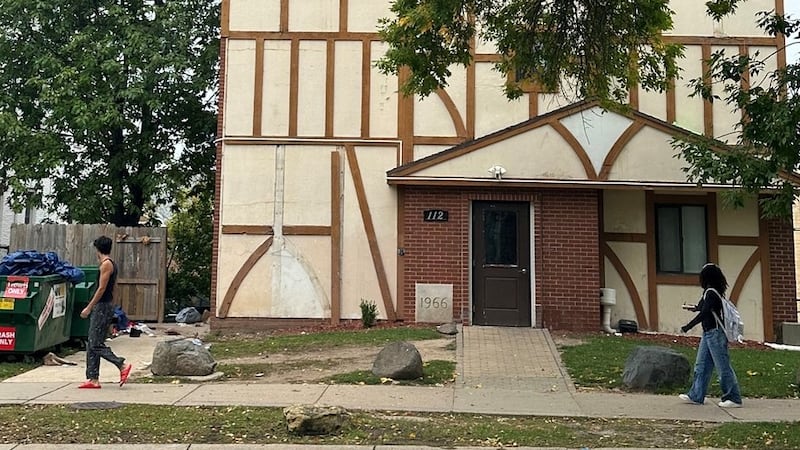
Toronto Fire Services confirms there have been nearly 100 lithium-ion battery fires in the city this year, far surpassing the total of what was seen in all of 2025. In an email to CP24, Capt. Deepak Chagger said there have been a total of 97 lithium-ion battery fires in 2026. There have also been 19 injuries related to these fires too, Toronto Fire Chief Jim Jessop confirmed on Wednesday night. Just last Sunday, fire crews responded to two fires involving lithium-ion batteries: one in an alleyway near St. Clair Avenue West and Bathurst Street, and another inside of an apartment building near Crescent Town Road and Victoria Park Avenue. They occurred within hours of each other. Jessop later told CP24 that a serious fire on Sept. 8 on Boustead Avenue that sent two adults and three children to the hospital also involved a lithium-ion battery. Fire Chief Jim Jessop stressed then that fires caused by these rechargeable batteries are typically toxic and pose great public safety risk. “Since 2022 the city of Toronto has seen well north of a 200 per cent increase in the number of fires involving lithium-ion batteries,” he told CTV News. These kinds of batteries are found in various products, but Jessop had said e-bikes and e-scooters are catching fire at an alarming rate. He says lithium-ion batteries in these bikes and scooters are not regulated in the same way as they are with smartphones or computers. “The data we’ve gotten out of our investigations is it’s predominantly the batteries that are not regulated, do not meet a standard, that anybody can go on any internet site to bring into this country and use, quite often for purposes or with devices for which they were not originally designed,” Jessop said. ‘Greatest evolving public fire safety risk’ Speaking with CP24 on Wednesday afternoon, the fire chief called lithium-ion battery fires the “greatest evolving public fire safety risk” in the city. Jessop said it’s gotten to the point that City Council even directed him to begin engaging with both the provincial and federal governments to find ways to mitigate this problem that is “not going to go away.” “We are, you know, well north of where we were for an entire year last year so we’re really hoping that the preliminary discussions we have had with the province of Ontario and the federal government continue to advance, and to be very honest, that they start expediting a bit because, as I said, we’re running these fires now almost daily,” he said. The chief said the short- and long-term risks for both the public as well as his firefighters posed by lithium-ion battery fires are something that keep him up at night. “So we know from a from a fire perspective, flashover used to take 20 to 25 minutes in the 1960s, down to about five minutes in the 1990s because of modern furnishings and polyurethane. You throw in a lithium-ion battery that goes into thermal runaway now. You have less than 90 seconds to leave your unit of origin safely,” Jessop explained. “What that also means is the firefighters responding into these fires now are going into fires that are more intense, that are more unpredictable. And then in the longer term, now we also know through science that the toxic gases and heavy metals that these batteries release are a lot are a lot more carcinogenic and toxic to the point where we actually now have to use special decontamination procedures for our bunker gear.” He went on to say that uncertified and unregulated lithium-ion batteries are primarily to blame for the increase in such fires the service has been responding to this past year. “There are no standards in the country, especially for micro-mobility devices. Quite often those batteries are damaged, especially if they’re bouncing up and down the roads. They’re getting knocked around,” he said. “Quite often they’re overcharged. We’ve seen them tampered with, and then quite often we’ve also seen them used with different charging systems for which they were designed. So, it’s a combination of uncertified batteries that are damaged and quite often altered that are causing about 80% of these fires we’re dealing with right now.” Regulations needed now: fire chief Jessop said the best way to get a handle on this situation is by regulating lithium-ion batteries as soon as possible. “So the only thing can be done, and this is what City Council has been very clear about to me, we need the provincial government, specifically through The Office of The Fire Marshal and the federal government to continue to work with the city of Toronto,” he said. “They’ve begun some preliminary discussions. We need to expedite these conversations and get some regulatory changes in as quickly as we can.” With files from CTV News’ Heather Wright