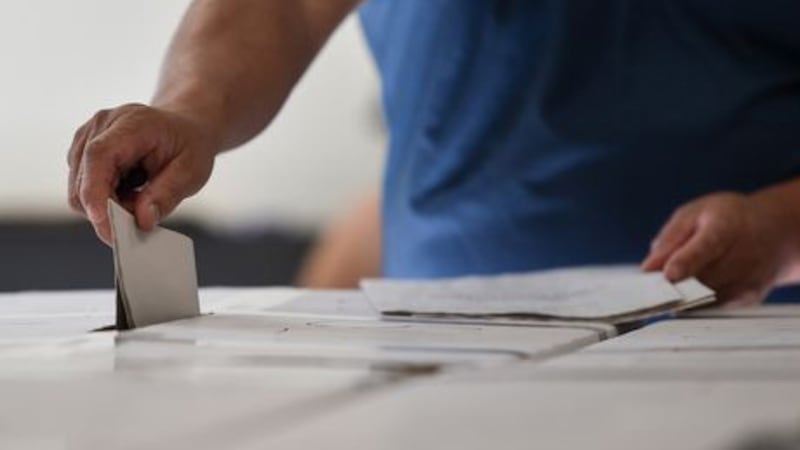
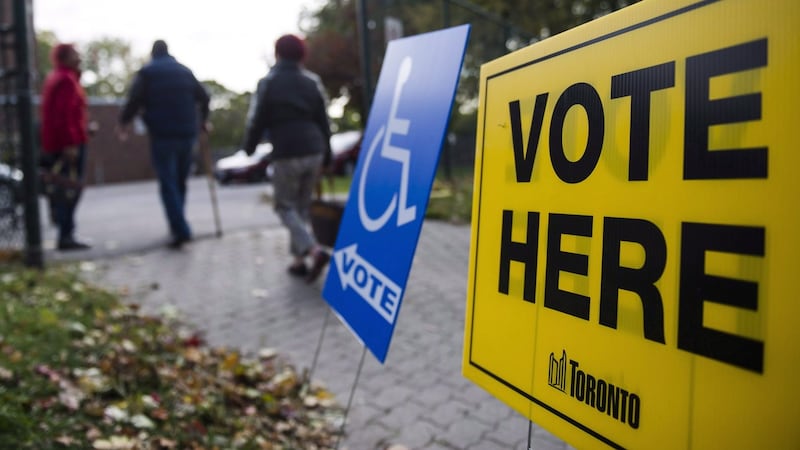
Monday is election day across Ontario, with voters heading to the polls to elect mayors, city councillors and school trustees. The Association of Municipalities of Ontario says that nearly 11.9 million Ontarians are eligible to vote in the municipal elections and will help to collectively fill 2,800 seats with 6,670 different candidates vying for those positions. In Toronto, it is expected to be a two-way race for mayor with Brad Bradford and Olivia Chow the frontrunners. Polling stations open at 10 a.m. and will close at 8 p.m. Here is everything you need to know about this year’s municipal elections: Who are the candidates? There are 53 candidates running for mayor in Toronto but polling conducted for CP24 and CTV News Toronto has shown that the Bradford and Chow are well ahead. In the latest Nanos Research survey released last week, 49.8 per cent of decided voters said that they supported Chow while 46.6 per cent said that they supported Bradford. The 3.2 percentage point lead for Chow was within the margin of error for the survey, pointing to a statistical tie. Chow has served as Toronto’s mayor for the last three years, coming into the seat following a snap byelection to replace former mayor John Tory. But, Chow is no stranger to politics, having been first elected as a TDSB trustee in 1985 before going on to serve three terms as a Toronto city councillor and four terms as a NDP MP for the downtown Toronto riding of Trinity-Spadina. Bradford, the current city councillor for Beaches-East York, also ran in the 2023 byelection but finished a distant eighth. The former city planner first entered politics in 2018, when he ran for councillor in Beaches-East York. He was one of few candidates to receive an endorsement from Tory, who was mayor at the time. Bradford barely won that year, but his re-election in 2022 was far more decisive. You can read more about Bradford and Chow here: What are their promises? Chow has largely ran a campaign centred on affordability while Bradford has promised to address what he has referred to as “the three C’s” - congestion, crime and cost of living. For transit, Chow says she will introduce a weekly fare cap on the TTC where after 10 paid rides in a single week, the rest of the week is free. She has also promised to freeze fares for a fourth straight year and build the Scarborough East LRT. Bradford said he would do away with the slow zones along the subway line and has vowed to make building the Eglinton East LRT his top transit priority. He has also vowed to remove bike lanes on Bloor Street West from South Kingsway to Resurrection roads and to take out some red bus priority lanes in Scarborough to help expedite traffic. On affordability, Chow has promised to keep property tax increases either at or around the rate of inflation, provide free lunches at schools, and ban surveillance pricing at grocery stores. Bradford has said he would implement a outright property tax freeze during his first year in office, cut water bills by 25 per cent a year and scrap the municipal land transfer tax on the first $1.1 million of the value of homes purchased in Toronto. For more on what the front-runners are promising, read CP24’s promise tracker: Ward races to watch There are four wards without an incumbent running for re-election: Ward 4 (Parkdale-High Park), Ward 11 (University-Rosedale), Ward 14 (Toronto-Danforth) and Ward 19 (Beaches-East York). There are also five other ward races worth watching on election night due to a challenge from a high-profile candidate. Read more here. How to vote Most polling stations will be open from 10 a.m. to 8 p.m. in Toronto, though in Mississauga polling stations will be open from 9 a.m. to 8 p.m. Outside of mayor, voters can cast a ballot for their city councillor and if eligible, their school board trustee. To be eligible to vote in the 2026 municipal election, you must be at least 18 years old, a Canadian citizen, and a resident of the city they are voting in. Non-residents who own or rent property in Toronto (or have a spouse that does) are also eligible to vote. In Toronto, eligible voters can use MyVote to find where they should vote today, who the candidates are in their ward, learn how accessible their polling station is, and download or print their digital voter information card. Voters must present one acceptable piece of identification to an election official with your name and qualifying address in the city. A voter card cannot be used as ID, and neither can your passport as it does not indicate your home address. Prospective voters can show ID on their phones so long as that particular document was electronically issued to them—it cannot be a photo or a scan, like a picture of your driver’s licence for example. Election officials will accept a driver’s licence, an Ontario-issued photo card, property tax assessment, utility bill, a T4 statement, a mortgage statement, and any document from a Band Council in Ontario. For a full list of acceptable IDs, look here. Bringing your voter information card will make it easier at polling stations, but they are not required to vote. How to watch the results CP24 will broadcast live coverage of election night starting at 7 p.m. To watch ‘Toronto Decides: Election Night Live’, Torontonians can tune in to CP24 on their televisions, stream the broadcast on CP24.com, CTVNewsToronto.ca, the CP24 App or the CTV News App. It will also be available on CP24’s YouTube channel and TikTok page, as well as on X/Twitter. It will also be available to watch on the Crave News hub. While the Toronto mayoral race will be the major focus of the night, coverage will extend the Greater Toronto and Hamilton Area, showcasing analysis and results out of Peel, York, Durham and Halton regions too.