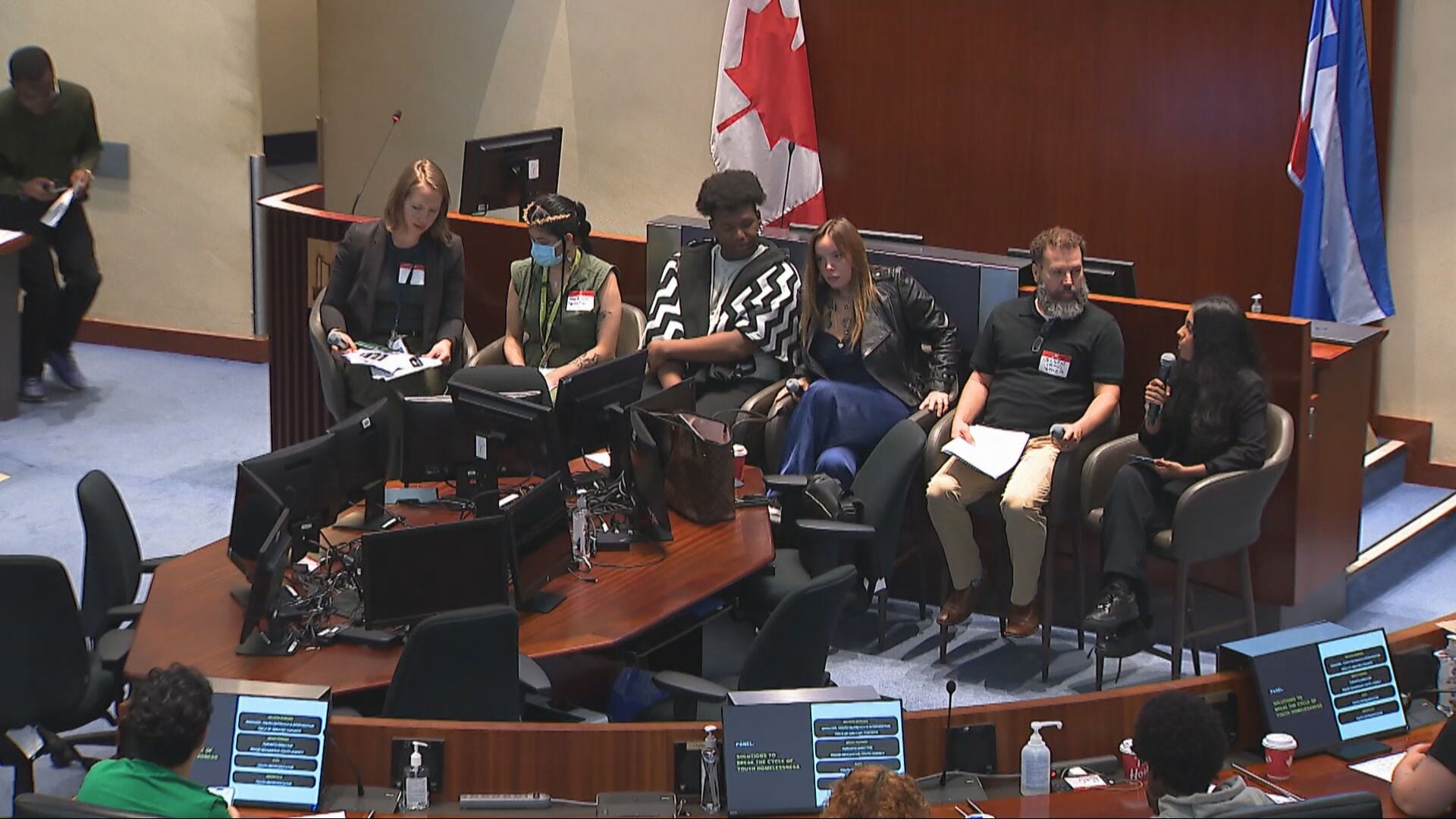
Toronto’s Youth Cabinet and a coalition of youth homelessness organizations are calling for a youth-first strategy to break cycles of poverty and prevent youth homelessness across the city. The summit took place Monday at City Hall and more than 100 young people and dozens of organizations came together to discuss solutions, make recommendations, and share lived experiences. Michael Zarathus-Cook said he experienced homelessness when he was 17 and stayed at Covenant House, Toronto’s youth homeless shelter on Gerrard Street. “Staying at the shelter for those 18 months was incredibly important for me to just get my bearings,” explained Zarathus-Cook. “I was in school at that time.” Zarathus-Cook now studies medicine and is a magazine editor. He said it took him about a decade to stand on his feet again, and credits his success to a variety of services and arts groups who opened spaces to him. “It’s not just about being homeless. It’s about afterwards, in the days, weeks, months afterwards. How do you build community? How do you build a career that lasts?” Another part of Monday’s summit involved consulting with youth and tapping into their experiences to problem solve. “The system is not built for them,” said Negha Kanaganarathan, housing working group lead with the Toronto Youth Cabinet. “They face long wait lists for shelters, unfair evictions, discrimination, lack of support and unstable jobs that make it impossible for them to pay rent.” This summer, the city’s Street Needs Assessment report found there are around 1,500 youth experiencing homelessness on any given night in Toronto— a group that now makes up 10 per cent of the city’s shelter population. As well, one third of chronically homeless adults today were also homeless in their youth. The actions homelessness advocates said they want to see include targeted employment programs, a youth lived experience advisory committee to guide city policies, and better data management to track outcomes. Some work they say can be done immediately. Both Toronto’s Youth Cabinet and homeless organizations say they want to see bold action from the city. “It’s about having conversations because coming in the shelter system is not a good option, so what can we help you with?” said Mark Aston, CEO of Covenant House. “Do you have family? Do you have extended family? Is there family counselling or mediation we can do? Do you need support for rent, first and last? These types of things and they have shown to be really effective.” The hope from the summit is to craft a strategy that can eventually be brought to city council.