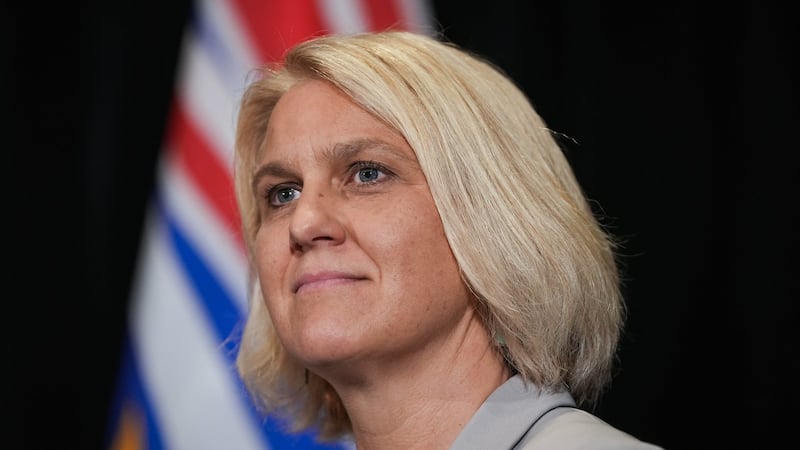
A B.C. MLA is again urging the province to order a coroner’s inquest into the fatal police shooting of 15-year-old Chase De Balinhard, saying the government has the power to act now despite an ongoing watchdog investigation. Surrey-Cloverdale MLA Elenore Sturko said Premier David Eby’s “refusal” to commit to an inquest is denying the De Balinhard family both “peace of mind and an opportunity for transparency” following the death of the teenager, who was on the autism spectrum, nearly eight months ago in February. Eby has cited the Independent Investigations Office’s probe into the officers’ actions as a reason to wait. “Even with the ongoing IIO investigation, there is no reason why the premier cannot commit to a coroner’s inquest,” Sturko told CTV News. “I do not understand, in this case, why the premier is actually being so heartless as to deny the family this opportunity to learn more facts about what happened with their son, Chase.” Sturko, a former Surrey RCMP officer and parent of a child on the autism spectrum, argued an inquest would help restore trust with the public. “I think that an inquiry where it is not an assignment of blame but a fact-finding opportunity to look at the total circumstances and make recommendations that could result in positive change, actually can also help police,” she said. The tragedy took place in Sturko’s riding nearly eight months ago, and the IIO still has yet to issue its findings. The police watchdog said Thursday it has no updates on when its investigation will be completed, despite the case already taking more than four times longer than the average file. B.C. NDP holds position At an unrelated news conference Wednesday, Eby maintained that an inquest will not be ordered while the IIO continues its review, but said Public Safety Minister Nina Krieger has heard the family’s concerns. “The public safety minister and her team are working on the family’s request,” Eby said. “They take it very seriously, as do I, and they’ll have more to share with the family soon, I’m sure.” The premier added: “I just want to reassure the family and everyone who loved this young man that first of all, my understanding is the police are already implementing changes and training to respond to that terrible tragedy that took place. The loss of life is always tragic.” Family’s response Chase’s mother, Crystal De Balinhard, said her family feels “in limbo” and left in the dark. “IIO investigations can go on for years, and we just want to know what happened to Chase,” she told CTV News. “We don’t want this dragged out.” She said the silence has taken a toll on her family’s mental health.“The only information that we’ve found out is through CTV News,” she said. “Otherwise, we’ve been left in the dark.” Crystal also believes accountability will only come through a public inquest.“This will happen again to another family,” she said. “The officers need to be trained on how to recognize neurodivergent traits.” She added: “I just don’t want his story to end in a hail of bullets. It can be about change and growth and education and something good will come out of this.” What the processes mean The IIO investigates whether police acted lawfully in cases where someone is seriously injured or killed in an interaction with officers. A coroner’s inquest, by contrast, is a public fact-finding process that establishes the circumstances around a death and can issue recommendations aimed at preventing similar tragedies in the future. Legal experts have noted that the provincial government does have the authority to order an inquest before an IIO review is complete — and there is precedent for doing so. While hearings would not begin until after the watchdog’s work concludes, critics argue making the decision now could give the family peace of mind and show a commitment to transparency. Krieger’s office reached out to CTV News Thursday requesting clarification on the government’s stance on ordering a coroner’s inquest. “I get that there has not been a commitment to hold one, but there also has not been a refusal. It is being considered, but a decision hasn’t been made yet,” said a spokesperson for the minister. What happened to Chase Chase De Balinhard left his family’s home in Surrey’s Clayton Heights neighbourhood on the afternoon of Feb. 9. About 20 minutes later, RCMP responded to a call about a person in distress carrying a firearm. His parents later confirmed Chase – who functioned developmentally like a 10-year-old boy, according to the family – had taken an unloaded pellet gun from their home without their knowledge. According to the IIO, there was an interaction between Chase and officers near 70 Avenue and 185 Street, during which police opened fire. He was pronounced dead at the scene. His grieving parents say they only first heard from Krieger after CTV News began investigating his death in August. Despite repeated calls from the family, politicians, legal experts, and autism advocates for an inquest, the De Balinhards say they have not heard anything further from her office.