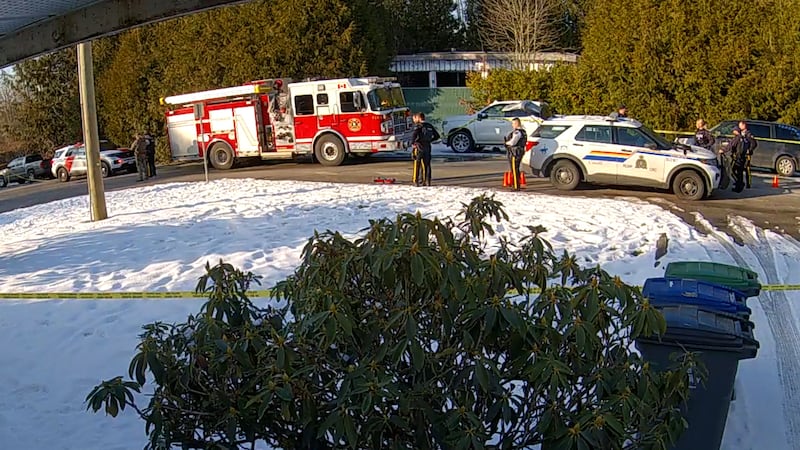
Warning: This story mentions suicide After six days of detailed and often emotional testimony, the five-person jury examining the fatal police shooting of a 15-year-old autistic teenager in Surrey is now deliberating. The coroner’s inquest into the death of Chase de Balinhard began Nov. 9 at the Burnaby Coroners’ Court, more than 21 months after he was shot and killed during a police response to a 911 call on Feb. 9, 2025. During the call, Chase reported having a revolver and expressed an intention to take his own life. His parents, however, have questioned whether their son genuinely intended to harm himself or fully understood the possible consequences of his actions. The inquest has examined those circumstances alongside Chase’s medical history, developmental disabilities and the information available to responding officers. Over six days of evidence, jurors have spent approximately seven-and-a-half hours a day in proceedings, amounting to roughly 45 hours in the courtroom. They have heard from family members, police officers, health-care professionals, educators and experts on subjects ranging from Chase’s childhood and experiences at school to emergency dispatch procedures, police training and the final moments of the teen’s life. For viewers, much of that evidence has been condensed into television reports lasting less than two minutes. The jury, however, has heard the testimony in its entirety. Now, members must consider that substantial volume of evidence, establish the facts surrounding Chase’s death and decide whether recommendations could help prevent similar tragedies. There is no set timeline for deliberations. What did we know before the inquest? CTV News Vancouver first investigated Chase’s death in September 2025, publishing a five-part series called Lost in Translation. The investigation examined police de-escalation tactics, training on autism and other developmental disabilities, and concerns raised by families about the way first responders interact with neurodivergent individuals. It also explored gaps in provincial policing data and the De Balinhard family’s efforts to secure a coroner’s inquest. At the time, B.C.’s Independent Investigations Office (IIO) had not completed its investigation into Chase’s death. The civilian police watchdog released its findings on Dec. 4, 2025, concluding there were no reasonable grounds to believe any officer had committed an offence. The IIO determined that the officers who discharged their firearms were legally justified in using lethal force in the circumstances. The report established that Chase had called 911 himself, reported having a revolver and made statements indicating he intended to end his life. Following the call, police attempted to communicate with him during an encounter lasting approximately 22 minutes. The investigation found that Chase pointed what appeared to be a handgun toward officers multiple times before two officers fired almost simultaneously. He was struck by a single bullet and died at the scene. The weapon Chase had was later identified as a realistic-looking pellet revolver. The IIO’s findings concern whether officers may have committed a criminal offence. They do not establish what Chase privately intended or whether he understood how police would interpret his actions. His parents have maintained that his developmental disabilities are essential to understanding the events that unfolded. Which police agencies responded? The shooting happened during Surrey’s transition from the RCMP to the Surrey Police Service (SPS), a distinction that has sometimes caused confusion. SPS officially became the city’s police of jurisdiction on Nov. 29, 2024. However, the transition was being implemented in phases. At the time of Chase’s death, RCMP members operating through the Surrey Provincial Operations Support Unit continued to provide frontline policing in the Cloverdale area. The response involved officers from both the RCMP and SPS. One of the RCMP officers involved in the shooting was a Squamish RCMP member working an overtime shift in Surrey. The coroner’s inquest has examined the actions of the responding officers and the information available to them at the time, rather than treating the encounter as the responsibility of a single police organization. What new information has emerged? While the IIO investigation provided a detailed account of the police encounter, the inquest has allowed the public to hear a broader range of evidence about Chase’s life, the circumstances preceding his death and the systems involved in responding to him. Chase’s mental health and school experiences The jury heard extensive testimony from Chase’s treating psychiatrist, who discussed his diagnoses, treatment, mental-health history and recurring suicidal thoughts. The psychiatrist described previous expressions of distress and the clinical assessments made during his care, including occasions when Chase reported suicidal thoughts without an identified intention to act on them. The evidence provides context for the statements he made during the 911 call but does not establish with certainty what he intended on the day he died. The jury also heard about Chase’s declining attendance at Clayton Heights Secondary School and the challenges he experienced accessing consistent educational support. An educator who worked with him testified about changes to the assistance available to him, including concerns about support being reassigned despite his disability designation. That testimony raised questions about how school districts allocate funding for students with disabilities, how individualized education plans are implemented and what intervention occurs when attendance deteriorates. CTV News has repeatedly reached out to the Surrey School District for comment on this matter, with no reply. The 911 call and information available to police One of the most significant moments of the inquest came when the jury heard the recording of Chase’s approximately 19-minute call to 911. The recording provided a firsthand account of what Chase told the call-taker, including statements about his emotional state, his autism and the revolver he was carrying. Jurors also heard testimony about what information was passed to responding officers and how emergency calls involving a possible firearm and suicidal statements are managed. The IIO report had already established that officers were informed Chase was autistic. The inquest examined that information-sharing process in greater detail, including how responders might access additional information about a person’s communication needs or previous mental-health care. The role of Car 67 The jury also heard from a psychiatric nurse who responded as part of Car 67, Surrey’s integrated police and mental-health response program. Car 67 pairs police officers with psychiatric nurses to assist people experiencing mental-health crises. Testimony examined the information available to the nurse, efforts to contact Chase’s family and the practical challenges of providing mental-health assistance during an unfolding police response. The evidence prompted discussion about whether existing safety plans, family contact information and other relevant details could be made more accessible to first responders. One idea explored during questioning was a voluntary alert system that could identify an individual’s particular communication needs and direct officers toward an individualized crisis plan. Officers describe the confrontation The inquest also provided an opportunity for the jury and public to hear directly from officers involved in the response, including those who discharged their firearms. Several became emotional while recounting the encounter and its aftermath. They described their attempts to communicate with Chase, assess the perceived threat, maintain distance and use cover while responding to someone they believed was carrying a real handgun. The jury also examined police training and the availability of less-lethal options. These firsthand accounts offered additional context to the police evidence previously summarized in the IIO’s public report. Police training and autism The need for autism-specific police training was a central focus of CTV News’ initial investigation and was also addressed in the IIO report. The inquest has examined what training officers received at the time of Chase’s death and what has changed since. Witnesses described updates to mandatory crisis-intervention and de-escalation training intended to improve officers’ understanding of autism, sensory sensitivities and communication differences. The jury also heard about partnerships between police agencies and autism organizations, including specialized training offered by Canucks Autism Network. Questions have focused on how officers can recognize signs of distress, adapt communication techniques and avoid misinterpreting behaviours that may occur when an autistic person becomes overwhelmed. The provincial government has said some training improvements were already being developed before Chase’s death. What issues could the jury address? Across the six days of testimony, several themes emerged through witness evidence and questions from jurors. They included autism-specific training for police and other first responders, communication and de-escalation techniques, and how 911 dispatchers relay important information during emergencies. Jurors also explored whether systems such as PRIME could provide quicker access to individualized safety plans, along with the potential role of family members and mental-health professionals in developing those plans. Other discussions examined police use-of-force training, integrated mental-health response teams, educational support for students with disabilities and regulations involving realistic-looking pellet guns. How does a coroner’s inquest work? A coroner’s inquest is not a criminal trial. Under B.C.’s Coroners Act, it is a public, fact-finding proceeding intended to establish the circumstances surrounding a death and consider measures that could prevent similar deaths. A jury of five to seven people hears evidence from witnesses under oath. Witnesses may be questioned by inquest counsel, lawyers representing approved participants, the presiding coroner and members of the jury. The jurors must determine facts such as when, where, how and by what means the death occurred, as well as its classification. They may also make recommendations intended to improve public safety. However, a coroner’s jury cannot determine criminal or civil responsibility, and its recommendations are not legally binding. That is an important distinction in Chase’s case. The IIO has already concluded that the officers’ use of lethal force was legally justified. The inquest serves a different purpose: examining the circumstances of the death and identifying potential lessons to help prevent another tragedy. Once all evidence has been heard, the jury deliberates privately. Its discussions are confidential. Why can’t CTV News show video from inside the courtroom? Although coroner’s inquests are public proceedings, there are strict restrictions on recording and broadcasting what happens inside the courtroom. Journalists cannot bring in television cameras and film the testimony. Accredited media may be permitted to make audio recordings for note-taking purposes, but those recordings cannot be broadcast or published. That means CTV News can report on what witnesses say under oath but cannot simply play recordings of their testimony for viewers. Access to evidence is also restricted. Throughout the inquest, jurors have been shown documents, photographs, recordings and other materials presented as exhibits. However, the fact that evidence has been presented publicly does not automatically authorize a news organization to reproduce it. Journalists must apply through the B.C. Coroners Service for access to exhibits they wish to publish or broadcast. The presiding coroner determines whether those materials can be released. Those applications can take time, and access is not guaranteed. This helps explain why viewers may hear detailed descriptions of evidence in CTV’s coverage without being able to immediately see or hear the original exhibits. It is also why daily reporting can provide only a condensed account of the extensive evidence presented during the proceedings. What happens when the jury reaches its decision? Once deliberations are complete, the jurors will return to the courtroom to deliver their findings and any recommendations. Those findings become part of a public document known as the Verdict at Coroner’s Inquest. Recommendations may be directed toward police agencies, government ministries, health authorities, school districts or other organizations, depending on the evidence presented. However, the jury cannot require those organizations to implement changes. The verdict is generally made public through the B.C. Coroners Service, with an updated version containing the presiding coroner’s comments released afterward. For Chase’s parents, Crystal and Rick de Balinhard, the proceedings follow more than 21 months of seeking answers about the circumstances of their only child’s death. They have consistently expressed hope that examining their son’s case could lead to improvements in how first responders interact with autistic and neurodivergent people. CTV News Vancouver will continue covering the proceedings and report on the jury’s conclusions once they are announced.If you or someone you know is experiencing a mental-health crisis or having thoughts of suicide, call or text 988 for free, confidential support, available 24 hours a day across Canada.