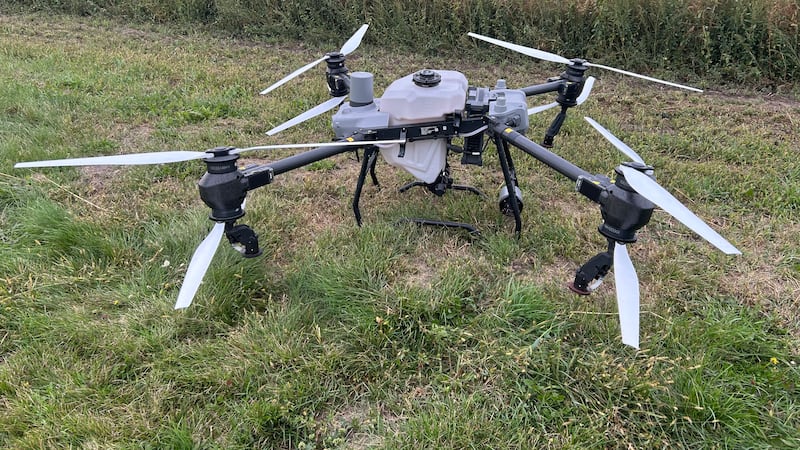
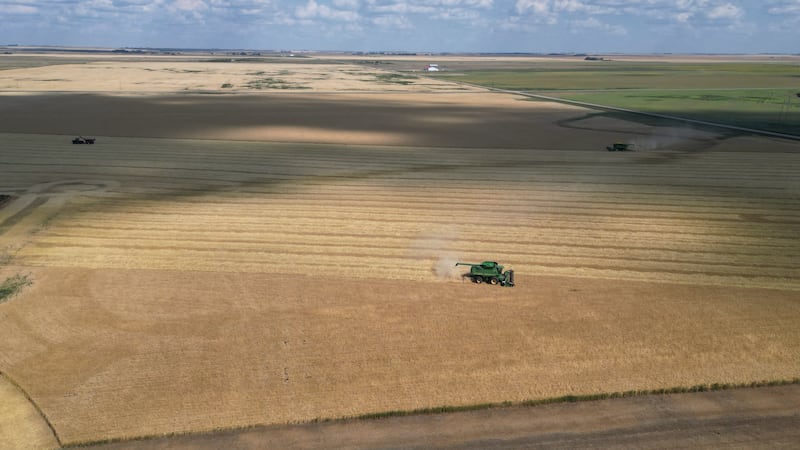
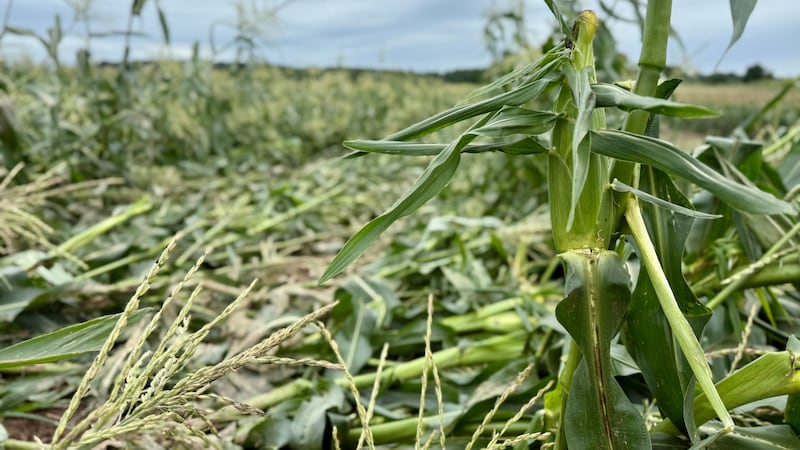
CARMAN, MAN. – University of Manitoba researchers are developing new technology they hope will help farmers use fewer chemicals while maintaining crop yields. Drs. Dilshan Benaragama and Nasem Badreldin are developing innovative technology designed to maximize crop yields, while minimizing chemical use, applying treatments only where they are needed. Benaragama, an assistant professor at the University of Manitoba, said the goal is to make farming smarter, more affordable and environmentally friendly. “We are focusing on bringing in technology, like most advances in remote sensing technology with drones and then combining with AI technologies to solve problems in western Canadian farms,” he said. Farmers are increasingly using drones, satellites and other sensors to monitor their fields and identify areas that need additional nutrients, but Benaragama says farmers don’t always have the equipment needed to act on that information. That’s where the research team hopes to make a difference. Their research project has received more than $670,000 in funding and will use smart sprayers, precision seeders and a tractor at a test field in Carman, Man., about 75 kilometres southwest of Winnipeg. The team has already developed ways to use digital images and sensors to identify things like soil conditions, moisture, nutrients, weeds, and pests. The next stage of the research is testing whether farmers can actually act on that information. If successful, Benaragama says the technology could reduce chemical use, environmental damage and input costs while maintaining crop yields. “We are working on developing that machinery that helps us to advance research,” he said. The team’s first step will be to custom-build the precision equipment they need. Aside from the tractor, the required smart nozzles and sprayers are not yet commercially available. Their designs will therefore be tailored to different field and farm sizes over the winter, with the goal of having them ready for testing next year. Badreldin hopes this technology will not just make a difference for farmers in western Canada, but for farmers around the world. “We hope that we will give them much more robust data to work with, information that will help our economy and also provide some sort of sovereignty to the information about our lands,” said Badreldin, who is an assistant professor in the department of soil science at the University of Manitoba. “So instead of depending on other international data sources to know and understand what’s happening in our soil, we have home build technology and AI that understand our challenges and our needs.” Badreldin also hopes the project will give students entering the workforce the tools and knowledge they need to work with emerging agricultural technologies. He believes farming could become even more automated in the future. Indeera Hettiarachchige says she is excited to partake in this research. “Trying to find solutions for those kinds of problems as a student researcher helps me to develop my own career, as well as give something big, maybe something small, but something that has a big impact,” Hettiarachchige, who is a PhD student at the university, said. “Integrating the digital technologies, the precision applications and the spray drones, the sensors that we have is something that is important so that we are not overusing the chemicals.” The research comes as Manitoba farmers navigate another difficult growing season marked by unpredictable weather. Producers in southwestern Manitoba and the Interlake were particularly affected by a major two-day storm in June that flooded fields across the province. Benaragama says he hopes the technology can make farmers’ jobs a little easier. “The way I have seen the technology advances evolving, I think that’s a big potential for farmers to change the way we do farming for the future,” he said. “I want to make sure that farmers are optimistic about this technology.”