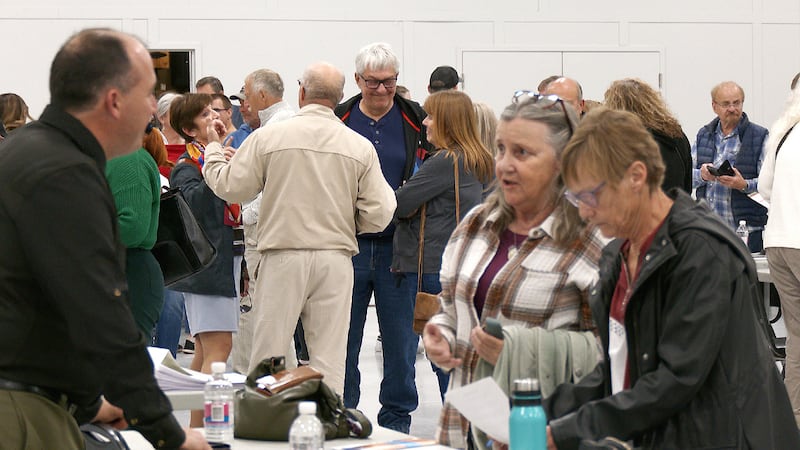
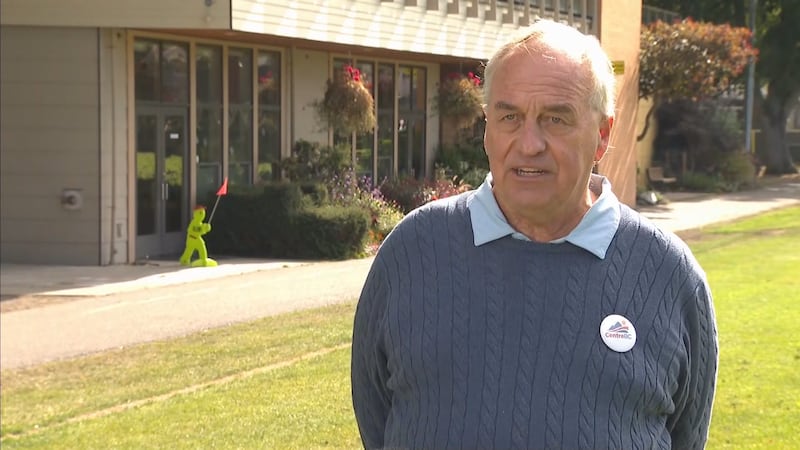
The New Brunswick Federation of Woodlot Owners says the pending closure of the Nackawic pulp mill is “quite a kick to the gut” at a time when the sector is still dealing with the impacts of U.S. tariffs. “To lose such a substantial market as AV Nackawic mill would be absolutely devastating to not just to the community and to the workers, but it ripples through the whole forestry sector,” says federation president Rick Doucett. “We have a fairly small number of mills and each mill uses certain products. So, if you lose a mill like AV Nackawic, which uses poplar, birch and maple, it affects all your harvesting abilities and your profitability.” Doucett says before U.S. tariffs came into effect, woodlot owners in Western New Brunswick could send their product directly to Maine. He says with the current administration, it’s far too complicated to go that route now. He says he hasn’t yet checked if other nearby mills are taking additional wood since the news of Nackawic’s future came out. The closure comes with frustration for woodlot owners says Doucett, who points out this mill has had issues in the past and was bailed out by the government 20 years ago at a price tag of $100 million. “When it went bankrupt the first time, we and a lot of woodland owners and a lot of marketing boards lost a lot of money on that bankruptcy,” Doucett highlights. “It’s a little frustrating if you put that much tax dollars in that it feels like you didn’t get a full return for your money.” “It does sort of feel like maybe the corporation that took control of it and was running it made a decision not to put a lot of capital dollars into the mill and kind of ran it into the ground.” While Doucett is hopeful to see the mill restored, he says it must be done smartly to avoid another similar instance in the future. Until there is more certainty with the market, he says some woodlot owners have to press pause on cutting. “For a woodlot owner or wood producer to go out and spend $1 million on harvesting equipment with this level of uncertainty, it’s just not going to happen,” Doucett points out, adding the mill closure has created a lot of uncertainty in the market. “We’ve already lost a fair amount of truckers and a fair amount of wood producers on the private side in the last few months. I suspect this will probably drive more of them out of business.” In a statement, Forest NB executive director Kim Allen says the idling of the Nackawic mill will have serious and far-reaching consequences for the entire community in that part of the province. She says AV Group intends to continue operating in southern New Brunswick, while keeping a mill open in the north. The statement says the group remains committed to operating in New Brunswick. “Given the integrated nature of New Brunswick’s forest sector, the idling will require a realignment of wood flows,” says Allen. “Industry participants are actively working to manage these adjustments and maintain operational stability across the sector.” “New Brunswick’s forest sector has a demonstrated record of resilience and remains a major employer and contributor to the provincial economy,” the statement continues. “Forest NB and it’s members are committed to working collaboratively with government to achieve policy alignment that supports provincial economic objectives, strengthens industry competitiveness and creates long-term benefits for workers, communities and the province.” Union Update On Tuesday for the first time since news broke of the mill’s future, Unifor officials held a meeting for affected members of the mill. Of the roughly 350 employees at the mill, around 200 are represented by Unifor. Local 219 president Grant Charlton, who is also a chemical plant operator at the mill, admits it wasn’t an easy meeting for anyone involved. “It was a somber room,” he admits. “I think starting to get answers to some of the questions helped settle some of the uncertainty, but it’s still a very stressful time.” He says many of the questions pertained to employment insurance, severance packages, what plans are in place to protect the mill once it idles, and what has been discussed with the New Brunswick government. He says the workers are a resilient bunch, some of whom have gone through a similar incident before at this mill or elsewhere. He says right now the union is on a dual track, one of which is dealing with the immediate fallout of the closure like finding employees new employment opportunities. The other is advocating for the future of the mill, and the important role it plays in New Brunswick’s forestry sector. “We’ve had open discussions with the government about what could lie in the future for the mill,” Charlton says. “Right now, we’re just looking for the company to come fill the seat at the table and give us a plan for what the future looks like.” For more New Brunswick news, visit our dedicated provincial page.