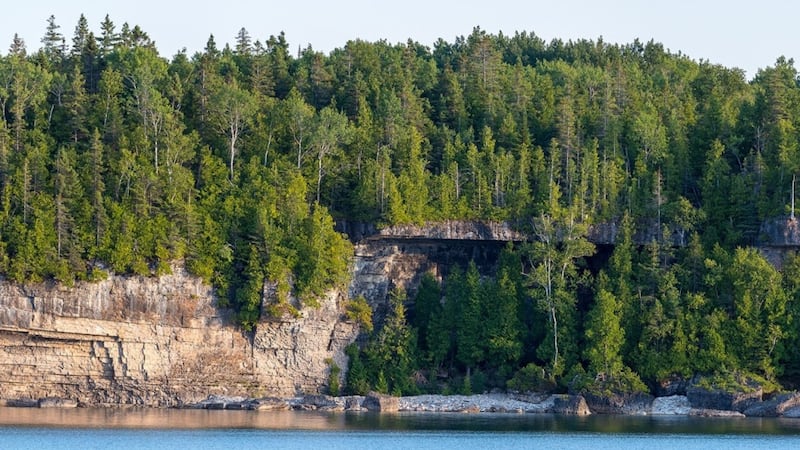
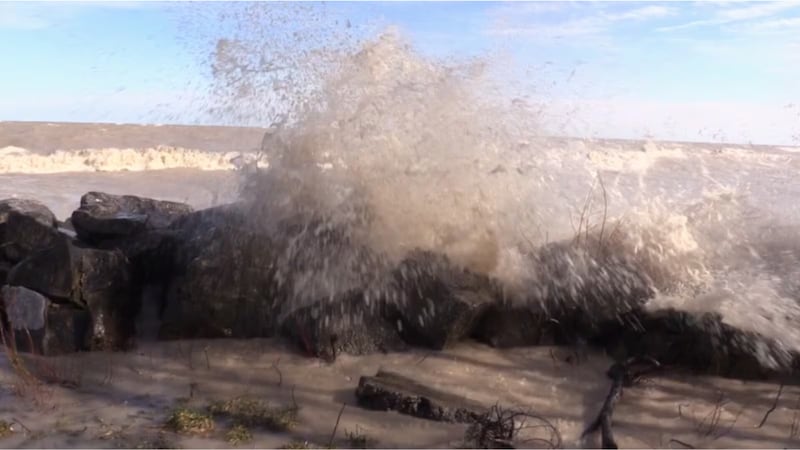
Ocean Week Canada is a coast-to-coast-to-coast celebration that offers an opportunity to dive into ocean awareness. In Iona, N.S., young people were getting their feet wet when it comes to learning how they might make a difference. “(Let’s) get a conversation going on about climate change in the Bras d’or Lakes,” said Eva Carmichael, a recent graduate of the Marine Affairs program at Dalhousie University in Halifax. Carmichael, who is from British Columbia, made it from the West Coast of Canada to the East Coast thanks to a grant through the Ocean Frontier Institute. Having lived near the Pacific Ocean, and now the Atlantic, she has a good understanding about how our waters are changing. “Water is getting warmer,” said Carmichael. “We are seeing a lot of increased erosion, especially in coastal communities, ocean acidification.” A lot of the focus during Ocean Week Canada in Cape Breton is on the unique marine biosphere which has made the Bras d’or Lake a UNESCO World Heritage Site. “There are a lot of creatures in the lake that you don’t find anywhere else until South Carolina,” said Ann Marie MacNeil, of the Aros Na Mara Cultural Centre in Iona. Aros Na Mara means ‘house of the sea’ in Gaelic. “It is special,” said MacNeil. “The tides, the salinity, the oxygen levels. Researchers can come and study here and because of the location, they can do research about the lake and they’re not out on the ocean because it mimics it so much.” Researchers from Dalhousie University are expected to be in Iona next weekend ahead of World Oceans Day. In Halifax, there are 10 days of waterfront events capped off by World Oceans Day Festivities on June 8. “Here in Halifax, that relationship that we have with the ocean is really explicit,” said Alanna Canaran, Ocean Week Halifax co-chair. “But sometimes I think people forget that the ocean is everything. It supplies us with oxygen, with food, with livelihood and it connects us all, all around the world.” For more Nova Scotia news, visit our dedicated provincial page