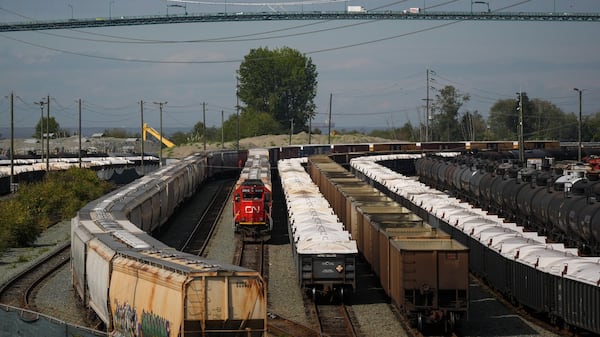
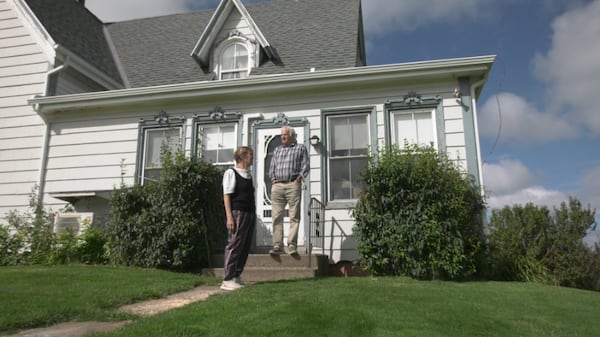
In the small eastern P.E.I. village of St. Peters Bay — population under 300 — nearly every family has a story to tell about war. The community is believed to have suffered one of the highest per-capita casualty rates in the entire British Commonwealth, an extraordinary sacrifice that still shapes this quiet seaside village today. This Remembrance Day, residents gathered at the village monument a granite stone etched with dozens of names. “We had the highest number of casualties per capita in the entire British Commonwealth — not just Canada,” the master of ceremonies told the crowd. For Lynn Thompson MacInnis, remembrance is personal — and deeply rooted in her family history. “My uncle Eugene was a private with the North Nova Scotia Highlanders,” she said. “He was killed storming the beaches of Normandy on D-Day … My mom always made sure we’d never forget.” Eugene Henley was Lynn’s mother’s brother, one of many young men from St. Peters who enlisted when war broke out. “He actually tried to enlist before he was old enough,” she said. “He snuck out of the house and went back when he finally could. He was probably just 20 or 22.” Her mother grew up just down the road from the train station and never forgot how news from the front arrived. “She could see the station from her house,” Lynn recalled. “That’s where they got the notices — when someone was missing or had lost their life. She never forgot that.” Every telegram that came by rail meant heartbreak for another family. On her father’s side, Lynn’s other uncle — Johnny Thompson — also served overseas. His wartime experience remained unspoken for decades until Lynn’s daughter uncovered it during a school project. “My daughter Jesse did a heritage project on the veterans from St. Peters,” Lynn explained. “She interviewed my dad’s brother Johnny. He told her about getting caught behind enemy lines and trying to survive on hard biscuits.” It was a story no one in the family — not even Lynn’s father — had ever heard before. “On the drive home, Jesse was telling us what Uncle Johnny had said,” Lynn said. “My dad got emotional. He said it was the first time he’d ever heard any of it. He’d never talked about it with his brother. “I couldn’t be prouder of both my uncles for taking part and fighting for our freedom. That’s why we keep coming back every year.” Joan Larkin was also born after the war but grew up surrounded by its shadow. Her father Joseph Larkin fought in the Pacific as a member of the Royal Rifles of Canada. “My father fought in Japan,” she said. “He suffered a lot of different things — dysentery, diarrhea, terrible food. They were dragged to the mines.” Joseph returned home to P.E.I., raised eight children and worked as both a farmer and fisherman. But Joan says the war left marks that never truly healed. “He was a good father,” she said. “But you could tell the war never left him. He used to say nobody would believe what he went through.” For her, Remembrance Day is about gratitude and continuity. “We have to be thankful,” she said. “They fought for our freedom. We just have to keep remembering.” Another longtime resident, Donald Larkin, a veteran himself, shares a similar respect for the generation that served. “In my family, my father’s brothers and sisters were all in the war, and they all came back,” he said. “I’ve been exposed to military people my whole life — their attitude and discipline shaped this community.” Donald calls the annual service one of the most meaningful gatherings of the year. “For a small place like this, it means everything,” he said. “We remember what they did, and we keep that sense of duty alive.” Local historian Juanita Rossiter, who has studied the area’s wartime history for decades, says St. Peters’ unusually high enlistment and casualty rate didn’t happen by chance. “St. Peters had the highest rate per capita of enlistment and deaths in the British Commonwealth,” she said. “It became almost cultural — following in the footsteps of the first generation that went to war.” Rossiter believes the First World War set the tone for the second. “I think it built on what happened in the First World War,” she explained. “So many went then, and in the Second (World War) the next generation followed their example. It was part of who they were.” She estimates more than 300 men and women from the St. Peters area served across the First, Second, and Korean wars — an astonishing number for such a small community. Among the memories Rossiter has collected, one story stands out: the day-to-day dread of seeing the stationmaster’s car. “People remember watching for Vince Murphy, the stationmaster,” she said. “When they saw his car, they knew someone was about to get terrible news.” In the late 1970s, local volunteers formed the St. Peters Historical Society and began documenting every veteran they could find. Their work led to the publication of “They Chose to Serve” in the 1980s. “The proceeds from that book went toward building the monument we have today,” Rossiter said. “It’s not just stone — it’s our story.” Her own family is part of that history, just a short distance away in the community of Morell. “My grandfather Eugene Rossiter fought in France during the First World War,” she said. “He was gassed overseas and died at 41. Every year we still lay a wreath in his memory.” As this year’s ceremony ended, residents lingered to talk and reflect — the same families whose stories fill the pages of “They Chose to Serve.” “In a place this small, every loss was personal,” one attendee said. “And those stories are still being told — one family at a time.” For more P.E.I. news, visit our dedicated provincial page.