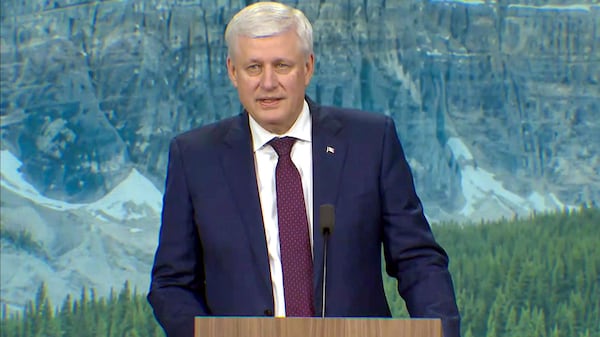
The federal government is opening up Canada’s four largest airports for private investment — including in Calgary. Prime Minister Mark Carney told an investment summit in Toronto on Tuesday that he wants to take the billions of dollars it could make from private equity in the country’s four largest airports and reinvest that back into smaller, regional airports. According to the Canada Airports Council more than half a billion dollars is brought in from annual lease payments. “The Government of Canada will retain ownership of the underlying land and assets, but we will unlock their true value by bringing in new capital and expertise to their operations and their growth,” Carney told the summit. Vancouver, Montreal, Toronto and Calgary are Canada’s largest airports. Carney is hoping to secure private funding to help operate and maintain the facilities, but the feds would still own the land. “We want to know the details of this plan, and we want to see how it’s going to save money for Canadians,” said Conservative Party Leader Pierre Poilievre. One passenger rights advocate says there are more questions than answers on Ottawa’s plan. “Who is going to ensure that those private monopolies are not abusing their monopoly to put undue cost on the airlines or on the passengers to ensure profit to their shareholders?” said air passenger rights advocate Gabor Lukacs. The money made from the investments would help fund smaller airports that generally have trouble securing financial capital. The prospect of regional reinvestment resonates with some travellers from smaller communities, such as Nora Jackson from North Bay, Ont., who was visiting Banff and Jasper. “As long as he (Carney) doesn’t give the land away, we’re all good, because investing in Canada is a good thing,” Jackson told CTV News. One aviation expert believes the investments could lead to future dining, shopping and hotel opportunities that could help alleviate some costs for the passenger. “Canadian airports are functional,” John Gradek said. “Airports are there to move passengers through it. They’re not places that you’d want to hang out.” “The passenger will get lesser fee increases. And then if we leave the model the way we know it today,” Calgary Airports has previously said its open to discussions on how to further enhance the facility. “If there’s a structure that is good for our community, of course it’s got our support,” Calgary Airports CEO Chris Dinsdale said on April 30, 2026. And in a statement late Tuesday, Calgary Airports welcomed further engagement. “YYC has earned a reputation as one of North America’s leading airports, and we welcome the opportunity to contribute to continued discussions regarding the future of Canada’s airports,” Dinsdale said. “As discussions progress, Calgary Airports is keen to explore approaches that strengthen Canada’s airport system. This includes improving access to investment and supporting long-term growth, while maintaining a strong focus on guest experience, affordability, governance, competitiveness and continued reinvestment in the infrastructure and services Canadians rely on.” And as the pitch could soon take flight, Calgary’s mayor is hopeful it could spur possible investment at the municipal level. “If certain portions of them might be under private ownership, that’s a significant amount of land and property within the City of Calgary that could begin to start generating property taxes to be able to support municipal infrastructure,” Jeromy Farkas said.