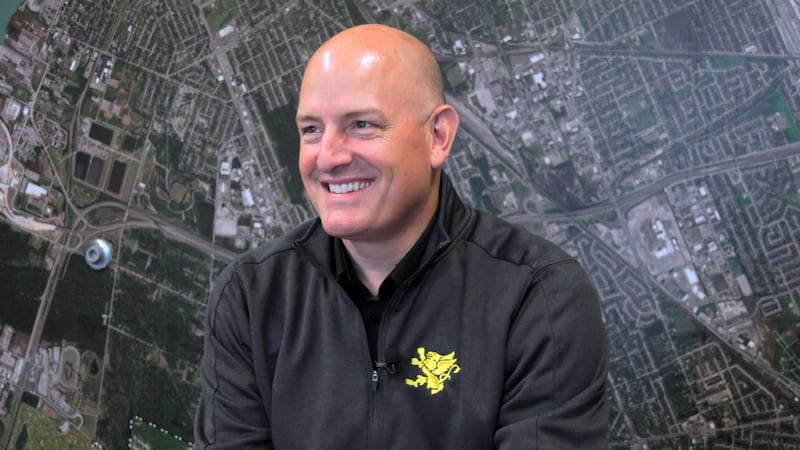
ADAZI, Latvia -- NATO’s largest-ever exercise along the border of Russia and Belarus is being called “a mission rehearsal” by the Canadian commander at the helm of NATO operations in Latvia. Col. David Brassard commands NATO’s Canadian-led multinational brigade in Latvia. This week, he has deployed 3,000 soldiers from 14 NATO nations to multiple locations along NATO’s eastern flank, where all roads lead to Russia and Belarus. “What we’re doing is sending a message: we have a defence plan, we have equipment, we have the personnel,” Brassard said. Latvia, along with Estonia to the north and Lithuania to the south, makes up NATO’s eastern flank. The threat from Russia toward the Baltic region has only grown since the full-scale invasion of Ukraine. “The situation has deteriorated in the east,” Brassard said during a one-on-one interview with CTV National News at the Adazi Military Base in Latvia. Asked how he views the threat Russia currently poses to eastern Europe, Brassard says the situation is fragile, but stable for the time being. However, he lists drone incursions, incidents of “espionage and even sabotage through acts of arson” as a form of hybrid warfare he believes Russia is carrying out against multiple European countries including Latvia. “Is going to the east 100 per cent safe right now? No, it isn’t. We must take precautions when we get close to the border,” Brassard said. That’s exactly what Brassard’s brigade has executed this week, moving roughly 600 vehicles and thousands of personnel toward a training ground on Russia’s doorstep. Pointing to a map of Latvia in his office, Brassard shares that he had a platoon within five to seven kilometres of the Baltic defence line and Russia in recent days. CTV News has embedded with multiple battalions and squadrons along NATO’s eastern flank this week for the historic exercise, dubbed “Resolute Reforger.” On Thursday, while embedded with a squadron of military engineers, CTV News toured a newly constructed underground bunker and trench system just 30 kilometres from Russia’s border. The fully covered bunker was constructed to train soldiers how to protect themselves while remaining on the offensive during modern warfare. From deep inside the dark bunker, drone operators can stay covered and concealed while remotely flying a drone into enemy territory. “Tactics on the battlefield are evolving very fast,” said a captain of the Multinational Engineer Squadron, whose name CTV News agreed to withhold to protect his identity. “Things have changed, we’ve learned and we’re adapting with our partners to be able to adapt our training for the next-generation war environment.” Brassard says he’s waiting on a $4-million order of drones to arrive in Latvia as he works to provide NATO troops with a cutting edge, modern-day arsenal. “Do I have all the capability that I want (at my disposal) no I don’t,” Brassard said. “However, one thing for sure is I do have the capabilities that I need to be able to address any crisis in the east.” Brassard says that military spending is no longer just an empty promise; he says Canada is beginning to deliver on its pledge to increase military spending while making a meaningful contribution to NATO. The colonel has confirmed that an even larger exercise is planned for this coming April. Dubbed “Resolute Warrior,” 900 military vehicles, and 3,600 personnel are expected to take part across NATO’s eastern flank. “This is only the beginning,” the commander said.