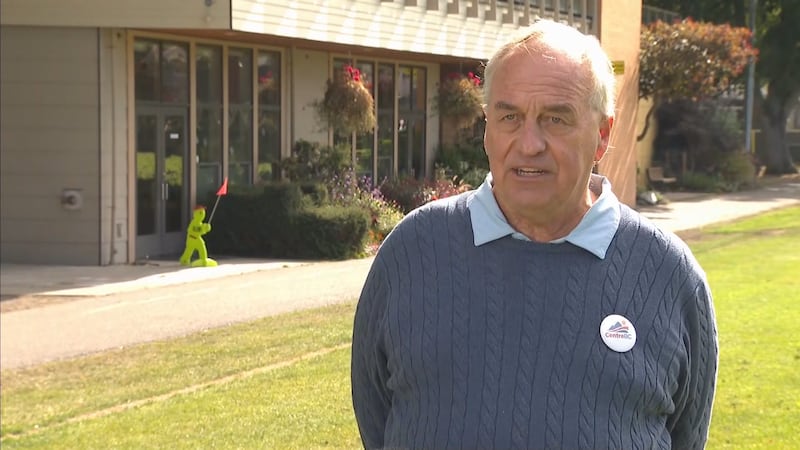
HALIFAX – Barry Walker bought his home in Dartmouth, N.S., 39 years ago, and for the first time since moving in, he has raked leaves on his property long before September. “I have never seen trees in this distress in my time here,” said Walker. “I have never seen trees losing the leaves like this in August.” Walker has been doing his own research and is certain recent cycles of hot, dry weather have inflicted serious damage on many trees and have caused dead leaves to fall to ground in the Halifax-area much earlier than previous years. It has created what he called a “fall vibe” in August, and it has heightened his concern for the overall health of the trees on his street. “This is just one sign of what’s happening all across different environments in our province,” said Walker. Peter Duinker is a Professor Emeritus (retired) of Resource and Environmental Studies at Dalhousie University in Halifax. Duinker has spent decades studying trees and ecosystems in Canada and abroad. “I don’t recall seeing this much leaf fall by Aug. 15,” said Duinker, who added the Norway Maples mostly being impacted in the Halifax-area are still healthy with an abundance of foliage, but it is still concerning to see a lot of leaves on the ground this early. “I would put it down to heat, and at the same time we are not getting enough soil moisture.” As he continues to monitor the trees and the falling leaves, Duinker will also closely watch the weather patterns as this dry hot August continues in Nova Scotia. “I am as concerned for the woodland trees around Nova Scotia, as I am for the urban trees,” he said. Leaves falling from trees earlier than normal is not limited to just Nova Scotia – it has also happened in other parts of Canada this summer. CTV science and technology expert Dan Riskin pointed to the effects of climate change as an explanation. “When people talk about a one degree or two change, it doesn’t really register with them because it is not a big difference,” said Riskin. “But when the leaves have all fallen in August instead of waiting until the fall, you can see that and you can feel it.” Riskin said climate and weather pattern changes can threaten the existence of trees that have previously thrived in an ecosystem. “In Nova Scotia, or in anywhere in Canada that has seen these kinds of conditions, what you’re seeing is the trees that are there now don’t match the weather that is there now,” he said. Riskin is concerned that if more hot, dry and extreme weather is on the way, these trees could endure added stress and lose more leaves earlier than normal.