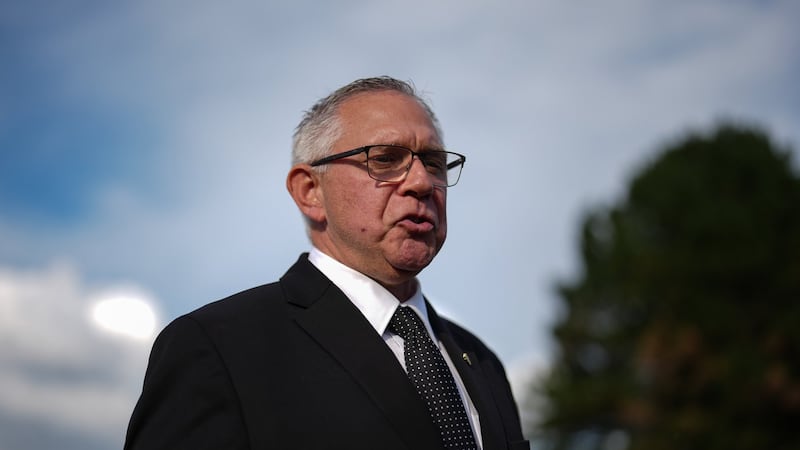
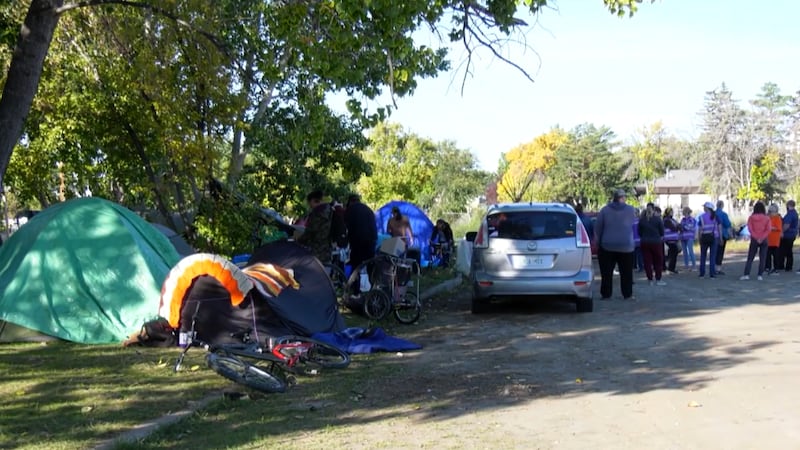
A group of Toronto tenants gathered at a local park to welcome new members to their group, called Toronto Tenants Union, which only formed in April with a mandate to protect renters, especially low-income earners, and inform them of their rights. Their latest push is against recently announced federal loans granted to private developers. “It’s very problematic because it’s just a bailout for the private developers who led us into this housing crisis in the first place,” said Bruno Dobrusin, co-chair of the Toronto Tenants Union, in an interview with CTV News. Prime Minister Mark Carney and Toronto Mayor Olivia Chow announced $2.7 billion on Wednesday towards building 18 housing projects over the next three years in a move aimed at adding thousands of new rental units to the market. The breakdown of the funding includes $310 million that will go towards building roughly 1,900 homes on city-owned land through the Build Canada Homes federal agency -- 700 of those will be supportive and affordable homes, while about 1,100 will be rent-controlled homes. But it’s where the rest of the money is going that tenant advocacy groups are taking issue with. Roughly $1.8 billion will be paid out in low-interest loans to private developers through the Canada Mortgage and Housing Corporation’s Apartment Construction Loan Program (ACLP), which can create roughly 3,700 rental homes in Toronto. Because the private-sector projects would be newly built, units that are first occupied after Nov. 15, 2018 would generally be exempt from Ontario’s annual rent-increase guideline. However, more than 1,000 of the 3,700-plus homes are expected to be designated affordable under separate affordability requirements. “It should be rent controlled, (it is) the bare minimum we need as tenants to survive,” added Dobrusin. “If it was up to us, (the funding) would all be going to public housing or nonprofit housing -- so take it out of the market -- and if any of that was going to private developers, it has to be with the condition that (it) is going to be rent controlled.” The other $600 million of the funding will be made available for future Toronto projects. The Canada Mortgage and Housing Corporation tells CTV News via email that these repayable loans are a necessity. “The ACLP provides fully repayable low-interest loans to home builders to encourage the construction of more rental housing for Canadians in undersupplied housing markets,” said Leonard Catling, a spokesperson for CMHC. “It plays a crucial role in filling Canada’s housing supply shortage by providing homebuilders with the necessary low-cost financing to support faster construction of more rental supply across the country.” Tom Storey, a realtor at Royal LePage, says he sees both sides of the argument, but believes more rental housing in Toronto should reduce rents for most tenants. “Even if you’re building larger units, that could mean downsizers are selling their home to move in there -- and that opens up inventory for the rest of the market,” Storey said in a Zoom interview with CTV News Saturday. “I can see both sides of the argument here, but I think more housing being built is a good thing. We’re not always going to love how it’s being built, but if the developers don’t get this type of financing -- which I really look at as just low interest loans for a period of time --they’re not going to build housing, and then we’re going to complain in 5 to 10 years why rental prices are going up again.” Mortgage broker Sean Cooper said government financing could help get some of those stalled projects moving again. “Look at my neighbourhood as an example,” Cooper said in a Zoom interview with CTV News Saturday. “There are so many projects that have been put on hold -- so just with the economy that we’re in and the tariffs -- companies are hurting as well. So many projects in my area are not getting sold and they’re not getting built. So, the government has this kind of opportunity for them to step in and actually help.” Alejandra Ruiz Vargas with ACORN Canada, an independent national community union for low- and moderate-income families, believes adding more rental units to the market won’t knock rent down enough for low-income families. “What are we talking about? $100? $50 lower? Because at the end of the day, one bedroom is costing $1,800 roughly,” said Ruiz Vargas in an interview with CTV News. “It’s our money, we should be the ones who call the shots, not the developers, because this is a crisis.”