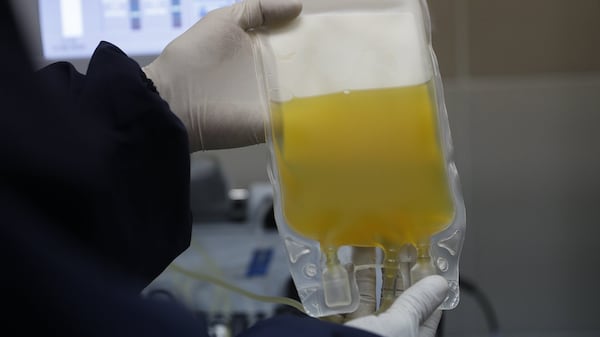
The province says it’s cracking down after recently learning of the loss of hundreds of millions of dollars spent paying for private lab tests with public dollars. Justin Wright, Minister of Primary and Preventative Health Services, said the government has been losing about $12 million each year paying for private tests being fulfilled through the public provider, Precision Labs. Wright blamed Alberta Health Services for the blunder and credited the province’s health-care overhaul for bringing it to light. “As we’ve separated out the system to be able to have more of a hands-on approach to it, we’re actually able to see where some of these challenges are,” Wright said. “This is the benefit of segmenting all of this out of AHS’s control. It’s no longer a black hole that we can be blocked out of.” “This problem has existed for over 15 years,” he said. “It’s coming to light now, and this is why we’re making the meaningful changes.” Wright said amendments to the Alberta Health Care Insurance Act would stop the leak by clarifying that lab tests associated with privatized health services would not be covered by Alberta health insurance. Those changes were among a multitude that make up the wide-reaching Bill 39 – or Health Statutes Amendment Act, 2026 – that was tabled on Wednesday. According to Minister of Hospital and Surgical Health Services Adriana LaGrange, the legislation would also give the province more power to oversee other elective or privately-insured health care. “They would allow government to establish clear requirements for physicians who provide services through self-insurance plans, and for insurers that offer that coverage … (and) they would support effective oversight through reporting and record-keeping requirements,” LeGrange said. Chris Gallaway, executive director of Friends of Medicare, told CTV News Edmonton that he was skeptical of the UCP’s newest suite of health-care changes. “Either care is medically necessary or it’s not; either it’s covered or it’s not,” Gallaway said. “It’s them who are shifting some of the definitions and some of what’s covered over time. “So, was it an oopsie or is it an opportunity to create yet another market for the insurance industry … because they’re claiming it’s not medically necessary care and thus they can get away with people paying out of pocket.” LaGrange and Wright both maintain that nothing in the new legislation would impact Albertans’ access to public health care. Should Bill 39 pass, the province would also move another step closer to launching “compassionate care,” which would force Albertans into rehab against their will in cases of “severe addiction.” Rick Wilson, minister of mental health and addiction, said amendments to the Compassionate Intervention Act and Mental Health Act would fine-tune the program ahead of its 2027 launch in hospitals and “secure facilities.” “Building an entirely new system of care is complex, and it must be done very thoughtfully,” Wilson said. “These changes will help health professionals work together more effectively, delivering more coordinated care that’s going to lead to better outcomes for patients.” The Protection for Persons in Care Act would also be updated to clarify which public providers are subject to the act and set out how reports of abuse are handled and investigated. Other changes would oversee the transition of public health inspectors to Primary Care Alberta, and update language in legislation and code to reflect Alberta’s new health agencies, corporations and ministries.