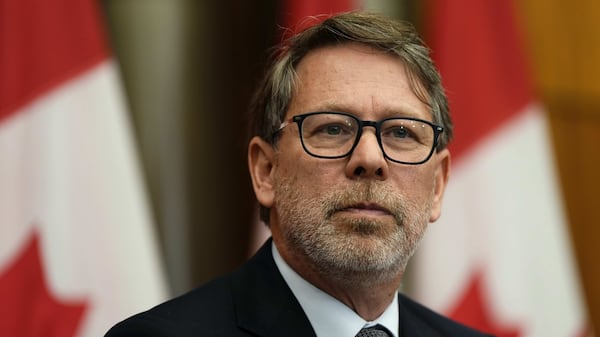
A new bill tabled in legislature Tuesday would prevent Alberta’s post-secondary institutions from taking a public stance on political, social or ideological issues that deviate from an academic purpose. Bill 38, or the Advanced Education Statutes Amendment Act, is a wide-ranging document that covers tuition fee regulation for non-international students, institutional neutrality as well as student and staff codes of conduct. Alberta Minister of Advanced Education Myles McDougall says universities should “stay in their lane” by ensuring a neutral environment for students to freely discuss their opinions, no matter how unpopular. He told reporters Tuesday it would require public and independent universities and colleges to establish and meet “freedom of expression policies,” which weren’t outlined in the bill but were expected to be solidified by next year. Specific penalties for not abiding by neutrality, he added, will be decided around that time, too. If passed, schools would be responsible for their own rules, although the bill would give the ministry power to direct staff to consult with campus communities. The ministry would also reserve the right to review potential policies. The changes to the Professional Governance Act and Post-secondary learning Act would ensure “common sense on campus,” McDougall added. While schools could make official expressions of sympathy during tragic events, he noted, they would be discouraged from taking stands on the political elements of a situation. “The expectation is that the institutions will provide the environment, the neutral environment, for different points of view, including those that may not be popular, to be expressed,” he said. “I don’t think it has to be that complicated … I don’t see this as being a problem, I think most institutions already feel that this is the role of the institution.” The government is defining institutional neutrality as a school’s duty to “refrain from issuing statements that take positions on political, social or ideological issues that are not related to its academic mission.” Freedom of expression refers to the rights of all members of post-secondary schools – students, staff and visitors – to express opinions, debate ideas and engage in discourse without “institutional censorship,” so long as the discussion is lawful. Alberta’s 26 public post-secondary schools have been expected to implement freedom of expression policies since 2019. The idea was sparked by what’s known as the Chicago Principles, created by the University of Chicago in 2014 to commit its academics to the “widest possible range of ideas to be spoken and heard, even those that are considered wrong or offensive by many.” Then-minister Demetrios Nicolaides began requiring Alberta’s post-secondary academic institutions to report annually on their efforts to protect free speech on campus in 2024. Private and First Nations post-secondary institutions would not be affected should Bill 38 pass, the Alberta government added. Alberta NDP shadow minister for advanced education, David Eggen, says the bill “does very little” to address the more central problems of underfunding in post-secondary schools. “It’s a huge waste of time. Institutions all have their standards by which they operate under ... This government is trying to bring forward this culture war garbage they’re importing from the United States,” he told reporters on Tuesday. Student, staff codes of conduct a ‘moving target’ The Alberta government says a 2025 government review of almost 200 policies found inconsistent writing and application of existing student codes of conduct. Amendments would see the ministry set minimum conduct requirements, although institutions would write their own codes and address violations on a case-by-case basis. McDougall said his ministry was working with stakeholders to fine tune what that conduct could entail. A separate panel exists currently to look at the impacts of artificial intelligence in post-secondary systems, for example. “My expectation is that this is a moving target,” he said. Licensing and tuition simplifications Bill 38 would move to cap tuition increases for existing domestic students at two per cent next year. The advanced education ministry would also set maximum tuition amounts for programs or groups of programs through ministerial order. According to the Alberta government website, average tuition fees are already capped at two per cent each year, while single programs cannot see more than 10 per cent tuition fee increases each year. McDougall says the cap in Bill 38 means domestic students will be guaranteed lower tuition fee raises in the 2027-28 school year. “We did not make that kind of statement that far in advance before … What happens in the future will continue to be dependent on circumstances.” Professional licensing requirements for those in specialized engineering and geoscience fields would also be streamlined with minor technical amendments to the Professional Governance Act. Both groups would be regulated by the Association of Professional Engineers and Geoscientists of Alberta, as opposed to having two regulatory bodies as they do currently. Bill 38 passed first reading on Tuesday afternoon.