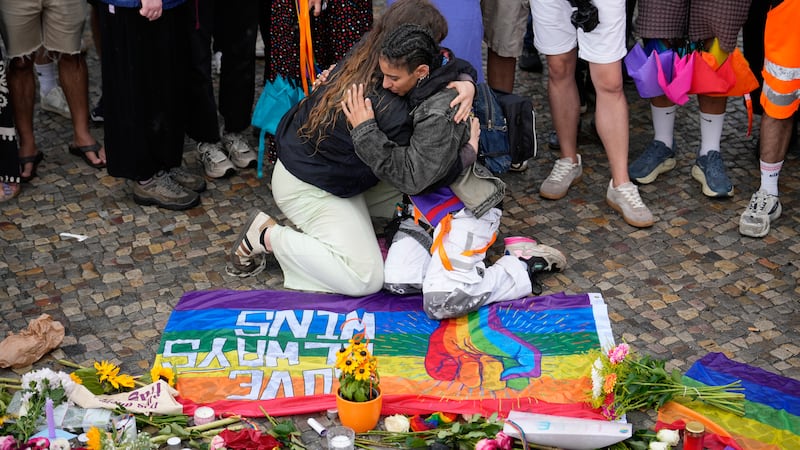
Grief can be an immense burden on anyone suffering loss, which is why an Edmonton woman created a group for people to grieve together and help participants heal. Walking with Grief in Nature began last year when organizer Kimberly Robbie was reminded of how important it is to connect with other people when you’re grieving, as it can be isolating. “It’s one of the most isolating, scary things that we go through in life, and there’s never a more important time to come together with other people,” Robbie, who is also a grief specialist and educator, said. “This walk was created around that intention, really, and off of my own story of searching for a safe space to kind of be with my broken heart when I was going through a loss that kind of shattered my life, the end of my marriage six years ago, and as well as some current losses that have been happening in my life.” Loss comes in many forms, she clarifies, not just the death of someone in your life, which is a misconception many carry. “On the ends of relationships, we actually experience a form of loss and grieving related to it almost every single day,” Robbie said. “We have tons of life changes and tons of things that end and change in our lives, so this all creates emotional loss and creates emotions of grief.” Losing a job or a friendship, or even moving cities are examples of loss that can cause feelings of grief. Even happy moments like retirement, marriage or having children can cause people to grieve for the life they had before. “When we don’t understand the human experience, we don’t understand why we’re feeling different emotions, we isolate in it, we don’t talk about it, we judge ourselves,” Robbie said. “When I started to realize how huge grief and loss is, how prevalent it is in my life, I started to understand some of the emotions I was feeling and why.” Each walk starts with an hour of “slow, mindful walking” and then an hour of group discussion. “Sharing is never mandatory, it’s just a space that becomes safe to kind of come and show up, however we’re feeling, without that structure,” Robbie said. She saw there were a number of groups in Edmonton, and many other places, that catered to a specific kind of loss or examined it in a certain way. “I wanted to create a space where people can kind of bring their broken hearts together without having to learn anything, because that has a huge power,” Robbie said. “We’re really good, as humans, (at) understanding and (finding) meaning in things, but sometimes it’s so important to drop out of our minds and come to our hearts and our bodies and just really be with what’s here and be with one another and what’s here without the education piece.” She also points out how grief can make people feel disassociated with their emotions, bodies, other people and the natural world around them. This is part of the reason for walking in nature, to help people ground themselves again. Kerrie Long, one of the participants in the March walk, calls the experience “really healing.” “These sessions are quite wonderful that we’re with people who have similar experiences, not necessarily identical, but we can certainly share some of the grief that we’ve been through and laugh about it, cry with each other,” Long said. Long lost her husband three years ago to cancer and six weeks after that, she was diagnosed with breast cancer. “I am, thank goodness, cancer free, but that’s what brought me here,” Long said. “For a long time, I thought that I could just heal myself, and learned pretty early on that I need help.” Robbie points to how if you break a bone, you are likely going to the doctor, maybe getting a cast, potentially doing some physical therapy to recover from the injury, but when it comes to grief, the messaging is different. “We’re not taught healthy ways to (grieve). Instead, we live in a world that gives us the messages about keeping strong, keeping a stiff upper lip and keep carrying on,” she says. Her goal is to change the messaging on grief and show people it’s ok to be a bit more vulnerable and honest about your feelings. “You can’t expect the heart to heal (on its own), you actually have to do the work,” Long said. “As painful as it is, once you start doing the work … I honestly don’t think you ever get through it, and it never becomes easier or harder in my experience, but it does become different, and the more tools that you have in the toolkit, as my husband would say, the better you are equipped to get through anything in life.” “It’s uncomfortable and it’s scary, but if we just give a moment to ourselves and our bodies to kind of open up to it, instead of kind of distract ourselves with something that feels really good, it’s actually it helps the emotions in our body,” Robbie adds. “It’s priceless to know that we’re not (alone), and it’s priceless to have an experience that makes us feel just a tad bit less lost or a tad bit less alone in a painful experience.” The grief walk takes place once a month, days and locations are available on Robbie’s website. The next one is set for April 25, with the location still to be determined. With files from CTV News Edmonton’s Connor Hogg