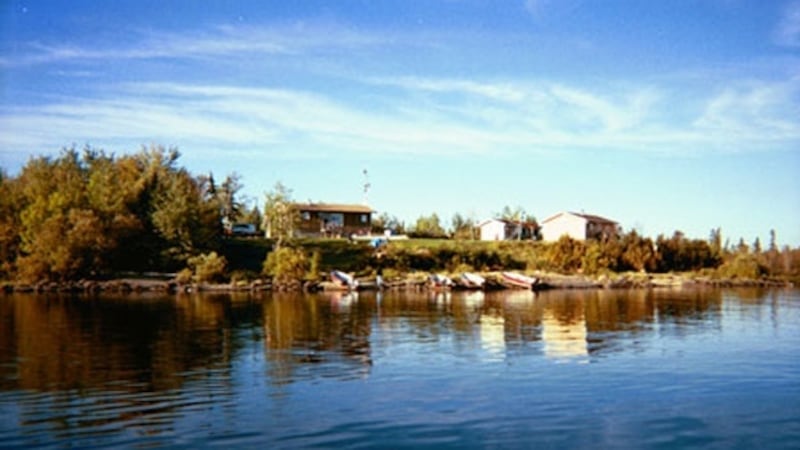
In its prime, Uranium City was described to be a small slice of heaven tucked away in Saskatchewan’s far north. “The part of Saskatchewan is very unique. There’s only air access, so you’re kind of remote, and you’re surrounded by wilderness where you could go out any time...it was like one massive playground...There was always something to explore, always something different to see,” John Chodzicki, a former resident who grew up in the community, said. Now, with an estimated population of less than 100 people, the community looks very different from the nostalgic images that many former residents hold close to their hearts. In its prime The Beaverlodge mining site, operated by Eldorado Nuclear (at the time, a federal Crown corporation), allowed for the community to grow into the definition of a boomtown in the 1950s. Families from Saskatchewan and across the globe flocked to the picturesque city located more than 1,200 kilometres from Saskatoon. “We grew up in a community that was very diverse population, but there was no real majority, there was First Nations, there was Métis, and there were a lot of people from other countries...Eldorado was a federal government company. So of course, with that in play, what it did in our community was it brought everybody together,” William Loutitt, a former resident, said. Loutitt added that the sense of community was very strong, and those growing up in the area were afforded many unique opportunities. “It was a federal town. So there was a lot of amenities that a lot of other communities never ever had the opportunity for. Where do you get an opportunity to fly around as a young kid to play hockey in different cities or towns?” Loutitt said. Loutitt’s sister, Janet Holmgren emphasized her brother’s sentiments. “It was a beautiful place to live...it was a conglomerate of many nationalities, people coming from overseas...and it was amazing how people got together,” Holmgren said, adding that she has many fond memories growing up in the area. “We used to go down to the beach lots to swim. And sometimes the family would go down. Sometimes it’s a group of kids getting along, sometimes it’s a party as we get older.” This dramatic growth in population created a need for teachers like Donna Woloshyn, who moved to the community to work for the Adult Basic Education program. “There were many miners who brought their families, but their spouses did not speak English, so that was my initial job,” Woloshyn said. Woloshyn eventually moved up the ranks in her organization, but she still remembers her frigid first day in the community that has a special place in her heart. “I arrived in Uranium City on probably what was the coldest day of the year in January...Everything was frozen over. My trailer that I was moved into had been frozen and everything, my pipes burst.” Woloshyn was quickly invited to stay with a local family who to date, she remains friends with. A drastic change June of 1981 marked the beginning of the end to Uranium City’s rapid expansion. “Overnight everything came to a crashing halt...I can’t explain it really. It was devastating for a lot of people. And we didn’t really appreciate what we had until we had to go out and see what the real world was like,” Loutitt said. Eldorado Nuclear announced the closure of the Beaverlodge mining site, which was the main source of income for most of the households in Uranium City. “The announcement came over the radio...My dad was working, so I called him right away. They didn’t know, nobody knew in Uranium City yet. This announcement was made that the right hand didn’t know what the left hand was doing. So that was the excuse for all the money that was being spent over the years,” Loutitt said. Over the next few years, the population of Uranium City began to rapidly decline. Many families who moved to the area with the intention of putting down roots found themselves in search of a new place to call home. “Most people had children, they had to have jobs. They had to have a life to raise up for. So that’s why they had to leave. And most of them left were broken hearted,” Holmgren said. Those who spoke with CTV remember that time to be a difficult one. In a time before social media, many who went in different directions completely lost touch with the neighbours that they were used to seeing every day. “The move was quite abrupt because the mine closed. And then we stayed another year and a half to help with some of the reclamation. I was a little sad, everyone just dispersed all over the place,” Chodzicki said. Chodzicki shared that many people moved to Saskatoon after the closure, which did make it easier for some community members to keep in touch. “It was a quick readjustment. So then some people like myself like to go back every few years, and then others just settled in Saskatoon or other places and made new lives for themselves,” Chodzicki said. Loutitt said many didn’t realize how the multiculturalism in Uranium City had impacted their worldview. He recalls experiencing racial prejudice to be one of the most significant and unwelcome changes that came along with the move. “One of the biggest shocks that the people felt when they moved out was it was no more. This ‘not your friend anymore’ [attitude]...it was different than when you’re in Uranium City,” Loutitt said. Adding that now as he raises a family of his own, Loutitt can’t help but think about how his upbringing in Uranium City was something special. “You want to see your children have it easier than it was for you. But some of the things they couldn’t experience, like the community spirit that we had in Uranium City,” Loutitt said. Still a strong community While they may be located far apart on a map, the Uranium City community is still working to remain close. Every few years, a reunion is held for those who grew up in the former boomtown. “This is just a way for people to reconnect with each other and catch up with old friends, and to try to keep some of the history alive or so to show that there were people there and there was a lot of business there. And there is still future mineral wealth that can be found there with rare earth minerals,” Chodzicki said. The gathering allows for community members of all ages to reminisce about their time living in Uranium City and connect with loved ones. “You get to talk about old times. You get to rehash some of your better memories. You get to see people how they how they get or age and get older...plus my whole family has six brothers and sisters still alive and with most of them are here....we live between Alberta and Saskatchewan. So we all meet here. So it’s also a family reunion,” Holmgren said. In addition to the familiar faces, many photos, news articles and pieces of memorabilia from the town are displayed at the reunion. Ray Jones, who was born and raised in Uranium City, showcased some of his photographs at the event. “I’ve been back a few times... and my contribution to this reunion is just sharing the beauty of the area with photographs....It’s a part of Saskatchewan, part of the history of the province,” Jones said. Jones also worked to find pictures taken during the years when Uranium City was rapidly growing. “What I’ve done is taken pictures of the area, nostalgic stuff for people I think would find interesting in the area. And addition to that, what I’ve done is gone to the Saskatchewan archives and, they have a huge inventory of photographs of the area from the 1950s,” Jones said. The next generation Now, the story of Uranium City in its heyday is a piece of history for Saskatchewan and many families. Koal Warren was looking into his family history and knew that his grandparents resided in the community. “I started doing some digging, started asking around family members, friends, people who knew my grandparents from that time frame and doing this digging. My aunts and uncles actually found an old slide box that my grandparents had had, living in Uranium City and so on for the rest of their lives,” Warren said. Warren, who lives in Edmonton, said the box was found thanks to some searching, and the images inside prompted him to take an interest in the place that his grandparents once called home. “There’s other photos from different areas of Canada, but Uranium City just really stood out to me. And almost wanted me to dig deeper into the history of it,” Warren said. Now in the process of digitizing the images, Warren said getting a glimpse into the slice of Saskatchewan history has been a very unique experience. “It’s a very ‘awe moment’ to see what they were like at that age, because being one of their grandsons, I only got to see them in an elderly age. So it’s nice to see that. It’s really cool to see how people lived in Uranium City back in the 1950s,” Warren said. Adding that his entire family has been taking an interest in learning about their history. “My daughter, she’s 13 years old, and she’s actually been very intrigued with all this digging I’ve been doing. So she’s been kind of over the shoulder here...I keep telling her that she would have loved my grandmother because seeing all the photos and how happy she always was, they would have got along very good,” Warren said. The rest is history While it looks quite different now, Uranium City is still a community that some Saskatchewan residents call home. “There are people living in your city right now, and there’s been different people that have come and gone through the years. Uranium City still exists, I mean it exists a lot longer than I thought it would when I moved out in ’83 and it’s still going right now, just different people are there,” Chodzicki said. According to Woloshyn, Uranium City’s rapid expansion and subsequent shrinkage have had significant impacts on the mining industry as a whole in Saskatchewan. “One of the things that came out of the Uranium City closure or the closure of the Eldorado mine, was that mining towns would no longer be constructed the way in which Uranium City had been built...They became fly in communities. So most uranium mines now in the province, people fly in for a week, leave for a week, or maybe it’s a two week shift or whatever. So that was one of the significant outcomes of the closure,” Woloshyn said. While Uranium City’s decline in population was mainly due to the unique circumstances that the mine closure created, Chodzicki said the issue of shrinking communities is still relevant across the province. “I understand the same problems with rural Saskatchewan where many small towns are shrinking and they like to consolidate people in the cities, but people still choose to live in places where they have nice scenery and a nice place to view,” Chodzicki said. Adding that he hopes to one day see more resources made available by groups like business leaders and all levels of government to make it easier for folks who want to live in more rural areas. “I understand that they want to consolidate people in the cities. It’s easier to live in a city with denser population, but there’s still people that choose to live up there and we have to respect that,” Chodzicki said. Loutitt told CTV News that he made the trip back to Uranium City in the 1990s. He said while it was nice to see the place he called home, it looked very different from the booming community he grew up in. “Kind of disheartening to see that everything, our houses, [had] trees going up through the front porch and everything else. But nature takes us back over and it has a way of giving its own little history,” Loutitt said.