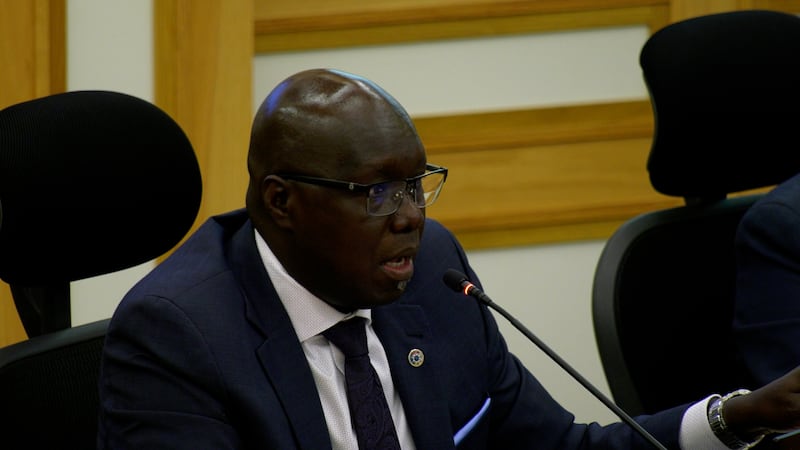
Health inspector employees in Alberta are moving from the Health Services Association of Alberta to the Alberta Union of Provincial Employees. Major changes are leading to a growing concern over layoffs, reduced hours, possible relocation and pay cuts. AUPE president Sandra Azocar joined Alberta Primetime’s Michael Higgins to discuss the impacts. This interview has been edited for clarity and length. Michael Higgins: What makes this more than just a reorganization? Why the degree of concern over employment status? Sandra Azocar: This has been a two-fold type of concern. If you have listened to what the premier has had to say about this being a simple lift-and-shift, in reality, this has caused huge concern to people who have given their lives to this sector and to this job. Where they’re being moved, not when you “lift” something, these are human beings whose lives are being uplifted. They’re going to a new job that has less money, that impacts our pension, that impacts our families, that impacts our community, and the decisions that they have made throughout their careers to live in a community to be able to provide those services that they provide. MH: In an emailed statement to CTV News this week, the government says, in part, that “there will be no layoffs, no centralization, and the goal is to ensure affected employees are treated fairly and respectfully.” Where are you left with your stance versus what we’re seeing in that statement? SA: It’s a completely different reality from what we’re seeing from that statement. We’ve been trying to negotiate this transition agreement that will ensure that those issues that they’re talking about are actually followed through on and are not just words. When we bargain transition agreements, it’s not the same as bargaining a collective agreement. Members don’t get to vote on it (and) don’t have the ability to be in the same boat as when you’re bargaining a collective agreement, so it’s incredibly difficult for them to accept that their lives are being turned upside down by this legislated unnecessary change. MH: In terms of negotiation, is this left to AUPE or does HSAA have any role left? SA: It’s been left to AUPE, and it’s really unfair that they have left two unions basically in a situation where you’re damned if you do, damned if you don’t. It’s a very odd way that they’ve decided to make this transition. Normally, what we do is negotiate transition agreements within departments, within pillars, whatever that has translated into. But this one is very, very different. MH: Today was a deadline for negotiations, was it not? Where do things stand right now? SA: We’re still in the process of negotiating (and) still putting out counter proposals. Our aim is to follow the mandate that members have given us, both AUPE and HSAA, through the conversations that we’ve been able to have. It’s been a real opportunity for us to be able to work very closely with HSAA and their members to be able to get a sense of exactly what we need to do to ensure their transition will be as seamless as possible. Then, of course, we have members in that group as well. MH: Where does this leave the health inspectors, though? Because it feels like they’re stuck in the middle and being pulled in different directions. SA: I believe that’s the case. It leaves them in not a very good place. When you have to live through that uncertainty, and you’ve worked in a place for so long, it’s an unfortunate decision that wasn’t necessary. Removing the inspectors from the health care sector doesn’t make sense. They were operating at arm’s length from the government, and now they’re going to be subject to all kinds of pressures from political decisions made without really understanding why they’re made. But it begets the question, because we’re not only talking about public health inspectors, we’re also talking about people who work in vaccine depots, for example. It begs the question as to whose priority we are focusing on when we’re making these decisions. Are we focusing on the health of Albertans or advocates or lobby groups that come before the health of everyone in this province? MH: In terms of oversight, you’re saying there will not be the guardrails in this new capacity versus what was the dynamic under Alberta Health? SA: That’s correct. There are not the same guardrails, and if misspeaking or incorrect, I would challenge the government to correct that, because Albertans need to be worried about the fact that now there are not those guardrails in place. MH: Your union has publicly stated this move puts Albertans in danger. Can you explain that? SA: When we have no arms-length oversight and talking about guardrails, it leaves it open for a business that might be more friendly to the government to say, “Look, do you need to put this?” It goes back to what we have seen with the decisions that are being made as part of their red-tape reduction efforts. What is it really? I think people would trust the process more if we actually knew why they’re making these decisions. It just doesn’t make sense to take a very important part of our health care system and remove it from the purview of health care and put it into a government ministry. It just does not make sense. MH: There’s a lot of debate over the degree of privatization the government wants to or is moving towards. Is this a position? That the element of public health inspectors is something that could be privatized? SA: For sure. We’ve already seen agencies providing health inspections in some communities, so you know we’re not crying wolf, and we’re not saying the sky is falling. This is a reality that we are facing in this province. I challenge this government to say that this is not happening. We know for a fact that this is happening, and if this is the direction that they want to go, it leaves everybody at risk. It leaves Albertans with the possibility of getting sick and potentially suffering from that. MH: Does the transfer just happen regardless of where negotiations are at? SA: That’s what we’re trying to do, to make sure that not only are the workers going to be protected, but also the services that they deliver are going to be protected. The goal is to ensure that we have a health care system that protects the health and safety of Albertans. The government is going to be responsible for ensuring that goes forward, if they do go and follow through with this transition.