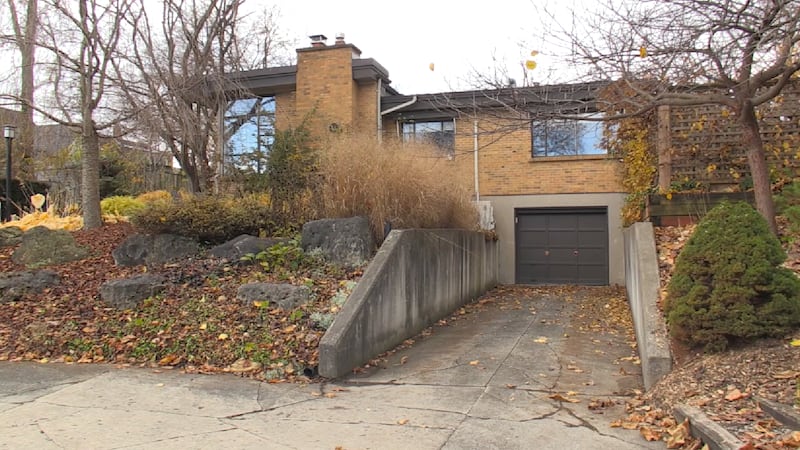
A looming provincial deadline has put an elderly couple’s home at the centre of a debate about the financial consequences of heritage designations. For the past 12 years, Alex and Anna Porzecanski have lovingly maintained their small one-storey mid-century modern home in south London. “Our attitude has been to keep it original, to keep it as beautiful as it was when it was done,” said Alex. But the retirees oppose a recommendation from city staff to assign a heritage designation to their property. “This will impose an enormous financial cost to us at this time in our life,” Alex told CTV News. “We are retired. We are over 80 years old, and our finances are limited.” The provincial government set a Jan. 1, 2027, deadline for municipalities to remove buildings that have not been designated from their heritage registries. In London, that meant narrowing a list of more than 2,000 potential heritage buildings to 13 prioritized for designation — including the Porzecanskis’ home that was inspired by the work of famed architect Frank Lloyd Wright. “The heritage designation will mean that changes to the outside will have to be done according to the original design of the house. Every material has to be copied exactly,” Alex explained. The couple fears higher insurance and maintenance costs. They also worry a designation could shrink the pool of potential buyers if they eventually need to sell their home to finance a move to a supportive care facility. “The financial cost may actually make us sell it at an earlier time than we should, and it will really put us in hard difficulties to live because we were counting on selling this house in the future to somebody who cares and who will love it as much as we do,” Alex said. “It’s just the thought that your property is not your property anymore because you don’t have a say in what the municipality is going to do. Whether you want to, or not, your house can be made heritage,” Anna added. To qualify for heritage designation, a building must meet at least two of nine provincial criteria in a Cultural Heritage Evaluation. Without the couple’s knowledge, city staff prepared a 30-page report that concluded it met five of the nine criteria. Other property owners have successfully opposed the recent spree of designations. In July, council rejected a staff recommendation to pursue designation of the six-storey former Hunt Bros. Flour Mill at 471 Nightingale Ave. in east London amid questions about the cultural evaluation and the owner’s concerns about significantly higher maintenance and insurance costs. Subsequently, the same community advisory committee that generated the list of 13 priorities properties for designation acknowledged the sudden financial impact on owners. Council approved a motion by Deputy Mayor Shawn Lewis that directed staff to report back with options including a property tax credit for Part Four heritage properties (those not in heritage districts) that meet certain maintenance expectations. However, no decision has yet been made, and offsetting the costs would have to be considered during future budget deliberations. In the meantime, the Porzecanskis are preparing to oppose the designation of their home at the Planning and Environment Committee (PEC) on Dec. 1. “It has been very stressful. We’ve had other health issues that have occupied most of our time, and it’s meant we couldn’t dedicate a lot of energies into fighting this,” explained Anna. Council will make a final decision on Dec. 15, just two weeks before the provincial deadline. “I will have to fight my own battle. I don’t know how it’ll end, but I have good arguments to put forward, and I’ll try my best to make my point,” said Alex.