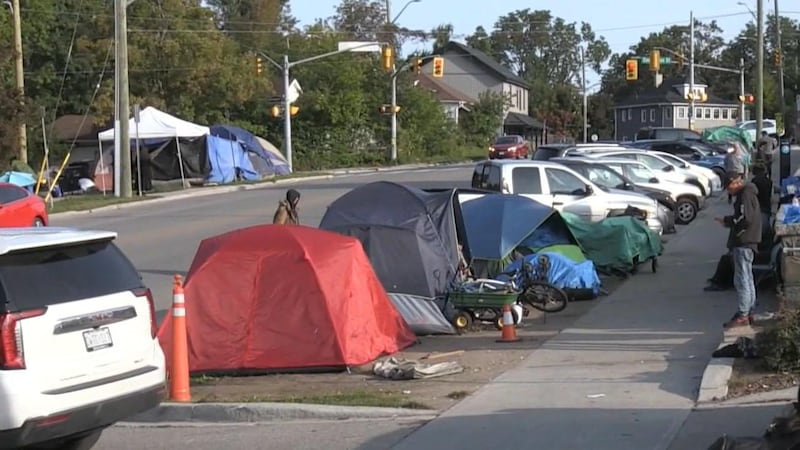
A Montreal organization that supports women experiencing homelessness or housing instability says a large number of its services are being eliminated after a major funding cut announced in March. Sally Richmond, the executive director of Logifem, said most of the programs affected are pre-shelter and post-shelter services, while community support in social housing has also lost funding. “Services that are outside of the shelters help to prevent people from needing a shelter in the first place, and also help people, once they leave a shelter, to stay housed. So that piece is critical to ensure that the number of people that actually need shelter access isn’t continuing to grow exponentially,” she said. The funding had been allocated through the Reaching Home Program, which is administered by the federal and provincial governments. Logifem is a member of the coalition Partenariat pour la prévention et la lutte à l’itinérance des femmes (PPLIF), which brings together nine Montreal women’s organizations. Richmond said many of them have also been hit by the cuts. “In the example of the Le Chaînon, when we were discussing funding decisions, they still don’t have any public funding for 21 emergency shelter beds,” she said. “When we’re talking to Les Maisons de l’Ancre, they’re opening a new shelter in January 2027 and they so far only have provincial funding secured for half of the shelter beds, which means they would open a new building at half of its capacity.” The cuts to Logifem’s post-shelter services, she said, increase the risk of women returning to situations of precarity. “I think it says to us that the people making funding decisions or allocating budgets are not understanding the work that we do,” Richmond said. “And also, there’s a sense in which, on the ground, there’s no recognition on the pressure that puts on management and staff of always being in innovation mode.” Richmond added that the programs being cut have strong track records of keeping women out of homelessness, which, in turn, saves money by reducing pressure on health care and shelter systems. Yet those same programs often lack stable, long-term funding. “For us, we get a letter at the beginning of March to say these programs won’t be renewed as of April 1. That gives us no time at all to look for alternative funding situations, to realign programs, to change priorities,” she said. “There needs to be a long-term vision for what do we want to put in place. How can we fund it? How can we make sure the organizations have the capacity to roll out quality programs with results.” With files from CTV News’ Max Harrold