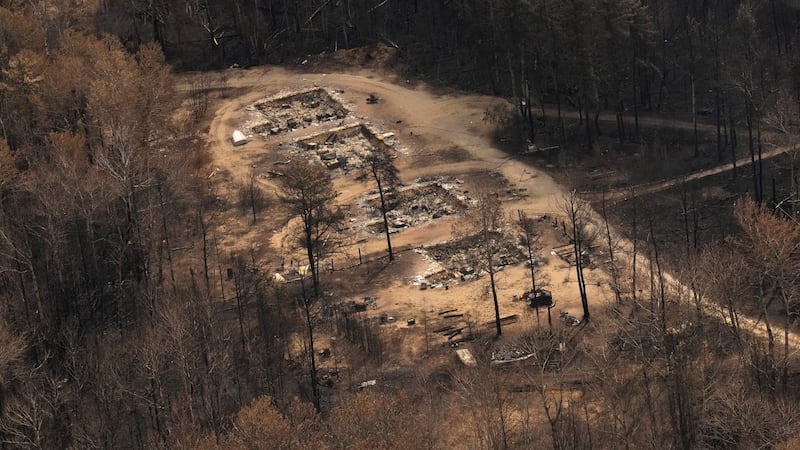
A coalition of northern Ontario First Nations chiefs is calling for a public inquiry into the province’s handling of wildfires that have devastated communities and forced thousands to flee with little notice. Chief Wilfred King of Gull Bay First Nation led a press conference in Thunder Bay on Tuesday, joined by leaders from multiple affected communities, to counter what they described as a false narrative from Premier Doug Ford’s government about the effectiveness of its emergency response. “When these wildfires started in our territory, all that was talked about on the news was the smoke conditions in the City of Toronto,” King said. “There was not one word mentioned on the national media about the situation of people literally running for their lives in these fires.” King said the province’s response has been inadequate, citing a July 20 press release from the premier that praised his government’s efforts without mentioning First Nations. “He praised himself and his government about what a wonderful job they were doing in fighting these fires,” King said. “He’s creating the narrative so that he can basically lie to the Canadians and lie to the people of Ontario.” Leaders report lack of communication, delayed evacuations Chief Lawrence Wanakamik of Whitesand First Nation detailed a timeline of confusion on July 13, when a fire threatened his community. At about 2:30 p.m., the band manager received information about a large fire near Mathias Lake, Wanakamik said. The Ministry of Natural Resources advised a helicopter would investigate and subsequently reported there was no fire – despite heavy smoke. By 4 p.m., Whitesand leadership was arranging transportation and contacting hotels in Thunder Bay. At 4:30 p.m., some community members began self-evacuating. A council member attended the Armstrong base and was told the community was safe. “Whitesand requested the assurances in writing,” Wanakamik said, but noted it was never received. At 6:30 p.m., with no official evacuation order issued, Whitesand Elders warned members to prepare for possible evacuation. At 7 p.m., the ministry advised no evacuation order was in place and suggested only vulnerable community members be relocated. An official mandatory evacuation order was not issued until approximately 9:30 p.m., Wanakamik said. By then, Whitesand had already mobilized leadership, staff and volunteers. “It took too long to recognize the danger, too long to issue a clear direction and too long to order the evacuation,” Wanakamik said. “Whitesand’s own preparation and decision-making helped prevent an already dangerous situation from becoming worse.” Chief Helen Paavola, whose community, Namaygoosisagagun First Nation, also called Collins, was destroyed by fire, said members barely escaped with the clothes on their backs. “My community was devastated by a forest fire that overtook the homes with great speed and heat,” Paavola said. “My members barely escaped with the clothes on their backs.” She said her community was left to evacuate without notice and support on July 13. “The suggestion that the fire was started in the community is completely and utterly false,” she said. Calls for leadership changes, inquiry The chiefs are seeking the immediate removal of Chris Cuthbertson, the current director of aviation, forest fire and emergency services for the MNR, and the assistant deputy minister responsible for oversight of fire operations, pending an independent investigation. “The concern is not with employees who work under extremely difficult conditions, but with senior leadership responsible for policy, planning, oversight and decision-making,” King said. The chiefs are calling for a public inquiry into Ontario’s wildfire response that would examine operational decision-making, emergency coordination, communications with First Nations, evacuation planning and execution, resource allocation and overall provincial preparedness. “The federal government has responsibility here, too,” King said. “We won’t accept any jurisdictional disputes in the year 2026. How could this happen? More importantly, how do we make sure this never happens again? That’s what an inquiry must answer.” King also pointed to outside criticism of the province’s performance, saying: “I would have to concur with President Donald Trump when he said Ontario’s mismanaging their forest fires. And I have to agree with them, unfortunately.” The chiefs also called for the province to transition responsibility for emergency wildfire response and coordination from the Ministry of Natural Resources to the Ministry of Emergency Preparedness and Response. Federal recognition for Collins community sought Deputy Grand Chief Chris Plain from the Anishinabek Nation spoke specifically about the Collins community, which he said remains unrecognized by the federal government despite its history predating Canada. “Despite their long-standing presence and contributions and the recognition as status Indians, their community remains unrecognized by the federal government of Canada,” Plain said. He said the lack of official recognition has significant ramifications, particularly in moments of crisis, barring the community from programs including Indigenous Services Canada, the Canadian Mortgage and Housing Corporation and the National Indigenous Collaborative Housing. “This exclusion hampers their ability to rebuild and recover, forcing them to confront adversity without necessary support,” Plain said. “Why is this the case in 2026?” First Nations excluded from emergency decisions, chiefs say Nishnawbe Aski Nation Grand Chief Alvin Fiddler said Premier Ford has not responded to a plan First Nations presented to him in 2021 for a redesigned emergency response system. “Premier Doug Ford was here in person, and I remember going to him and I gave him that package and I told him, this is our plan,” Fiddler said. “He never even responded to that and so here we go again. Like it’s almost every time we are faced with this situation, we are flying by the seat of our pants and we shouldn’t.” Ontario Regional Chief Abram Benedict said the system supporting First Nations in emergencies is broken, noting that while the federal government pays the bill for emergency response on reserve, the province makes the decisions. “That means that they are the service provider,” Benedict said. “Lots of decisions have been made without our community leadership being at the table, and that’s completely unacceptable.” He said eight of the 13 communities the province has reported as evacuated are First Nations. “It wasn’t said that these are First Nations citizens and First Nation communities,” he said. Premier Ford visited Thunder Bay on Saturday but did not meet with First Nations leaders, according to the chiefs. Fiddler said he believes the premier “fell asleep at his tractor on his way to the Ring of Fire” in his haste to extract resources. “I think it’s important to note that we knew – all of us knew – that this was going to happen,” Fiddler said. King said the only minister who had reached out to his community was local member of Parliament Patty Hajdu. “Premier Ford hasn’t reached out to me, neither has Rickford or even the minister of natural resources,” King said. Canadians help while governments stay silent: chiefs The chiefs expressed appreciation for the outpouring of donations and support from individual Canadians. “There’s so much help coming from individuals, organizations, companies, but yet hardly any help from the federal or provincial government,” King said. Wanakamik said his community lost an elder, Stella Watson, who died in the aftermath. “She was having a hard time with her breathing from all the smoke,” Wanakamik said. “We did lose somebody in our community.” Chief Pauline Drake of Whitewater First Nation said she wished her community had received advance notice of the fire’s severity. “If we had been aware of the severity of the fires at that time, we would have probably gone in and tried to salvage something because we are a fly-in community,” Drake said. Chief Michele Solomon of Fort William First Nation, whose territory includes Thunder Bay, said she stands with the call for an inquiry. “We know wildfires are not going anywhere. We know wildfires are going to continue to happen, but devastation of community should not be happening,” Solomon said. “The complete devastation of any community should never happen.” Chief Merle Loon of Mishkeegogamang Ojibway Nation challenged the premier directly. “I challenge you, Premier Ford, put your money where your mouth is,” Loon said. “I challenge you to support and give us that resource. We need to take care of our own.” CTV News reached out to the Ontario Government, including the Premier’s Office, the Ministry of Natural Resources and the Ministry of Emergency Preparedness and Response, following the late press conference on July 21. Tuesday, only Minister Jill Dunlop’s team with the Ministry of Emergency Preparedness and Response has responded, speaking with CTV News by phone briefly that evening. Government responds to allegations In response to the chiefs’ concerns, Dunlop said the province has been in regular contact with First Nations leadership throughout the wildfire crisis. She said she has had two Zoom calls with Grand Chief Alvin Fiddler, including one last week and another on the morning of the press conference. “There was a couple of questions that came up that my ADM, who was acting deputy at the time, was able to follow up with the chief,” Dunlop said during her phone interview. She said the calls addressed the province’s capacity for hotel space for evacuees and the need for a trilateral meeting involving all levels of government. “I told the chief that I’d be happy to represent Ontario with some of my colleagues and I think it’s important to bring everyone to the table,” she said. Dunlop also noted that local MPP Kevin Holland has been speaking with Chief Whiteloud (Lac des Mille Lacs First Nation) and Mr. Harris has been speaking with Chief Fiddler and Chief Linda Debassige. “So, there has been contact. That’s just amongst the ministers ourselves,” she said. The minister said the provincial emergency operations centre has coordinated calls with all impacted communities, beginning early when a community request comes in or when the MNR conducts a risk assessment. “Typically we like to have a plan A and a plan B in place,” Dunlop said. “Plan A would be having a staggered evacuation, ensuring that the most vulnerable leave early, coordinating the flights and the host city at that time. Plan B being if things move much quicker than the risk assessment showed, that we’re able to get people out very quickly.” Dunlop said the ministry is currently focused on life-saving and readiness, with approximately 2,800 evacuees and 13 evacuation orders in place. On the chiefs’ call to transition wildfire coordination from the Ministry of Natural Resources to her ministry, Dunlop said the focus remains on the immediate response. “We want to ensure that people are safely removed from those communities and are set up for success in their host community,” she said. Regarding the chiefs’ demand for a public inquiry, Dunlop said the government conducts after-action reviews following every wildfire season and emergency situation to identify lessons learned and opportunities for improvement. “Any concerns that are related as far as communications, coordination, response timelines will be considered as part of that process,” she said. She emphasized that the debrief process is standard practice across all emergency responses. Dunlop also acknowledged the gravity of the situation facing evacuees. “We recognize it’s a very stressful situation when people are being evacuated from communities and not even knowing how long they’re going to be gone from their home and what they’re coming back to,” Dunlop said. The minister also thanked frontline workers. MNR defends its actions On Wednesday, the Ministry of Natural Resources issued a detailed defence of the province’s actions. In a statement emailed to CTV News, Harris’ office said any community can request evacuation assistance - but noted that “in circumstances where the fire is moving too quickly, communities may make the choice to self-evacuate.” Once evacuated, he said, the province works with Indigenous Services Canada to provide accommodation, food and health services. The minister’s office said the ministry is in “constant contact” with First Nations and has requested federal assistance to speed up evacuations and supports, adding that the ministry meets year-round with Indigenous communities on wildfire preparedness and that an “after action review” is conducted every fire season to inform future responses. The statement, however, did not directly address the Chiefs’ calls for a public inquiry. On background, the MNR also said the provincial government has doubled the year-start emergency firefighting allocation from $70 million to $150 million since 2018. The minister’s office also noted a $650-million investment to expand the province’s firefighting air fleet with six new waterbombers and five helicopters, along with more than 170 permanent fire personnel added since 2024, adding the province has increased compensation for firefighters and pilots and is making use of aircraft from Alberta and the federal government to respond to wildfires.