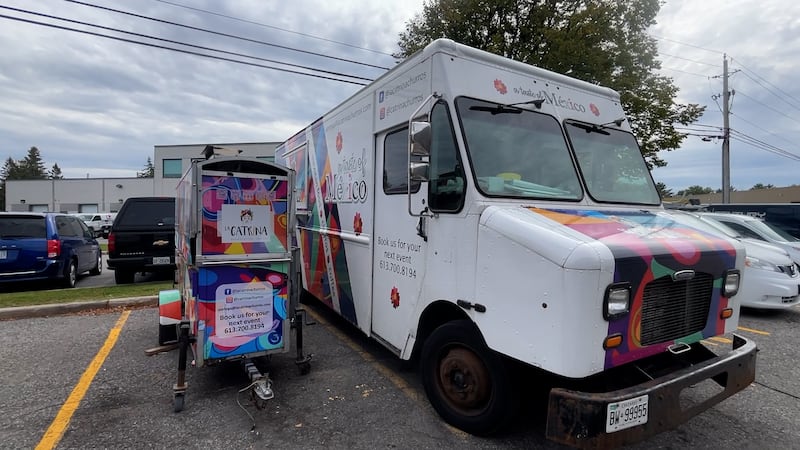
Diesel prices jumped 15 cents a litre Thursday, climbing to around $2.69 a litre and adding new pressure for businesses and organizations that rely on food trucks. For owner of La Catrina, Diana Martinez, whose food truck has become a key part of her business, the increase is already being felt. “The last time we filled it up it was over $200, whereas the last time we did it, it was $150, $160, so it really jumped,” Martinez said. While gasoline prices are set to drop Friday, diesel is moving in the opposite direction, reaching record highs and costing more than double what drivers were paying a year ago. Energy analyst Dan McTeague said tight supply is colliding with strong demand for diesel. “The shortage of supply coming at a time in which diesel demand goes through the roof means these prices are here at least for the next six or seven months,” he said. The impact is also being felt at the Ottawa Mission, where food trucks are on the road every day delivering meals to people in need. While the truck itself runs on gasoline, the equipment inside runs on diesel. “Each truck serves about 200 meals, those meals need to be kept warm,” said Aileen Leo, communications director with The Ottawa Mission. “Both the price of diesel, which is now at record levels and also the price of gasoline has a tremendous impact on the operation of these trucks.” For a non-profit that relies on donations, those higher costs add up quickly. Leo says it has cost about $850,000 a year to operate the food tucks in previous years. This year, she expects that total to be much higher. “I would be very surprised when we review our finances if the cost was not approaching, or more than, $1 million,” she said. McTeague said the effects of higher diesel prices could eventually reach well beyond the pump, increasing the cost of moving food, goods and other supplies. “We’re into truly uncharted waters and that means that the impact, the long-term knock-on impact for consumers, is going to be widespread and very painful,” he said. For Martinez, the goal is to absorb as much of the increase as possible without passing it on to customers. “We want people to be able to enjoy, if they have kids they can come to the restaurant, they can come to the food truck and not spend a fortune,” she said.