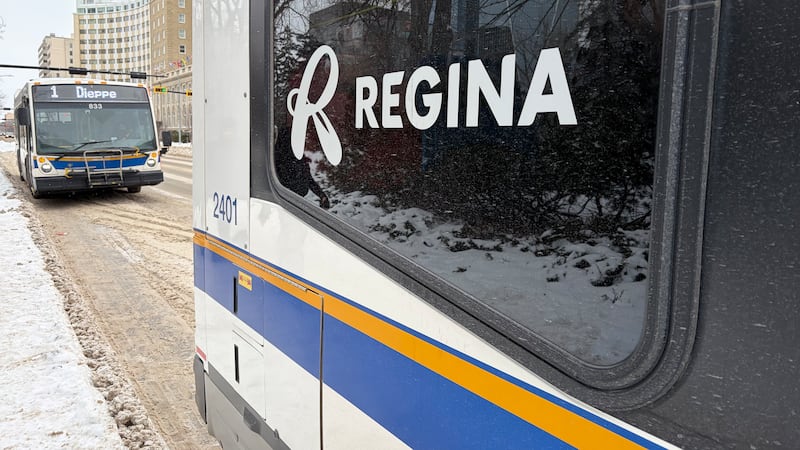
Two days after a lockout of Regina Transit workers forced a brief shutdown of operations, the city now looks to what happens next to ensure bus service continues to run smoothly. It comes after negotiations between the Amalgamated Transit Union (ATU) Local 588 and the city had reached an impasse. Late Friday night, the union issued notice to the city of an overtime ban job action effective Sunday evening. The city retaliated by issuing a lockout notice effective 11 a.m. Monday, forcing the shutdown of standard transit routes. On Tuesday – as transit operations were set to resume – director of transit Nathan Luhning said the call to lockout workers was made by a group of senior city administration members. “It would be an unpredictable shutdown of service,” he described to reporters. “Although 25 per cent [of routes would be impacted]; we wouldn’t know what routes or what times until maybe 30 minutes beforehand – which would really limit the communication time to customers who may be waiting at the bus stop.” According to Luhning, the city uses the mobile app TransitLive to notify users of bus locations, possible delays and even cancellations. They can do this with real-time tracking of buses around the city. He added the city used social media and put up posters at bus stops over the weekend to notify regular riders of Monday’s service disruption. “Thirty minutes is not a lot of time to get [a post] out to social media,” Luhning said. “When you look at the 48 hours notice we had to give out to let customers know, having 30 minutes is not much time.” How overtime is used The city says it uses operators’ voluntary overtime to cover shortfalls due to sickness or when there is additional demand on the system. Increased demand, for example shuttle service for Canadian Western Agribition this week, may have led to increased operator overtime. “We do have a spare pool of operators who come to fill in [when necessary],” explained Luhning. “But when we have extra demand on that system, that pool is diminished and we don’t have as many resources to draw upon.” As part of a rally by ATU members Monday after the lockout’s commencement, national president John Di Nino said if Regina’s transit system cannot operate without drivers working overtime, a larger conversation needs to be had. “If you think you have to manage a transit system with overtime, then you have a resource problem,” he claimed. “If you’re understaffed, then staff the place correctly; then we don’t have to worry about overtime. That’s extremely important.” “We shouldn’t have to depend on strictly overtime to provide the valuable service the citizens here need,” Di Nino added. OT ban lifted Late Monday night, the city and ATU reached a tentative deal which allowed Regina Transit buses to resume operations Tuesday afternoon. The details of that deal have not yet been disclosed by the union or city, as they still require a vote from ATU members and city council prior to its finalization. Luhning did say the city has to strike a delicate balance for operators. “It’s a balance between having enough operators in the pool, versus having too many,” he explained, “So if you do have too many, they are not being efficiently used and that is not an effective use of our resources as well. So it’s a good balance and it’s a conversation we can have with council.” Mayor Chad Bachynski said it is a conversation worth having. “This is something that has been identified and it’ll be something we would expect to have a discussion with administration on,” he told reporters Tuesday. “Obviously, that’s an operational [question], [council] doesn’t know what it takes to schedule drivers.” Not an easy answer Labour relations expert and former Regina city councillor Andrew Stevens believes the answer to the question may not be as simple as hiring more staff. “I don’t think it’s all that unusual for a public service to depend on overtime in some capacity, and I’m not confident in saying, ‘Well, it’s just a matter of hiring more people,’” he told CTV News. “It can be, but it might be simply to take an extra hour for a route to finish and you exchange a driver or an operator mid shift or mid route and how does that work?” Through his experience as a councillor for two terms, Stevens said transit operations was a continuous conversation. He says other questions often have to be asked to address the core of the issues related to operator staffing, and potential overtime use. “Is it a staffing issue? Why is it a staffing issue? Is it, they’re inadequately compensated?” Stevens questioned. “I know for years it was an attrition issue; there was a lot of trainees coming on the job who didn’t like it, and they left. So then there’s another question.” Stevens says issues of violence and abuse toward transit operators continues to increase across the country, and Regina is no different. “I’d have a lot of questions and then figure out, ‘Okay, budget is the time to deal with it,’” he continued. “Is it more operators? Is that required? But there’s always been a tension at the council table about transit and it’s always split.” Luhning says transit efficiency continues to be top of mind. “For a city of our size, when we have large events that come to the city, it does put a drain on our resources,” he said. “We can manage that; but looking at how much overtime we use versus how many people we have on standby is something we’ve done over the years and constantly look to improve.” He adds he learned the importance of transit to residents in their daily lives and how much a shutdown, if even for a day, impacts them. “It’s tough when we’re a growing city like we are to keep up with the services residents demand,” Luhning admitted. “That’s something we bring before council and they can make the decisions based on the other priorities they have.” Mayor Bachynski agreed. “We definitely need to understand the risks associated if, for example, overtime isn’t an option and we aren’t able to provide reliable service,” he said. “We should understand what that gap is and if there’s a way to mitigate it in the future.”