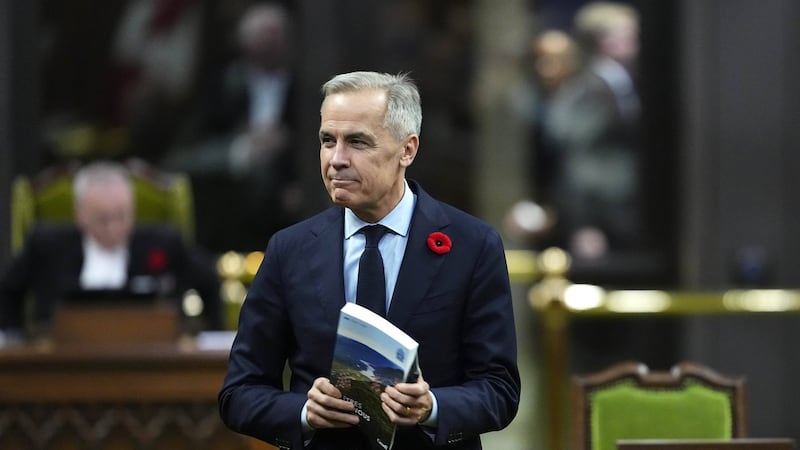
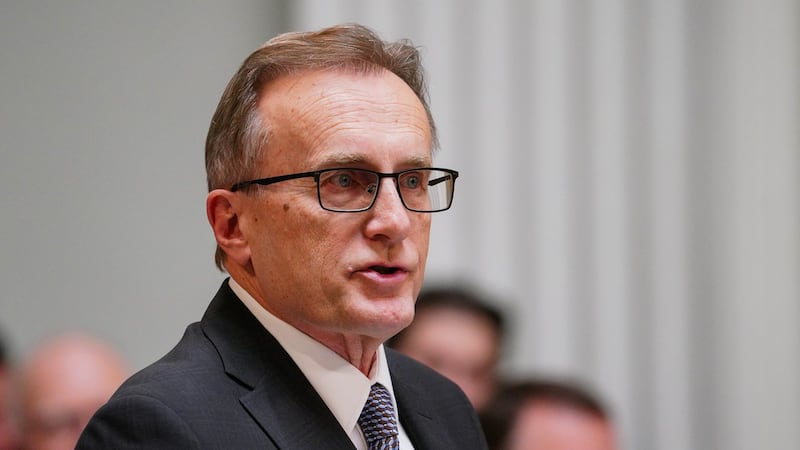
Saskatchewan is welcoming a business tax incentive announced in the recent federal budget. The Productivity Mega Deduction lets businesses immediately deduct the full cost of eligible equipment and other capital investments, rather than spreading those deductions over several years. Eligible purchases include manufacturing equipment, machinery, computers and software. “We will be fully participating,” Finance Minister Jim Reiter said, during a business panel on Friday at Saskatoon’s Prairieland Park. Reiter estimated the Saskatchewan impact to be $400 million a year. “In the short-term there’s a cost, in the long-term it’s going to be a big financial benefit to the province,” Reiter told journalists after the panel discussion. “It’s going to create more investment, more business.” On stage, Premier Scott Moe applauded parts of the federal budget. “It’s probably the best budget we’ve had in a decade, but that isn’t saying much. We likely have the strongest prime minister we’ve had in a decade, too. Also, not saying much,” Moe said, as the crowd laughed. Ministers also welcomed support for nuclear development and electricity transmission projects, but said the budget fell short on municipal infrastructure funding. Homelessness plan brings questions about provincial costs Moe said Saskatchewan shares Ottawa’s goal of ending homelessness within 10 years, but the province’s responsibilities still need to be worked out. The federal budget offers $11.2 billion to tackle homelessness over four years, starting next year, and $17.8 billion over 10 years. Moe expects Ottawa to fund “a capital component,” with provinces responsible for much of the operating costs. “This is yet another example — there is a provincial investment that is required for us to even start to attempt to attain the goal.” More income tax cuts expected in March Work is underway on Saskatchewan’s own budget. Reiter said affordability will be a key focus in March. “The thing I am comfortable saying is that you’re going to see more income tax cuts,” Reiter said. That would mark the third year of the government’s existing four-year tax reduction plan. On trade and recent Democratic midterm wins, Moe urged Ottawa and Washington to resume negotiations, saying U.S. tariffs continue to hurt Saskatchewan’s forestry and manufacturing industries.