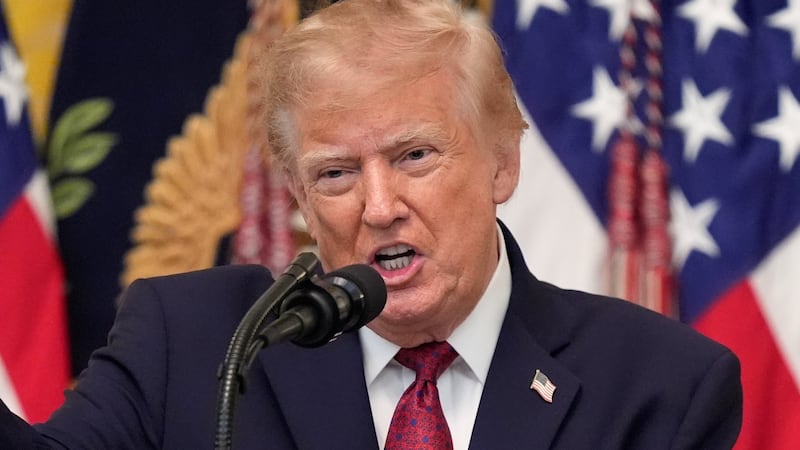
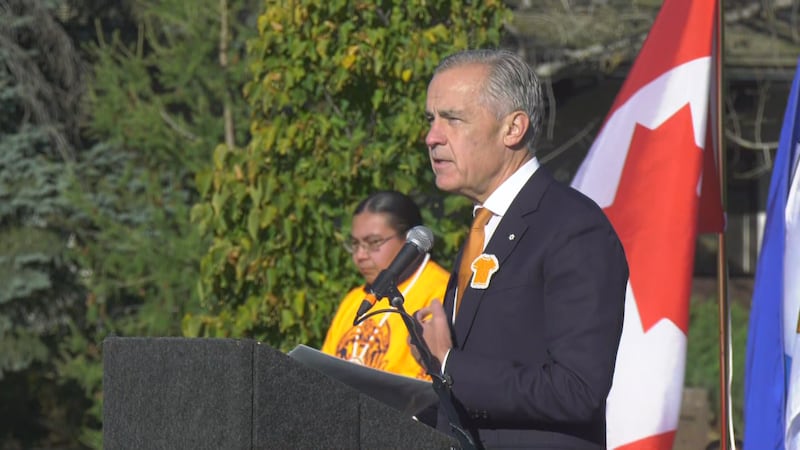
The topic of American liquor on Canadian shelves has been at the forefront of many conversations regarding tariffs. The cycle of taking American alcohol off shelves and putting it back on has become routine for many liquor store employees. “Without trying to be funny about it, this has become the straw that stirs the drink,” said Keith Willoughby, dean of the Edwards School of Business at the University of Saskatchewan. “If you think of the whole issue of tariff turbulence — we’ve been experiencing [it] for now a year and a half here in this country.” The most recent round of tariffs imposed by U.S. President Donald Trump has reignited the debate among provincial leaders. Premier Scott Moe told media on Sunday the next course of action is still being determined, even though most provinces have already removed American liquor from the shelves. “We’re going to discuss that. Whether it’s an outright ban like some other provinces have done — potential tariff — but there’s many other opportunities that provinces have as well when it comes to our relationship with American companies and American investment and American sales in this province as well,” Moe said. NDP demands action Meanwhile, Saskatchewan’s Official Opposition is calling on the premier to immediately instruct the SLGA to pull American liquor from shelves. “Canadian wineries, breweries, distilleries are being hit with a 50 per cent tariff. And Scott Moe still helping American producers sell their products here in Saskatchewan. And it just doesn’t make any sense. It’s time to fight back. American liquor should be removed from the shelves today,” said Don McBean, an NDP MLA. Alcohol is just one of many goods that has been impacted by the most recent round of tariffs. Not a huge difference “I’m not convinced it’s a huge monetary difference. Prior to this tariff noise, you’re looking at sales roughly $1 billion across Canada in terms of exports of U.S. spirits into Canada. Now they’ve decreased significantly since the tariff noise. But by itself, this isn’t a very costly item in terms of our volume,” Willoughby said. While the economic impact of liquor tariffs is smaller than that of many other goods that have had tariffs slapped on them, Willoughby explained that the alcohol industry has somewhat become the face of this trade war. “It’s a product that people consume. They’re aware of it, so we have the awareness level within the Saskatchewan consumer,” he said. “You also have now the political undertones with respect to this product, which by itself has a very small portion of the overall volume of trade between the two countries.” About the message McBean argued that while a liquor boycott might not pack the biggest financial punch, it’s more about the message it sends. “In terms of dollars, it’s not a big player in the economic trade world, but it is a very visible one. It’s one people understand,” the NDP MLA said. He said Saskatchewan remains one of two provinces to still have American liquor on the shelves following this most recent round of tariffs. “Whether the Saskatchewanian is a consumer of the alcohol, we want them to recognize and feel proud of the fact that we’re standing together with all of Canada,” McBean added. A different strategy Saskatchewan has previously pulled American liquor from the shelves. Moe told media that as the trade war continues, it might require a different course of action. “Nothing we have done to date has worked. If it had worked, we wouldn’t be in the situation that we’re in,” Moe said. “We are in a new environment now — we in this province of Saskatchewan — but also we collectively as ten provinces and free territories working with Prime Minister Carney, his negotiating team, his bargaining team, and ultimately, us as a nation with our relationship with the U.S.” Willoughby emphasized that regardless of the motivation behind an official American liquor boycott, the larger issue of the ongoing trade war is unlikely to be resolved anytime soon. “I look upon this not so much as being an economically-driven issue, but it’s emotionally driven. And I think that, to me, is why it’s becoming somewhat fascinating to watch,” Willoughby said. The dean said he was very curious to see what happens of the coming months. “Because if it’s not resolved … I worry that it does create the groundwork for future challenges," he added. It’s a sentiment that Moe echoed as he spoke to the uncertain future of Canada’s economy. “Things are going to get rough for us as Canadians and for the North American economy,” he noted. “Which is not what we ever aspire to be part of as the province of Saskatchewan.”