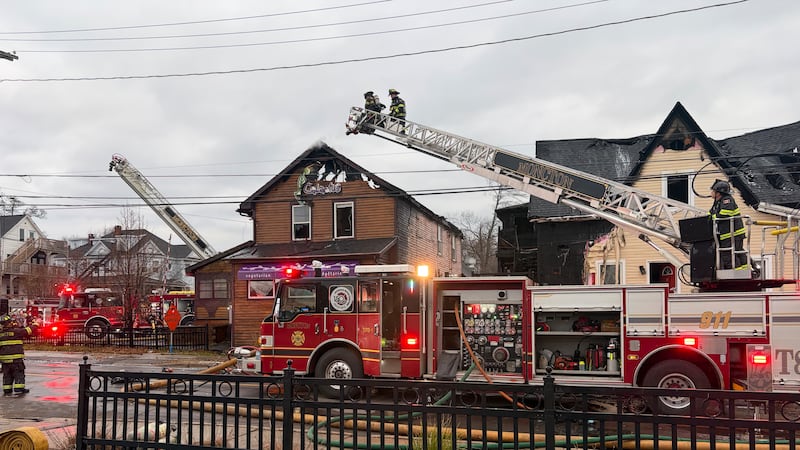
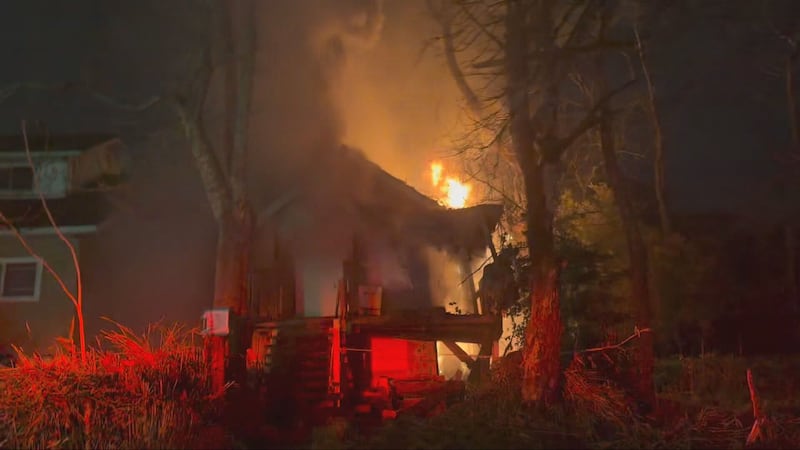
Large flames poured from a vacant Port Alberni home early Thursday morning, drawing firefighters from across the Alberni Valley to battle the blaze and protect neighbouring properties. The response also left local fire departments with no immediately available resources to attend another emergency. The fire broke out shortly before 4:30 a.m. in the 2600 block of First Avenue, drawing approximately 15 firefighters from Port Alberni, Cherry Creek and Beaver Creek. The Sproat Lake Volunteer Fire Department was also part of the initial multi-department response. “Our duty crew arrived on scene and found heavy volume of fire coming from a home,” Port Alberni Fire Chief Mike Owens said. Because the building was vacant and boarded up, firefighters initially took a defensive approach, battling the fire from outside while assessing the safety of the structure. “We were able to contact the demolition company and found out that the building was still structurally sound,” Owens said. The property was already under a demolition permit, and the information provided by the company helped crews determine it was safe to enter the building. Firefighters eventually transitioned to an interior attack, allowing them to extinguish the remaining fire. Owens says the structure sustained extensive fire damage, although it had already been slated for demolition. Investigators were still at the scene working to determine the cause and origin of the fire. Firefighters prevented spread to neighbouring home One of the initial priorities was protecting a home immediately north of the burning property. “That was our primary concern when we arrived on scene was just to ensure that we prevented spread from the building of origin into that structure, which we were successful in doing,” Owens said. Access to the burning home also presented a significant challenge. Because the structure was boarded up, firefighters had to use forcible entry tools to get inside. The response lasted approximately two hours, from the initial call until crews began demobilizing. All available firefighters called in While the response demonstrated the importance of co-operation between departments, Owens says the incident also put local resources under considerable pressure. With Port Alberni’s on-duty and off-duty personnel and neighbouring volunteer firefighters called in, there were no additional resources immediately available in the valley to respond to another emergency. “Last night in particular, we definitely had all available hands on deck,” Owens said. “We were actually making plans on scene that should another incident arise while we were still on scene, just who we were going to release from scene to respond to that subsequent event, as we did not have any additional resources in the valley that were immediately available to respond to a second incident.” The response involved four departments working under an automatic aid agreement that sees Port Alberni, Cherry Creek, Beaver Creek and Sproat Lake dispatched simultaneously to structure fires anywhere in the Alberni Valley. Owens says those relationships have been built over years of working together. “Without the teamwork of all four fire departments in the valley, it would certainly present a greater challenge for us to combat these fires,” he said. He says the established relationships allow crews to work together seamlessly when a major incident requires additional support. Fire chief reassures residents The fire also meant road closures for people travelling through the area. First Avenue was closed between Harbour Road and Stirling Street, while Melrose Street was shut down at First Avenue as emergency crews worked. Owens acknowledges the inconvenience but says residents should feel confident in the coordinated emergency response available throughout the valley. “They should also feel safe and secure that we do have a very well coordinated response within the Alberni Valley,” he said. The cause remains under investigation. For Owens, the response highlighted both the strength of the working relationships between local fire departments and the importance of having those resources available when the community needs them. It also offered a reminder of the pressure a single major incident can place on an entire region’s emergency response system, particularly when every available firefighter is already committed to one scene.