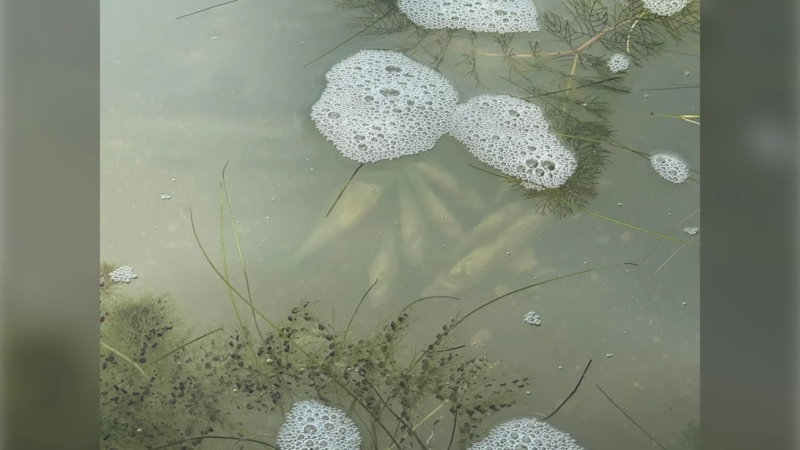
A vacationer at Wakaw Lake is sounding the alarm after discovering dozens of dead fish and crayfish lapping up along the shore of her family cabin, with the water suddenly looking green and turbid. Leyton Hiebert says she first noticed a change in conditions on Sunday. “I’ve been up at the lake for three weeks and on Sunday we noticed a bad smell coming from the lake. We went down and it was a murky green I’ve never seen before. I went for a walk along the shoreline and noticed piles of minnows, perch, and crayfish dead,” she told CTV News. “I looked it up because I wanted to know if the water was safe to swim in and it came up as this cyanobacteria,” Hiebert said in a post on Reddit. Cyanobacteria, also known as blue-green algae, is a freshwater bacterium that tends to thrive in slow moving or warm waters and can be fed by nitrogen and phosphorous from agricultural runoff. What is cyanobacteria? Cyanobacteria is the first organism known to have produced oxygen as a byproduct of its metabolism, and it’s thought to be responsible for creating the earth’s atmosphere as we know it over the course of billions of years. The problem is, it also produces a host of toxic byproducts. According to Health Canada, cyanotoxins can cause a wide variety of adverse effects depending on the specific type, and the duration and form of exposure. The effects range from skin, eye and throat irritation to stomach pain, diarrhea and vomiting; muscle weakness and fever; and even severe liver or kidney damage and neurological effects like paralysis of skeletal and respiratory muscles. After reading about it, Hiebert says she was relieved that her dog didn’t try to drink the water while she was examining the shoreline. Now, Hiebert and her mother are trying to figure out who to call on for help, and who can test the water to confirm their suspicions. First, they contacted a local conservation officer, but Hiebert says he dismissed their concerns. An official from the resort village got involved and is trying to bring in the Water Security Agency. CTV News contacted the Water Security Agency about the issue on Tuesday but has not yet received a response. Public health officials with the Saskatchewan Health Authority (SHA) conduct regular testing of water from recreational areas across the province throughout the summer as part of the provincial Healthy Beaches Program. You can find those reports online here. At the time of this writing, the most recent published samples for Wakaw Lake were from July 13 and showed acceptable levels of microcystin – one of the toxins produced by cyanobacteria – around the Wakaw Lake Regional Park main beach. The results of samples taken on July 20 have not yet been published. On Wednesday, the nearby RM of Hoodoo sent an email to residents about the suspected algae blooms. According to the RM, public health officials tested three beach sites at Wakaw Lake earlier this week, all of which contained acceptable levels of the cyanotoxin. “However, these results do not confirm the absence of algae blooms throughout the entire lake, as conditions can vary between different areas,” the RM said. The RM cautioned that the presence of dead fish doesn’t necessarily mean there’s a bloom of blue-green algae, but it doesn’t rule out the possibility. The SHA also said its public health inspector did not visibly observe the presence of algae in the public swimming area during the last round of tests, though the program only covers select areas. “The program is intended for public beaches only. Private residential shorelines and unofficial swimming spots are not part of regular monitoring. Property owners with concerns about private waterfront areas may submit their own water samples for testing at their own expense,” the SHA told CTV News in an email. “Lakes are untreated bodies of water and may carry risk due to pollutants and other environmental factors. Conditions at swimming areas can change quickly.” As a general precaution, the health authority advises vacationers to keep children, vulnerable individuals and pets out of the water anywhere algae blooms are present. Members of the public are encouraged to report algae blooms to a public health official through the Healthy Beaches website.