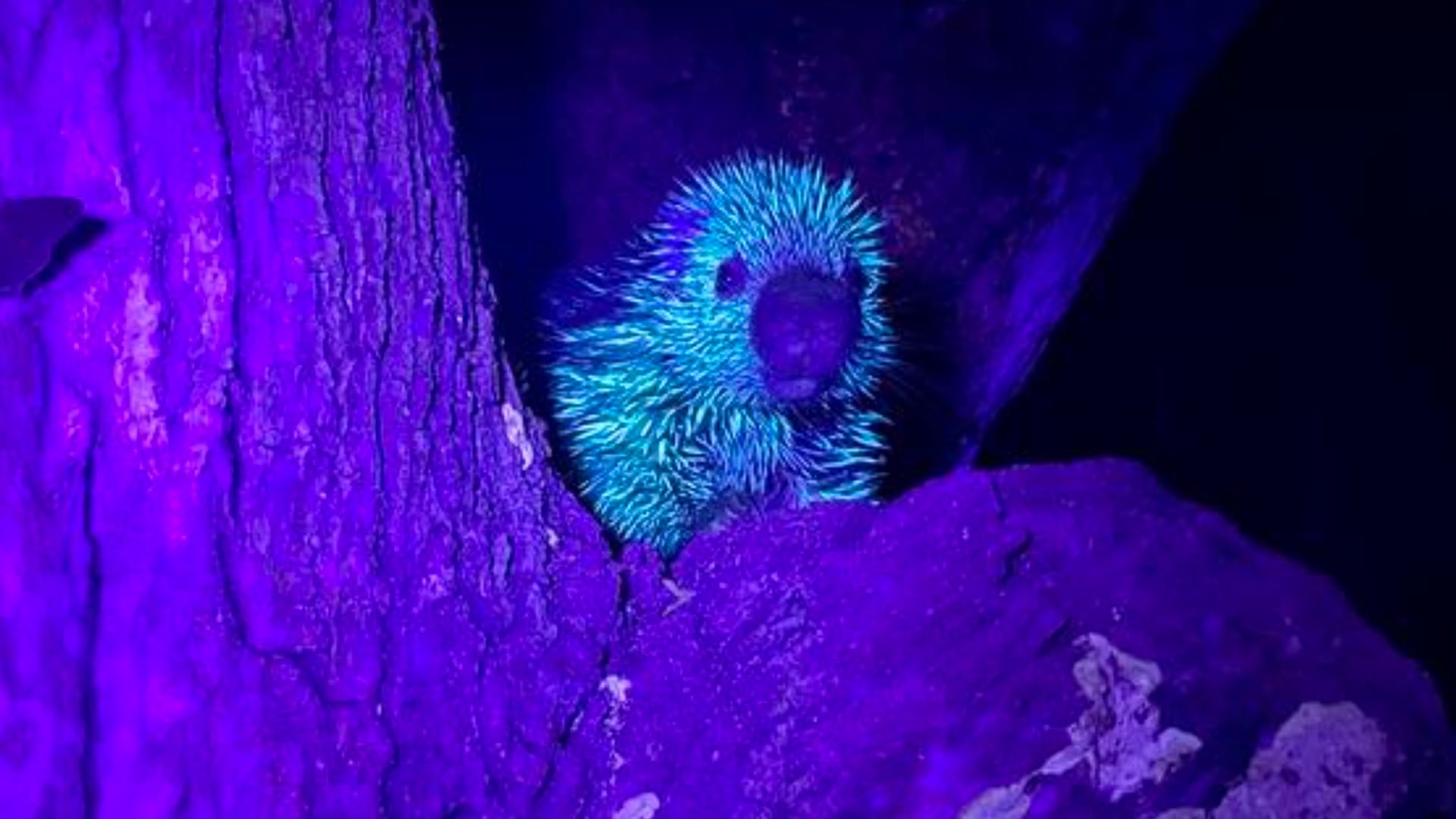
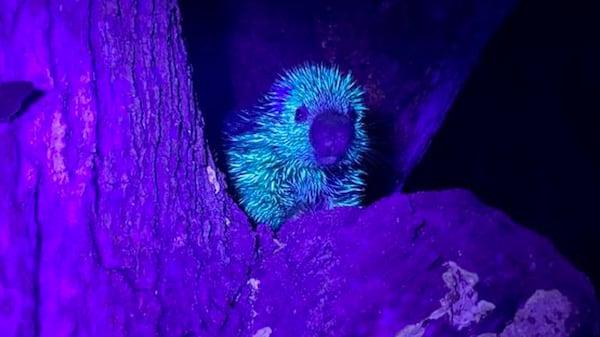
Researchers have discovered a rare trait in animals in the wild – Mexican hairy dwarf porcupines glow in various colours in the dark. Researchers described observing the “vivid photoluminescence” in the Mexican hairy dwarf porcupine (Coendou mexicanus) in Chetumal, Quintana Roo, Mexico. The researchers noted blue, green and yellow light emitting from live porcupines when they shined an ultraviolet (UV) light on the animals at night. Photoluminescence happens when “short wavelengths of light are absorbed, and longer wavelengths are re-emitted” in biological tissues of living and dead animals, researchers wrote. The finding was published in the Neotropical Biology and Conservation journal this month. It is a rare discovery of photoluminescence in live, wild animals and the first “UV-induced photoluminescence” ever for the Mexican hairy dwarf porcupines, alive or dead, according to researchers. They noted that a growing number of mammals have been known to exhibit this characteristic, but most of them are from museum specimens. “The ecological and communicative significance of this trait is unknown and requires further investigation,” according to the study. The senior author of the report first observed the unusual trait when he used a portable UV LED flashlight to clinically evaluate two female porcupines in June 2024. Over three months, researchers went on a series of walks at night and detected 20 porcupines using UV light. They also photographed two museum specimens under UV and visible light. Humans can only see a small portion of electromagnetic radiation or light, called visible light, according to NASA. Unlike visible light, UV light waves are invisible to the human eye. The museum specimens were preserved more than a decade ago without using chemicals that may contain fluorescent properties. The study was conducted with the supervision of environmental officials and under wildlife research ethics guidelines. Researchers “immobilized” the porcupines using ketamine and xylazine. “All the porcupines exhibited photoluminescence, but the live animals did so with greater intensity and in different colors (blue, green, and yellow) compared with the museum specimens, which had an ambiguous yellow-green photoluminescence,” according to the study. Researchers found the heads displayed the most photoluminescence, which were “greenish-blue.” The animals also displayed “greenish-blue” photoluminescence in their hindlegs, forelegs, backs and tails. Quills from living porcupines showed “green photoluminescence,” which were yellow under visible light, they said. The brown tips displayed “blue photoluminescence.” Areas without hair and quills were purple, and the palms and the soles reflected bright yellow photoluminescence, they added. For the museum specimens, the quills were pale yellow under visible light, and under UV light they displayed “a barely perceptible greenish photoluminescence.”